

Description
- Brand: Triconex / Invensys
- Full Model Number: 3708E
- System/Series Family: Tricon v9–v11
- Core Function: 16-channel isolated TMR thermocouple temperature acquisition with configurable open-input detection
- Top 3 Hardcore Specs: 16 differential isolated inputs; J/K/T/E thermocouples; 50 ms maximum input update
- Thermocouple Types: J, K, T, E
- Open-Input Detection: Upscale or downscale; configured in TriStation 1131
- Input Resistance: 30 MΩ DC minimum
- Input Protection: 110 VAC continuous without damage
- Common-Mode Range: ±200 VDC maximum
- Noise Rejection: -100 dB DC minimum; -90 dB at 60 Hz minimum
- Reference Junction Compensation: 0°C to 60°C
- Diagnostic Change Threshold: 0.5% of full scale
- Status Indicators: PASS, FAULT, ACTIVE, CJ FAULT
- Logic Power: <15 W
- Isolation: Individual differential inputs; isolated channel architecture
- Termination: External thermocouple termination panel required
- Hot Spare: Supported
- Stock Status: New Surplus or Fully Tested Refurbished; exact revision to be confirmed
Triconex documentation identifies 3708E as an isolated TMR thermocouple input module with 16 differential inputs. It supports J, K, T, and E thermocouples, configurable upscale/downscale open detection, and cold-junction monitoring.
Module 3: Technical Product Introduction
Temperature measurement becomes difficult when thermocouple wiring crosses grounded equipment, long cable runs, or mixed-voltage cabinet environments. The TRICONEX 3708E addresses that architecture with 16 differential, individually isolated thermocouple inputs inside the Tricon TMR system. It supports Type J, K, T, and E thermocouples, with open-input detection selectable as upscale or downscale through TriStation 1131. Unlike the 3706A, the 3708E is specifically the isolated thermocouple-input variant, making channel-to-channel isolation a key reason to select it.
The acquisition rate is 50 ms maximum per input update, while the input circuit presents at least 30 MΩ DC resistance and tolerates up to 110 VAC continuously without damage. The common-mode range is ±200 VDC maximum, with common-mode noise rejection of at least -100 dB at DC and -90 dB at 60 Hz. Reference-junction compensation operates from 0°C to 60°C. Published accuracy varies by thermocouple type and temperature range, so a single generic accuracy figure should not be assigned to every 3708E installation.
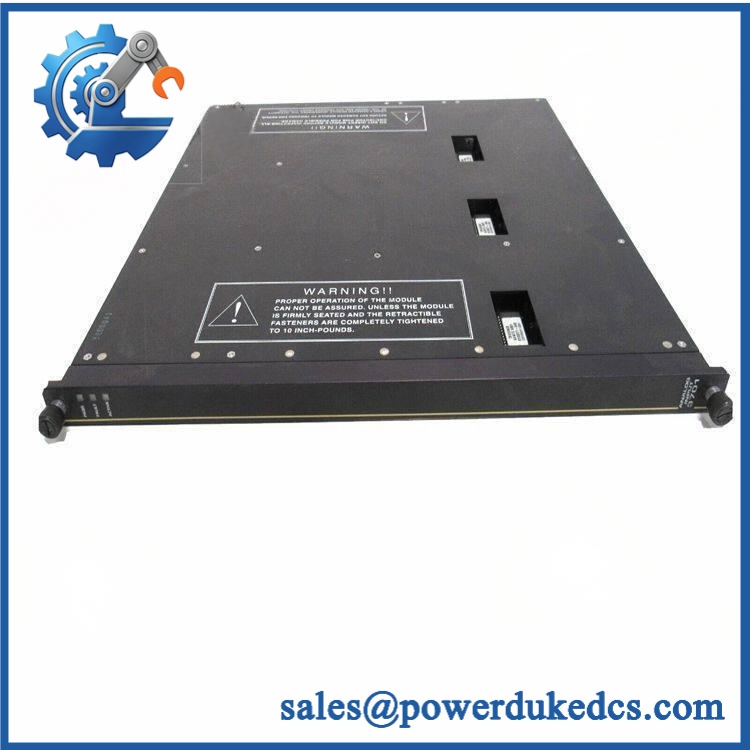
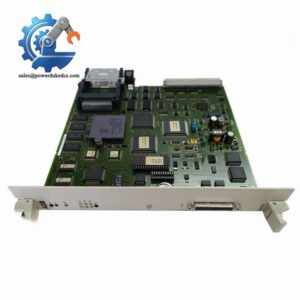
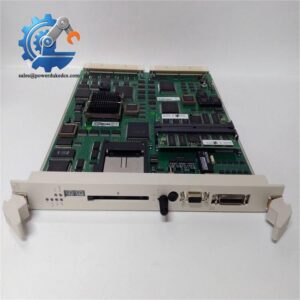
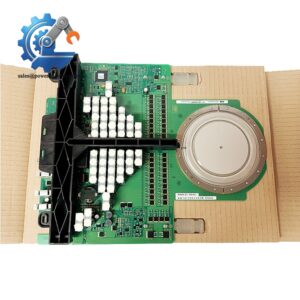
TRICONEX 3708E
Module 4: Application Scenarios & Field Realities
- Around refinery furnaces, heaters, and process vessels, 3708E can acquire multiple thermocouple temperature points while maintaining isolated differential measurement. That isolation becomes useful where individual field circuits sit at different common-mode potentials.
- For high-temperature J, K, T, or E measurement loops, the correct thermocouple type must be configured in the Tricon engineering environment. A functioning input card with the wrong thermocouple characterization can produce a stable but incorrect process temperature.
- Where a thermocouple loop can experience an open circuit, TriStation 1131 allows the 3708E open-input response to be configured as upscale or downscale. That choice must match the process shutdown philosophy; it is not merely a display preference.
- Inside cabinets exposed to temperature gradients, cold-junction compensation deserves particular attention. Tricon documentation states that the specified accuracy accounts for reference-junction compensation but does not account for temperature gradients between the temperature transducers and thermocouple terminations. Keeping the termination panel at a uniform temperature is therefore part of measurement accuracy.
Module 5: Migration, Compatibility & Installation Traps
Replacement Matrix
Replacement classification: Drop-in Replacement when the existing Tricon installation uses 3708E with the same compatible thermocouple termination panel, field wiring, chassis generation, and configuration.
Software compatibility: Configuration verification required. Thermocouple type and open-input behavior are configured parameters. Confirm channel definitions, J/K/T/E characterization, upscale/downscale detection, and existing application scaling before commissioning.
Cross-model replacement: Hardware and configuration verification required. The 3706A is a different thermocouple module with 32 non-isolated differential inputs, whereas the 3708E has 16 isolated differential inputs. Channel count and thermocouple capability therefore do not establish interchangeability.
Field Traps — Watch Out
1. Match the termination panel. The 3708E requires a separate external thermocouple termination panel. Current field-termination documentation identifies 9782-110F as compatible with the 16-channel 3708E architecture. The cable, termination panel, thermocouple extension wiring, and module should be qualified as one measurement chain.
2. Keep the termination temperature uniform. The cold-junction compensation specification is only meaningful when the thermocouple termination hardware remains within the intended thermal environment. Large temperature differences across the termination assembly can introduce errors that will not appear during an electrical resistance simulation of the module itself.
3. Verify the thermocouple alloy before replacement. J, K, T, and E are not interchangeable sensor types. The same millivolt signal level does not imply the same temperature. Confirm the installed thermocouple designation and TriStation configuration before accepting a replacement channel.
4. Do not exceed the common-mode limit. The published maximum common-mode range is ±200 VDC channel-to-channel or channel-to-ground. Exceeding that range can affect both the affected channel and the accuracy of other channels.
5. Treat CJ FAULT separately from a thermocouple-channel fault. The 3708E provides a dedicated CJ FAULT indicator. A cold-junction sensor problem can therefore require a different troubleshooting path from an open thermocouple or input-channel fault.
Module 6: Quality Assurance SOP
Pre-Shipment Inspection Protocol for TRICONEX 3708E
- OEM identity inspection: Verify Triconex/Invensys marking, exact 3708E designation, hardware revision, serial number, deep-yellow identification strip, and all additional assembly markings.
- Variant verification: Confirm the unit is 3708E, not 3706A or another thermocouple-input variant with different channel count or isolation architecture.
- Mechanical inspection: Examine the housing, module guides, locking mechanism, backplane interface, front-panel indicators, connector surfaces, and accessible PCB areas for corrosion, contamination, deformation, cracked components, or unauthorized repair.
- Termination verification: Confirm compatibility with the intended thermocouple external termination panel and inspect the associated cable and connector interfaces. For later Tricon installations, verify the documented 9782-110F arrangement where applicable.
- Power-on self-test: Install the module in a compatible Tricon test chassis and verify PASS, FAULT, ACTIVE, and CJ FAULT indications during startup.
- Channel verification: Exercise all 16 differential isolated inputs individually; one representative thermocouple channel is insufficient to qualify the module.
- Thermocouple simulation: Use calibrated thermocouple simulators or precision millivolt sources representing J, K, T, and E sensor behavior across representative temperature points.
- Cold-junction verification: Check reference-junction compensation using a controlled laboratory setup and verify that the CJ status remains healthy under normal conditions.
- Open-input test: Simulate an open thermocouple circuit and verify the configured upscale or downscale response through the applicable TriStation environment.
- Input-resistance verification: Confirm representative high input resistance behavior against the documented 30 MΩ DC minimum specification.
- Common-mode test: Apply controlled common-mode conditions within the approved laboratory limits and verify stable channel operation without cross-channel degradation.
- Noise-rejection verification: Where suitable test equipment is available, introduce controlled common-mode and normal-mode interference and verify measurement stability against the specified noise-rejection characteristics.
- Accuracy verification: Test representative J, K, T, and E channels at several calibrated temperature points and compare results against the applicable thermocouple-specific accuracy table rather than a generic tolerance.
- Diagnostic verification: Exercise representative input discrepancies and verify that the Tricon diagnostic system responds according to the documented 0.5% of full-scale minimum input-change criterion.
- TMR verification: Where the test environment permits, verify the three internal acquisition paths and confirm correct communication with the Tricon Main Processor architecture.
- Fieldbus/system verification: Confirm stable module operation through the appropriate Tricon I/O communication path and verify no persistent module or channel faults.
- Thermal observation: Operate multiple channels with representative thermocouple signals and monitor the module and termination interface for abnormal temperature rise or measurement drift.
- Final QC record: Record model, hardware revision, serial number, termination panel, test instrument calibration status, all 16 channel results, sensor-type tests, CJ test, open-input behavior, diagnostic results, test date, and inspector approval.
- ESD-controlled packaging: Place the module in an ESD-safe package and protect its backplane and termination connectors, indicator panel, and housing against impact, moisture, contamination, and electrostatic discharge.
Procurement note: The technically supported identity is TRICONEX 3708E — 16-point isolated TMR Thermocouple Input Module. The documented configuration supports J, K, T, and E thermocouples, 16 differential isolated inputs, 50 ms maximum input update, 30 MΩ minimum input resistance, 110 VAC continuous input protection, ±200 VDC maximum common-mode range, 0–60°C reference-junction compensation, and dedicated CJ FAULT indication. Accuracy must be evaluated by thermocouple type and temperature range; the published tables do not support using one generic accuracy value for every installation.



 Start Chat