

Description
- Brand: TRICONEX
- Full Model Number: 3721 / 9771-210
- System/Series Family: Tricon TMR Analog I/O System
- One-Sentence Core Function: 32-point differential analog input module paired with a 16-point user-configurable current-input termination panel
- Top 3 Hardcore Specs: 32 AI points; 0–5 VDC or −5 to +5 VDC input range; 9771-210 uses 250 Ω precision conversion resistors
- Stock Status: New Surplus / Fully Tested Refurbished — verify the complete module/termination-panel assembly before shipment
Module 3: Technical Product Introduction
A Tricon analog channel can be electrically healthy at the field transmitter and still produce the wrong process value if the termination arrangement is mismatched. The TRICONEX 3721 is a 32-point differential, DC-coupled, TMR analog input module supporting 0 to 5 VDC or −5 to +5 VDC measurement ranges. Tricon field-termination documentation identifies 9771-210 as a compatible, user-configurable current-input termination panel for the 3721.
The 9771-210 is a 16-point termination panel, so a complete 32-point 3721 installation requires two termination panels. Its design provides 16 positive power terminals and 16 current-input terminals, with each positive terminal current-limited through a 180 Ω series resistor and each input incorporating a 250 Ω precision resistor for 0–5 VDC current-to-voltage conversion. The panel also supports redundant 24 VDC power sources through diode ORing.
Module 4: Application Scenarios & Field Realities
- For process transmitters requiring voltage-based analog acquisition, the 3721 provides 32 differential measurement points in the Tricon TMR architecture. The field termination arrangement must match the selected 0–5 V or ±5 V application; do not treat every analog termination panel as electrically equivalent.
- When a 4–20 mA transmitter is connected through the 9771-210, the termination panel performs the current-to-voltage interface using its precision resistor network. For a 0–5 V conversion arrangement, the documented precision resistor is 250 Ω. This is why the panel cannot be replaced by a generic terminal board without checking the conversion network.
- During a 32-channel cabinet replacement, remember that the 9771-210 handles only 16 points per panel. Two panels are required for the complete 32-point 3721 interface. Ordering only one panel leaves half of the module’s field channels without the intended termination hardware.
- Where redundant field power is used, the 9771-210 can accept redundant 24 VDC sources through diode ORing. The power-source arrangement should still be checked against the approved cabinet drawing before commissioning.
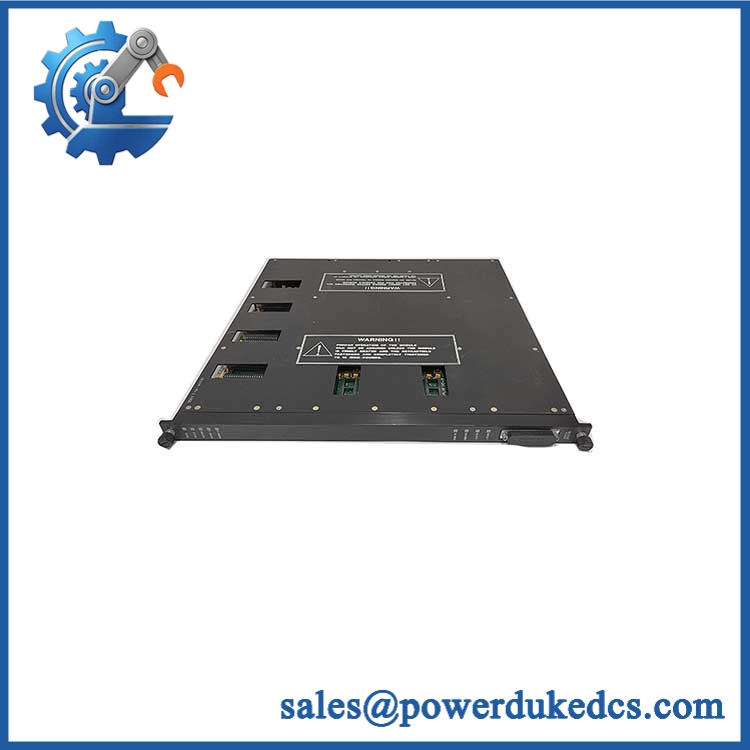
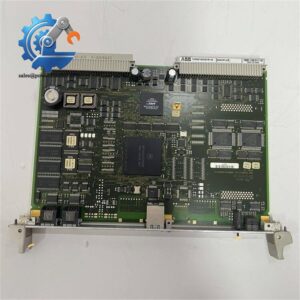
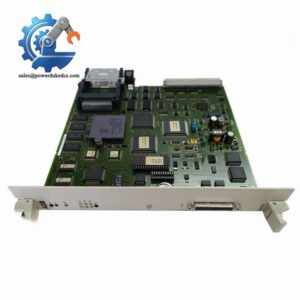
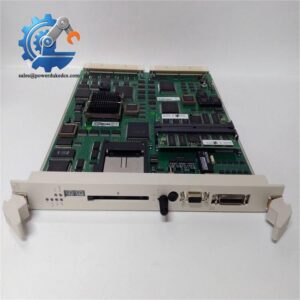
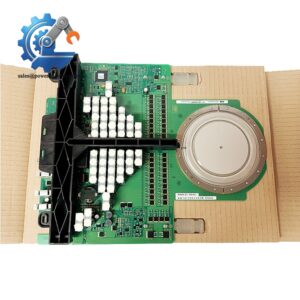
TRICONEX 3721 9771-210
Module 5: Migration, Compatibility & Installation Traps
Replacement Matrix
| Replacement Type | Assessment |
|---|---|
| Drop-in Replacement | Conditional — the 3721 is a like-for-like replacement only when the Tricon I/O architecture, input configuration, termination panels, and cable arrangement match |
| Software Compatible | Conditional — the input range is configured through the Tricon/TriStation environment and must match the existing application |
| Hardware Modification Required | Normally no for an exact 3721 replacement; two compatible 9771-210 panels are required for the full 32-point interface |
⚠️ Field Traps — Watch Out
1. One 9771-210 panel is not enough for a full 3721.
The 9771-210 is a 16-point termination panel, while the 3721 has 32 points. Tricon documentation explicitly states that two termination panels are required for a 32-point analog-input module.
2. Confirm the configured voltage range.
The 3721 supports 0–5 VDC or −5 to +5 VDC, with the input range configured through TriStation. A correct hardware installation with the wrong software range can produce systematic scaling errors rather than an obvious hardware alarm.
3. Do not omit the 9771-210 conversion network.
For current-input applications, the 9771-210 incorporates a 250 Ω precision resistor for the 0–5 V conversion arrangement and 180 Ω series current limiting on each positive terminal. A generic terminal block does not provide those functions.
4. Preserve the 1–16 and 17–32 channel labeling.
Each 9771-210 panel is supplied with two label sets, 1–16 and 17–32, which are used to identify the appropriate half of the 32-point module. Preserve this mapping during cabinet replacement.
Module 6: Quality Assurance SOP
- OEM anti-counterfeit visual inspection — inspect TRICONEX identification, 3721 model marking, PCB labels, connectors, housing, and the 9771-210 termination-panel markings.
- Exact part-number verification — confirm 3721 and 9771-210 separately against the purchase order and physical labels.
- System-family verification — confirm the target installation uses a compatible Tricon TMR I/O architecture and that the 3721 is the required analog-input model.
- Termination-panel count verification — confirm that a complete 32-point installation has the required two 9771-210 panels, unless the approved design specifies another documented compatible termination combination.
- Mechanical inspection — examine the module connector, panel terminal blocks, mounting hardware, cable connectors, labels, and PCB surfaces for bent contacts, corrosion, contamination, cracks, or impact damage.
- Power-on self-test (POST) — energize the 3721 in an approved Tricon test chassis and record PASS, FAULT, and ACTIVE indications, supply behavior, current draw, and abnormal temperature rise.
- 32-channel analog simulation — apply calibrated voltage signals to representative channels and verify correct analog acquisition using the configured 0–5 VDC or ±5 VDC range.
- Full-channel verification — where the test fixture permits, exercise all 32 input points and record applied value, measured value, channel number, and diagnostic result.
- Current-input simulation where applicable — connect a calibrated current source through the 9771-210 and verify the documented current-to-voltage conversion path. For the 0–5 V arrangement, confirm the applicable 250 Ω precision resistor path.
- Termination continuity verification — perform point-to-point checks across both 9771-210 panels and confirm channel numbering, polarity, and field-return paths against the approved wiring diagram.
- Power-source verification — where redundant field supplies are used, verify both 24 VDC sources and confirm correct diode-ORing behavior under controlled test conditions.
- Range and scaling verification — confirm the TriStation configuration corresponds to the actual field signal range, whether 0–5 VDC or −5 to +5 VDC.
- TMR verification — place the tested module into a compatible Tricon test environment and verify triplicated analog acquisition, diagnostics, and stable data transfer to the processor subsystem.
- Communication handshake verification — verify module recognition and I/O data exchange through the complete Tricon architecture. This is a system-level test rather than a standalone Ethernet or serial test.
- Final QC and packaging — record the module and termination-panel part numbers, hardware revisions, 32-channel test results, configured range, termination-panel mapping, photographs, ESD protection, and packaging condition.
Engineering note: The supplied TRICONEX 3721 / 9771-210 combination is technically supported as a Tricon analog-input and termination-panel pairing. The 3721 is a 32-point differential, DC-coupled, TMR analog input module supporting 0–5 VDC or −5 to +5 VDC. The 9771-210 is a 16-point user-configurable current-input termination panel compatible with 3721; for a full 32-point module, two panels are required.



 Start Chat