

Description
- Brand: TRICONEX
- Full Model Number: 7400213-100
- Lifecycle Status: Obsolete / Legacy
- Core Function: Digital Signal Hardware Execution Unit (DSHEU)
- Top 3 Technical Specs: 24 VDC input; 0–24 VDC output; TMR safety-system architecture
- Stock & Condition: New Surplus / Tested Refurbished; Physical stock confirmation required; Emergency dispatch subject to order cutoff
Public technical and supplier references identify 7400213-100 as a Digital Signal Hardware Execution Unit (DSHEU). However, secondary listings conflict on whether it belongs to a Trident extension/baseplate assembly or a Tricon safety-system execution function, so the exact installed platform should be verified before procurement.
Module 3: Obsolescence & Supply Chain Deep Dive
A failed 7400213-100 can create a difficult sourcing problem because it is associated with legacy TRICONEX safety hardware and is no longer supported as a current manufacturer item in some commercial databases. One established industrial parts reference identifies it as a Digital Signal Hardware Execution Unit with 24 VDC input and 0–24 VDC output, while other technical listings associate the same part number with Trident expansion hardware.That discrepancy matters. A buyer approving the part from a generic product title alone risks receiving a component intended for a different hardware position.
From a TCO standpoint, an exact verified replacement can still be far less expensive than redesigning a functioning safety system around another platform. The major savings come from avoiding new safety logic engineering, cabinet changes, application validation, proof-test redevelopment, and a longer shutdown. For a safety-system spare, however, procurement discipline must be higher than for ordinary PLC hardware — the complete part number, installed chassis/baseplate, role in the TMR architecture, electrical interface, and certification status should all be matched before the unit is released to the field.
Module 4: Compatibility & Replacement Matrix
| Purchase Approval Item | Assessment |
|---|---|
| Replacement Classification | Conditional Drop-in Replacement |
| System Family | TRICONEX safety-system hardware; exact platform must be verified |
| Module Type | Digital Signal Hardware Execution Unit (DSHEU) |
| Input Voltage | 24 VDC reported by secondary technical references |
| Output | 0–24 VDC reported by secondary technical references |
| Architecture | TMR / safety-system application reported by secondary sources |
| Software Compatibility | Application and hardware-configuration verification required |
| Hardware Modification | Normally not required only when the installed platform and hardware position match |
| Estimated Physical Changeover | 1–3 hours |
| Commissioning / Validation | Required for I/O, logic, diagnostics, and safety-system verification |
| Engineering Risk | High until the exact hardware role is confirmed |
Field Traps — Watch Out
- Product-identity conflict: Public references do not agree on the exact functional description of 7400213-100. Some identify it as a DSHEU, while another current listing describes it as a Trident baseplate extender. Do not approve a substitution without comparing the physical nameplate and installed chassis position.
- Safety-system configuration: A component that fits mechanically may still be unsuitable for the installed safety configuration. Verify controller generation, chassis/baseplate, firmware/software baseline, TMR arrangement, and applicable certification requirements before energization.
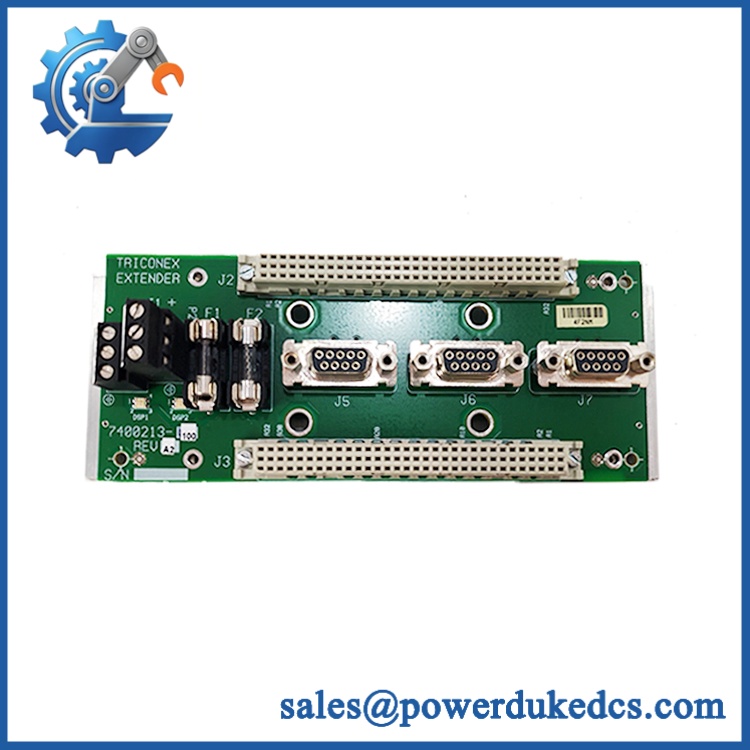
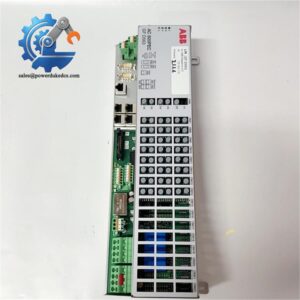
TRICONEX 7400213-100
Module 5: Quality Assurance & Testing SOP
Because the published identity of this part is inconsistent across secondary sources, QA should begin with unusually strict part verification.
- Incoming traceability: Record TRICONEX markings, complete 7400213-100 identification, serial number, revision, and all visible product codes.
- OEM anti-counterfeit visual inspection: Inspect labels, PCB markings, connectors, terminal interfaces, components, solder quality, housing, and evidence of unauthorized repair.
- Hardware-position verification: Compare the supplied unit against the installed chassis/baseplate, connector arrangement, mounting geometry, and application documentation.
- Mechanical inspection: Check all mounting features, connectors, retaining hardware, PCB edges, and enclosure condition.
- Power-on self-test (POST): Apply controlled 24 VDC where appropriate to the confirmed configuration and verify startup behavior and diagnostic indications.
- Supply verification: Measure input voltage, input current, grounding continuity, and abnormal temperature rise.
- Digital signal test: Apply controlled input conditions and verify the corresponding output response using an approved test fixture.
- Output verification: Confirm the reported 0–24 VDC output range where this matches the validated hardware configuration.
- TMR interface test: Where applicable, verify correct interaction with the redundant safety-system architecture.
- Communication / diagnostic test: Confirm expected chassis recognition, health indication, and system diagnostics.
- I/O load testing: Apply representative loads and monitor output stability, current, temperature, and fault behavior.
- Fault simulation: Introduce controlled input and output fault conditions and verify the expected diagnostic response.
- Configuration verification: Compare firmware, application configuration, hardware slot, and controller association against the approved site baseline.
- Extended operation: Run representative operating cycles while monitoring diagnostics, output stability, and intermittent faults.
- Final QC release: Record exact identification, hardware position, electrical measurements, configuration baseline, test results, photographs, and technician approval.
Module 6: Procurement & Lifecycle FAQ
1. Is the TRICONEX 7400213-100 genuinely in stock, and what is the cutoff for emergency shipping?
Public supplier records currently show 7400213-100 being offered as available, including listings marked in stock. Because the part’s published description is inconsistent, emergency procurement should require physical stock confirmation, exact nameplate verification, current photographs, and confirmation of the warehouse dispatch cutoff before PO release.
2. How do you guarantee the condition and authenticity of this obsolete or surplus safety component?
Verification should combine exact part-number identification with physical inspection and controlled electrical testing. Inspect the PCB, connectors, terminal interfaces, revision markings, and chassis fit, then verify the unit under the exact application configuration. For a safety-system component, retain serial-number photographs and a formal test record with the MRO documentation.
3. Are there any firmware compatibility issues I should warn my engineers about before issuing the PO?
Yes. The exact firmware and configuration requirements depend on the installed TRICONEX platform and the confirmed role of 7400213-100. Because public references disagree on its hardware function, engineers should verify the controller generation, chassis/baseplate, firmware level, TMR arrangement, and approved application configuration before the PO is finalized.
4. Can the 7400213-100 replace the installed unit without hardware modification?
Only after the physical and functional identity has been confirmed. A same-model replacement may be a direct hardware change when the chassis position, connector arrangement, electrical interface, and system generation match. Do not treat the part as universally interchangeable across Triconex/Trident assemblies.
5. What warranty and return terms should procurement require?
The PO should specify TRICONEX 7400213-100, exact hardware function, revision, chassis/baseplate application, condition, test status, warranty period, and return procedure. Warranty coverage should address DOA and verified functional failure while excluding damage caused by incorrect power, incompatible chassis installation, wiring faults, ESD, safety-configuration errors, or unauthorized modification.



 Start Chat