

Description
- Brand: TRICONEX
- Full Model Number: AI2361 7400210-020
- Lifecycle Status: Legacy / Lifecycle Status Requires Verification
- Core Function: 16-channel TMR analog input module
- Top 3 Technical Specs: 16 analog input channels; 4–20 mA process-signal acquisition; Tricon TMR safety-control architecture
- Stock & Condition: Physical stock verification required; New Surplus / Tested Refurbished; Emergency dispatch subject to QA release
Module 3: Obsolescence & Supply Chain Deep Dive
A failed TRICONEX AI2361 7400210-020 can remove a high-density block of analog process measurements from a Tricon safety or critical-control system. Current product records consistently identify AI2361 / 7400210-020 as a 16-channel analog input module used in the Tricon platform. The module is associated with TMR signal processing and is intended for analog process inputs such as transmitter signals. Some third-party records describe a broader range of input types, but the published product information is not fully consistent, so the installed channel specification should be verified against the site’s Tricon configuration before procurement.
For an operating Tricon installation, replacing the exact AI2361 can be substantially less expensive than redesigning sixteen analog input loops and migrating the associated safety logic. Existing field transmitters, termination hardware, chassis infrastructure, application configuration, and maintenance procedures can remain in service when the replacement is correctly matched. That reduces rewiring, engineering hours, proof-testing effort, and outage exposure. —The critical procurement issue is not merely the 7400210-020 number; engineers should confirm the exact chassis generation, module revision, input type, channel configuration, and approved safety-system configuration before releasing the PO. Current market records identify physical availability from multiple suppliers, but actual stock and revision must be verified on the unit itself.
Module 4: Compatibility & Replacement Matrix
| Replacement Scenario | Classification | Engineering / Procurement Guidance |
|---|---|---|
Exact AI2361 7400210-020 replacing the same installed module |
Drop-in Replacement — subject to verification | Match complete part number, chassis generation, revision, channel configuration, and field termination |
| Same AI2361 version with compatible Tricon chassis | Hardware Compatible | Verify backplane interface and approved Tricon system configuration |
| Different AI-series module | Engineering Review Required | Confirm channel count, signal type, input characteristics, chassis compatibility, and application configuration |
| Different order number within the Tricon analog-input family | Hardware Modification / Review Required | Do not substitute based only on channel count |
| Migration to a newer safety I/O platform | Hardware Modification | Requires field-wiring changes, configuration work, validation, and proof testing |
Estimated switch cost/time: With a verified spare already staged on-site, plan approximately 2–5 hours for controlled module replacement, channel verification, configuration checks, and functional testing. A newly sourced unit may require 1–5 business days for inspection and expedited transportation. For a safety-related installation, formal proof-test procedures can extend the outage window.
Field Traps — Watch Out
- Input-type mismatch: Available records describe the primarily as a 16-channel analog input module, with 4–20 mA applications commonly cited. Do not assume voltage, RTD, or thermocouple capability unless the installed hardware and approved Tricon documentation confirm it.
- Chassis/version mismatch: Verify the Tricon chassis generation and module interface before substitution. A matching order number without the correct system architecture is not sufficient procurement evidence.
- TMR configuration: Preserve the existing redundant input arrangement and configured diagnostics. Do not change the redundancy architecture simply to accommodate a replacement module.
- Configuration data: Record existing module assignments, channel scaling, alarm parameters, and diagnostic settings before removal.
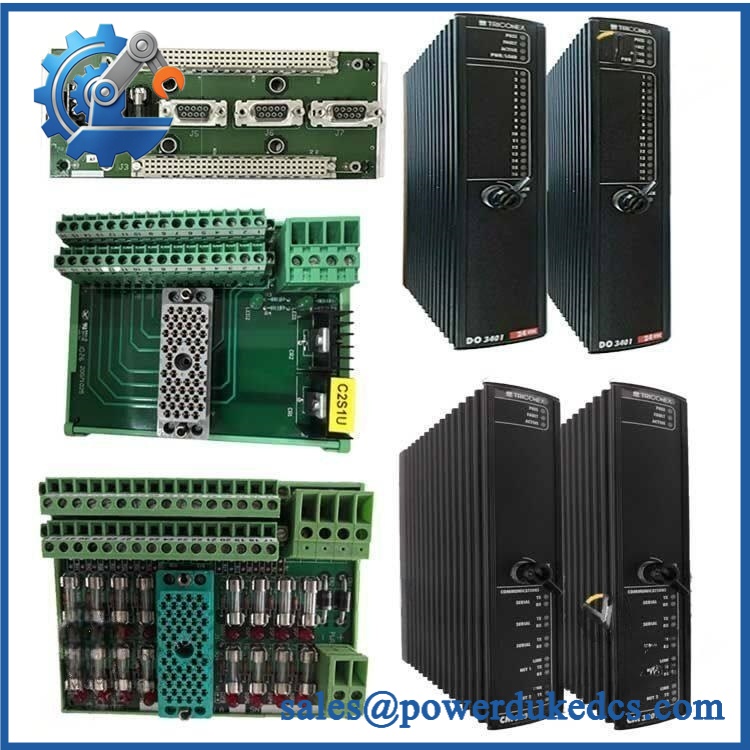
TRICONEX AI2361 7400210-020
Module 5: Quality Assurance & Testing SOP
The should be qualified as a safety-system analog input component. A module that powers up is not automatically a qualified spare.
- Part-number verification: Confirm
,7400210-020, revision, serial/traceability information, and TRICONEX identification. - OEM anti-counterfeit visual inspection: Inspect manufacturer labels, PCB markings, connector construction, terminal interfaces, component placement, and evidence of unauthorized rework.
- Physical condition inspection: Check the housing, PCB, backplane connector, mounting hardware, terminal interfaces, and accessible components for corrosion, contamination, cracking, or thermal damage.
- Connector inspection: Examine the backplane interface for bent, recessed, oxidized, contaminated, or damaged contacts.
- Module-identification verification: Confirm the Tricon system recognizes the installed module as the intended configuration.
- Continuity testing: Verify applicable power, ground, and accessible signal paths before energization.
- Power-on self-test (POST): Install the module in a compatible Tricon test chassis and verify startup, module recognition, and normal health indication.
- Channel testing: Exercise all 16 channels independently using calibrated analog test sources.
- 4–20 mA testing: Where the installed configuration uses current inputs, inject representative 4–20 mA values and verify correct channel acquisition.
- Signal-scaling verification: Compare displayed or reported engineering values with the calibrated input source across multiple points.
- Open-loop testing: Simulate loss of an input signal and verify the configured diagnostic response.
- Over-range/under-range testing: Apply controlled out-of-range inputs where permitted and verify the expected diagnostic behavior.
- TMR-path verification: Confirm the redundant signal-processing paths operate correctly within the approved Tricon test configuration.
- Module-health diagnostics: Check reported module status, channel status, and applicable fault diagnostics.
- I/O load testing: Exercise multiple analog channels simultaneously while monitoring module stability, signal integrity, and temperature.
- Configuration verification: Compare channel assignments, ranges, engineering units, and alarm parameters with the approved site configuration.
- Communication test: Verify correct data exchange between the analog input module and the Tricon processor system.
- Fault simulation: Where the approved test procedure permits, simulate representative module or channel faults and verify diagnostic annunciation.
- Extended observation: Maintain multiple channels under representative input conditions to identify intermittent measurement, communication, or hardware faults.
- Final QC release: Record part number, revision, firmware/configuration information where applicable, 16-channel test results, diagnostic results, photographs, condition grade, test date, and QC authorization.
Current product records identify the as a 16-channel TMR analog input module and associate it with Tricon v10/v11 systems. Because some online descriptions contain conflicting specifications, the actual module label, chassis documentation, and approved site configuration should take precedence over generic supplier descriptions.
Module 6: Procurement & Lifecycle FAQ
Q1. Is the TRICONEX 7400210-020 genuinely in stock, and what is the cutoff for emergency shipping?
Physical inventory should be verified against the exact 7400210-020 marking before the PO is accepted. Current supplier records show the part in active inventory listings, but actual quantity, condition, and revision should be confirmed before committing to an emergency shipment.
Q2. How do you guarantee the condition and authenticity of an obsolete or surplus ?
Require exact part-number and revision verification, OEM visual inspection, connector inspection, controlled power-up, all-16-channel signal testing, diagnostic checks, TMR verification, and a documented QC record. Photographs of the actual module and identification markings should remain with the procurement file.
Q3. Are there firmware or configuration compatibility issues engineers should check before issuing the PO?
Yes. The principal checks are the Tricon system generation, module revision, channel configuration, signal type, engineering-unit scaling, and approved application configuration. Preserve the existing configuration before replacement and confirm that the replacement is recognized correctly by the Tricon system.
Q4. Is 7400210-020 a processor module?
No. Current product records identify it as an analog input module, not a main processor. Some supplier pages use inconsistent terminology, so procurement should use the physical nameplate and approved Tricon documentation as the controlling identification.
Q5. What warranty and return terms should be written into the PO?
Specify warranty duration, DOA coverage, 16-channel input performance, configuration conformity, diagnostic-function coverage, return authorization, inspection period, and serial-number traceability. For refurbished inventory, require the actual channel-test record and define whether failures discovered during commissioning are covered.




 Start Chat