

Description
- Brand: Triconex / Invensys
- Full Model Number: CM2201 7400206-100
- Lifecycle Status: Obsolete / Discontinued by OEM
- Core Function: Communication Module Baseplate for Trident / legacy Tricon architecture
- Top 3 Technical Specs: 24 VDC nominal supply; 3-to-1 redundant processor communication interface; supports up to 2 Communication Modules
- System: Triconex Trident / legacy Tricon safety instrumented system
- Module Type: Communication Module Baseplate
- Processor Interface: Three independent links to Main Processors
- Communication Module Capacity: Up to 2 CM modules
- Network Interfaces Supported by CM Assembly: 10 Mbps Ethernet and 100 Mbps Ethernet; serial communications
- Mounting: Directly above or below the Main Processor baseplate
- Interconnect: Two dedicated MP Interconnect Assemblies
- Power: 19.2–30 VDC operating range reported
- Stock & Condition: Exact stock confirmation required; New Surplus / Tested Refurbished; Emergency shipping subject to cutoff
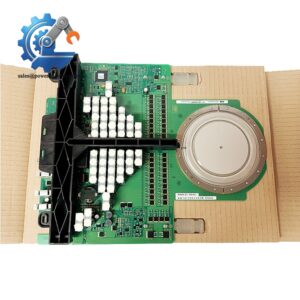
Current industrial references identify CM2201 7400206-100 as a Communication Module Baseplate, providing the physical and electrical interface between Communication Modules and the Main Processor assemblies. The CM baseplate can accommodate up to two communication modules and uses dedicated processor interconnect assemblies.
Module 3: Obsolescence & Supply Chain Deep Dive
When a CM2201 7400206-100 fails, the immediate issue is not ordinary I/O loss; it is the physical communication infrastructure connecting the controller processors to the system’s external communication modules. The baseplate establishes redundant communication paths between the Main Processors and CM hardware, supporting plant-side interfaces such as host computers, DCS/HMI systems, other Tricon nodes, and external networks. Current references identify the part as discontinued / obsolete by the OEM, making exact legacy inventory particularly important for plants maintaining this architecture.
From a TCO standpoint, replacing the exact baseplate can preserve the existing Triconex controller architecture, CM modules, processor interconnects, and installed network infrastructure. A complete SIS migration would introduce engineering validation, application reconfiguration, wiring changes, safety assessment, testing, and extended outage exposure. The replacement is therefore economically attractive when the surrounding Trident/Tricon hardware remains serviceable. (Because current secondary sources disagree on some detailed electrical and physical specifications, the installed rack drawing and original nameplate should control final procurement approval.)
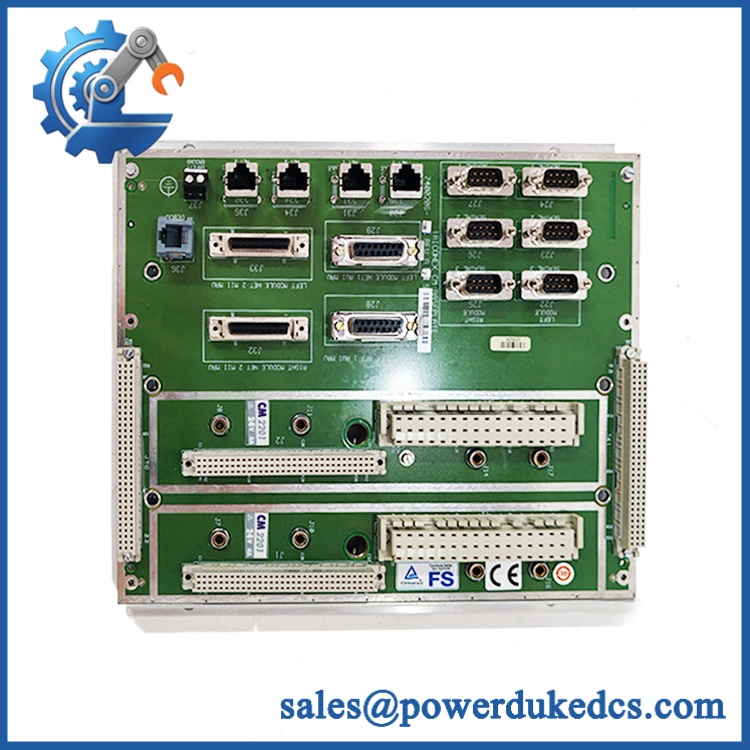
TRICONEX CM2201 7400206-100
Module 4: Compatibility & Replacement Matrix
| Approval Item | Engineering Assessment |
|---|---|
| Exact Part Replacement | Drop-in Replacement when the installed baseplate is CM2201 7400206-100 and the controller architecture matches |
| Software Compatibility | Not normally applicable to the passive baseplate |
| Firmware Flash | Not applicable to the baseplate itself |
| Hardware Modification | Normally none for an exact replacement |
| Nominal Supply | 24 VDC |
| Reported Operating Range | 19.2–30 VDC |
| Processor Links | Three independent MP communication paths |
| CM Capacity | Up to 2 Communication Modules |
| Mounting | Directly above/below Main Processor baseplate |
| Interconnect | 2 dedicated MP Interconnect Assemblies |
| Estimated Physical Swap | 1–3 hours |
| Engineering / Commissioning Allowance | 500–2,000 planning range |
| Post-Replacement Testing | Required for processor links, CM recognition, power distribution, and communications |
The CM2201 is described as a baseplate, not the active communication processor itself. Its correct replacement therefore depends heavily on the associated Main Processor baseplate, interconnect assemblies, and Communication Modules.
⚠️ Field Traps — Watch Out
- Baseplate vs Communication Module Confusion: Do not order 7400206-100 as though it were the active CM processor. Current references identify it as the Communication Module Baseplate, while the actual communication functions are performed by the installed CM module.
- Architecture Match: Verify whether the installation is a Trident or compatible legacy Tricon architecture and confirm the Main Processor baseplate location, interconnect assemblies, and number of installed CMs. A physically similar baseplate may not satisfy the required processor interface.
Module 5: Quality Assurance & Testing SOP
- OEM anti-counterfeit visual inspection — verify Triconex/Invensys identification, CM2201 / 7400206-100 markings, connector arrangement, labels, PCB construction, and traceability.
- Architecture audit — document the installed controller type, Main Processor baseplate, number of Communication Modules, and interconnect assemblies.
- Revision verification — photograph every visible part and revision marking before release.
- Mechanical inspection — inspect mounting points, connector interfaces, board guides, backplane contacts, and interconnect interfaces for damage or deformation.
- PCB condition inspection — check for corrosion, contamination, overheated components, cracked solder joints, damaged traces, and unauthorized repair.
- Electrical pre-screening — verify continuity, grounding, isolation, and power-path integrity before energization.
- Power-on self-test (POST) — install the baseplate with the correct CM and Main Processor hardware and verify normal system startup.
- Processor-link verification — test all three processor communication paths independently and confirm expected data exchange.
- CM recognition test — install each supported Communication Module position and verify correct hardware recognition.
- Power-distribution test — verify stable DC power delivery to the Communication Module assembly under representative loading.
- Serial communications test — where applicable, validate the connected CM’s RS-232/RS-485 communication paths through the assembled system.
- Ethernet communication test — where the installed CM supports it, verify 10 Mbps and 100 Mbps network connectivity and sustained data exchange.
- Redundancy test — simulate loss of one communication path or CM and verify that the remaining architecture maintains the expected communication function.
- Network recovery test — perform controlled link interruption and restoration and verify expected fault logging and communication recovery.
- Configuration-retention test — power-cycle the assembly and confirm correct CM recognition and processor communication after restart.
- Extended energized run — monitor power stability, communication links, diagnostics, connector temperature, and intermittent failures.
- Final QC release — photograph the exact identification and assembly configuration, retain link-by-link test records, use ESD-safe packaging, and preserve traceability.
For a passive baseplate, there is no meaningful standalone firmware test. The acceptance target is the assembled communication architecture, including power, processor paths, CM recognition, network connectivity, and redundancy behavior.
Module 6: Procurement & Lifecycle FAQ
Q1. Is TRICONEX 7400206-100 genuinely in stock, and what is the cutoff for emergency shipping?
Exact stock should be confirmed against 7400206-100, quantity, condition, and destination before PO release. Current public inventory references show both stocked units and limited availability, so emergency dispatch should be based on verified physical inventory and the warehouse cutoff.
Q2. How do you verify the condition and authenticity of an obsolete baseplate?
Require complete part-number verification, OEM marking inspection, connector and backplane examination, electrical continuity/isolation testing, mechanical-fit testing, and an assembled-system communication test with the appropriate Main Processor and CM hardware. The baseplate should remain traceable to its QC record.
Q3. Are there firmware compatibility issues engineers should check before issuing the PO?
Not for the baseplate itself. Firmware and application compatibility apply to the installed Communication Module and Main Processor hardware. Engineers should verify the controller architecture, CM type, processor generation, interconnect arrangement, and installed communication configuration before approving the replacement.
Q4. Can a newer CM2201A replace 7400206-100 directly?
Do not assume a direct drop-in replacement. Current references identify 7400206-100 as an obsolete baseplate and cite newer part numbers as possible alternatives, but the change should be treated as a controlled hardware migration. Verify processor compatibility, CM module compatibility, interconnect assemblies, power requirements, and safety-system validation before substitution.
Q5. What warranty and return terms should procurement require?
Require a written warranty period, DOA criteria, return-authorization procedure, exact part-number traceability, and exclusions for incorrect installation, damaged connectors, electrical overstress, or unauthorized modification. The quotation should explicitly identify 7400206-100 as the Communication Module Baseplate, not the active Communication Module.



 Start Chat