Description
-
Brand: TRICONEX
-
Full Model Number: D28799-005
-
Lifecycle Status: Current production and support status require confirmation with the OEM or an authorized technical source.
-
Core Function: Triconex system component; the exact component classification must be confirmed against the installed-system bill of materials.
-
Top 3 Technical Specs:
-
Component classification: Public catalog descriptions conflict, identifying the part as a digital output module, field-wiring interface, or power-related component.
-
Electrical ratings: Input/output ratings and terminal assignments require model-specific OEM documentation.
-
System compatibility: Chassis, module pairing, and hardware revision must be confirmed before substitution.
-
-
Stock & Condition: Physical stock, condition, traceability, warranty, and dispatch lead time must be confirmed for the offered unit.
Important identification note: Public product listings do not consistently identify D28799-005. Do not use generic digital-output or power-supply specifications to approve this part. Confirm the manufacturer’s identification, assembly description, and intended application before placing an order.
Obsolescence and Supply Chain Deep Dive
For a safety-system spare such as TRICONEX D28799-005, accurate part identification is the first procurement control. Conflicting catalog descriptions create a risk of ordering a component with the wrong electrical role, connector arrangement, or system interface. Begin with the label on the installed component, the equipment bill of materials, and the applicable Triconex hardware documentation. Capture any assembly number, revision code, serial number, and associated module or termination assembly. If these details disagree with a quotation, pause substitution approval until the discrepancy is resolved.
For aging safety instrumented systems, verified spare availability can reduce the risk of extended downtime while preserving the installed control architecture. Total replacement cost should include the component, inspection, compatibility assessment, engineering labor, shutdown coordination, and commissioning. A low-cost unit with uncertain provenance can create higher downstream costs if it fails acceptance checks or proves incompatible. (Supply-chain note: a matching label alone does not establish authenticity, electrical suitability, or functional condition.) For lifecycle planning, identify the installed version, establish a documented replacement basis, and evaluate migration separately if an equivalent component is no longer supported.
Compatibility and Replacement Matrix
|
Evaluation Item |
Preliminary Assessment |
Estimated Planning Allowance |
Field Traps |
|---|---|---|---|
|
Part identification |
Confirm the full model and assembly description against the OEM BOM |
30–60 minutes |
Catalog descriptions conflict for this number |
|
Mechanical fit |
Verify dimensions, connector type, mounting, and rack position |
30–60 minutes |
Similar enclosures do not establish interchangeability |
|
Electrical interface |
Check voltage, current, pinout, grounding, and terminal assignments applicable to the identified component |
1–2 hours |
Incorrect ratings or wiring can damage equipment |
|
Hardware and firmware |
Confirm the host platform, revision requirements, and configuration dependencies |
1–2 hours |
A physical fit does not establish system compatibility |
|
Functional replacement |
Define the acceptance test from the component’s verified role |
1–3 hours |
A generic power-up test cannot validate a safety function |
|
Site commissioning |
Apply approved procedures and test affected system functions |
Site-dependent |
Bypassing safeguards or skipping proof testing can create safety risks |
These are preliminary engineering planning allowances, not OEM service-time estimates. Final compatibility classification remains pending positive identification of D28799-005.
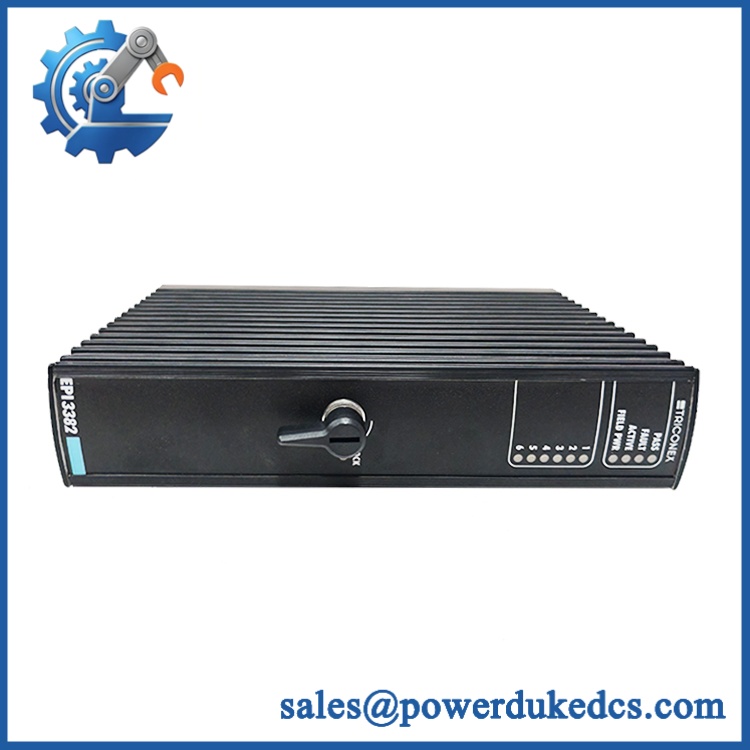
TRICONEX D28799-005
Quality Assurance and Testing SOP
The inspection process must be selected only after the component type has been verified. The following workflow provides a controlled incoming-inspection baseline without assuming unverified specifications or functions.
Incoming inspection
-
Record the complete part number, assembly designation, revision, serial number, and visible manufacturer markings.
-
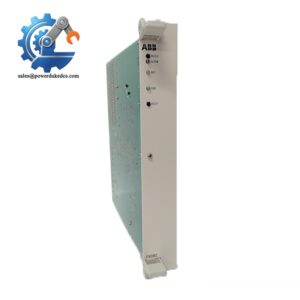
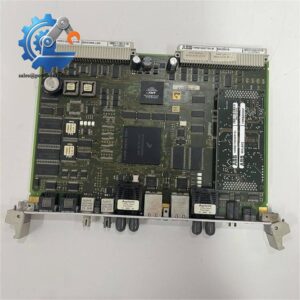
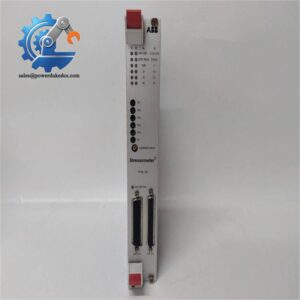
Photograph the label, connectors, terminal interfaces, mounting features, and packaging.
-
Inspect for corrosion, cracks, impact damage, contamination, missing hardware, and evidence of unauthorized repair.
-
Compare the received item with the approved BOM and the supplier’s documented condition statement.
-
Record discrepancies before accepting the component into safety-system spare inventory.
Technical verification
-
Retrieve the applicable OEM installation manual, wiring diagram, and hardware compatibility documentation.
-
Confirm the component’s actual role before selecting electrical test procedures.
-
Where applicable, use an approved test fixture and calibrated instruments to check power requirements, interface signals, communications, or I/O functions.
-
Define acceptance limits from the OEM documentation. Do not substitute generic ratings from unrelated modules.
-
For safety-related applications, perform the required diagnostics and functional validation under approved plant procedures. Keep bypasses, simulated signals, and test configurations under formal control.
Release and traceability
-
Maintain an incoming-inspection record, test results, photographs, and revision details.
-
Separate units with unresolved identification or test discrepancies from approved stock.
-
Do not describe a unit as tested, original, or ready for installation unless supporting evidence exists.
-
Complete site commissioning and any required proof testing before returning affected safety functions to service.
Procurement and Lifecycle FAQ
How can I confirm the correct TRICONEX D28799-005?
Provide a clear photograph of the installed unit’s label and connectors, along with the host-system model and the associated BOM entry. These details help establish the correct component classification and revision.
Is D28799-005 a digital output module or a power-related component?
Available catalog descriptions are inconsistent. The component’s exact function should be established from OEM documentation and the installed equipment records rather than inferred from an unverified listing.
What should I request before purchasing a replacement?
Request clear product photographs, exact part-number confirmation, hardware revision, condition disclosure, traceability documentation where available, warranty terms, and the applicable return process. Obtain written confirmation of compatibility before approving substitution.
Can a replacement be installed without shutting down the system?
Do not assume hot-swapping is permitted. The procedure depends on the verified component type, chassis design, system revision, and approved maintenance documentation. Follow the site’s management-of-change and safety procedures.
What information is needed for an urgent quotation?
Provide the required quantity, delivery destination, complete part number, installed-system model, label photographs, and required delivery date. Ask the supplier to confirm physical availability and dispatch timing in writing. For a safety-critical installation, resolve component identity before committing to a substitute.