

Description
- Brand: TRICONEX
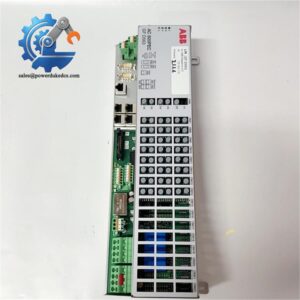
- Full Model Number: DI3361
- Lifecycle Status: Legacy / Obsolescence-risk
- Core Function: Trident Model 3361 Analog Input/Digital Input module
- Top 3 Technical Specs: 16 DI points + 16 AI points | 24 VDC digital inputs | 4–20 mA analog inputs
- Stock & Condition: Physical stock confirmation required | New Surplus / Tested Refurbished by lot | Emergency dispatch subject to inventory and carrier cutoff
Module 3: Obsolescence & Supply Chain Deep Dive
A failed DI3361 can remove 32 configured signal points from a Trident safety system at once, making an exact replacement important when the installed application combines discrete and analog process signals. The authoritative Trident product documentation identifies Model 3361 as an Analog Input/Digital Input module with 32 commoned points: 16 DI points at 1–16 and 16 AI points at 17–32. Its analog channels accept 4–20 mA DC, while the digital inputs use a nominal 24 VDC signal and are diagnostically monitored.
For an existing Trident installation, replacing the correct 3361 module can preserve the installed baseplate, field termination, application configuration, and safety logic without forcing a wider I/O redesign. The module supports ongoing diagnostics, mechanically keyed installation, and online hot-spare replacement in the documented Trident architecture. The TCO case is therefore based on avoiding field rewiring, loop checks, logic revalidation, proof testing, and extended SIS downtime. (For legacy Trident assets, verified spare inventory can be particularly valuable when the shutdown window is fixed.)
Module 4: Compatibility & Replacement Matrix
| Purchase Review Item | Engineering Guidance |
|---|---|
| Replacement Classification | Drop-in Replacement — conditional |
| Hardware Modification | None expected for a matching Model 3361 installation |
| Primary System | TRICONEX Trident |
| Module Type | Model 3361 Analog Input/Digital Input |
| Total Points | 32 commoned points |
| Digital Inputs | 16 points, channels 1–16 |
| Analog Inputs | 16 points, channels 17–32 |
| DI Nominal Voltage | 24 VDC |
| AI Signal | 4–20 mA DC |
| Baseplate | Model 2361 AI/DI baseplate |
| Typical Switch Time | ~2–5 labor hours plus loop verification |
| Typical Engineering Cost | Approximately 400–1,500 excluding SIS outage and proof testing |
| Recommended Migration Path | Record slot/baseplate → back up configuration → document 32 field points → replace → verify AI/DI channels → validate diagnostics and safety logic |
Trident documentation states that the 3361 AI/DI module is compatible with the Model 2361 AI/DI baseplate and the AI/DI external-termination baseplate. It also specifies channel organization as 16 digital inputs followed by 16 analog inputs.
Field Traps — Watch Out
- Wrong module family: Do not confuse the 3361 mixed AI/DI module with the Trident 3301 Digital Input module, which is a separate 32-point DI product. The Trident configuration software lists 3301 as Digital Input and 3361 as Analog Input/Digital Input.
- Point assignment error: Preserve the 1–16 DI / 17–32 AI channel mapping. The digital and analog sections have different electrical characteristics, thresholds, and diagnostics.
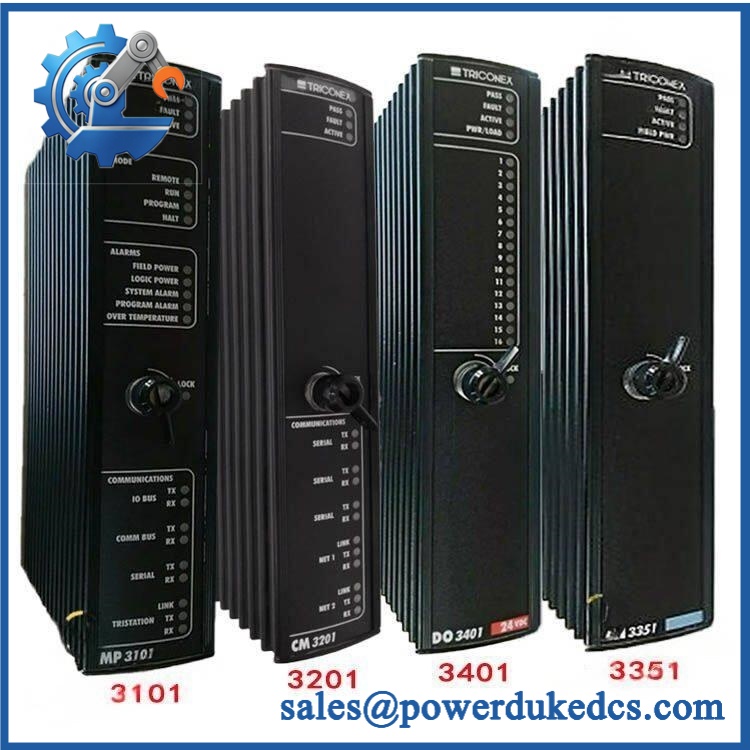
TRICONEX DI3361
Module 5: Quality Assurance & Testing SOP
A strict pre-shipment inspection for TRICONEX DI3361 / Model 3361 should include:
- Identity verification: Confirm the exact module designation, Model 3361 identification, serial number, labels, keying arrangement, and hardware revision.
- OEM anti-counterfeit visual inspection: Examine module markings, PCB identifiers, connectors, terminal interfaces, component placement, solder quality, and evidence of unauthorized modification.
- Mechanical inspection: Check housing, card edge, keying features, connectors, mounting surfaces, and PCB condition for cracks, corrosion, contamination, or bent contacts.
- Baseplate compatibility check: Verify the module against the installed 2361 AI/DI baseplate or approved external-termination arrangement.
- Power-on self-test (POST): Install the module in an approved Trident test system and verify normal startup and fault indications.
- DI Channel 1–16 Testing: Apply controlled digital inputs and verify correct ON/OFF state recognition on every digital channel.
- DI threshold test: Verify the documented transition regions, including 0–5 VDC OFF and 15–30 VDC ON conditions.
- DI response test: Confirm input response time and reliable state transitions under controlled switching conditions.
- AI Channel 17–32 Testing: Apply calibrated 4–20 mA inputs independently across all 16 analog channels.
- Analog accuracy test: Compare reported values against calibrated current sources at multiple test points.
- Open/abnormal-input simulation: Simulate approved field faults and verify the expected diagnostic response.
- Force-to-value diagnostic test: Exercise the documented FVD function and verify diagnostic response without compromising the test system.
- TMR data-path test: Confirm that the three Main Processors receive and vote the channel data correctly in the configured Trident architecture.
- Fault indication test: Introduce controlled channel faults and verify the module Fault indication and system alarm behavior.
- I/O load testing: Exercise representative signal circuits under controlled conditions while monitoring current, voltage, temperature, and stability.
- Hot-spare verification: Where the test rack supports it, verify correct online replacement behavior and module recognition.
- Extended run test: Maintain representative analog and digital inputs across the module while monitoring for drift, intermittent faults, diagnostic changes, or communication errors.
- Final QC: Record serial number, hardware revision, all-channel test results, FVD results, fault diagnostics, baseplate configuration, condition grade, photographs, and packaging approval.
The published Trident documentation specifically states that Model 3361 provides ongoing channel diagnostics, supports hot-spare replacement, and is mechanically keyed to prevent installation in an incorrect configured baseplate.
Module 6: Procurement & Lifecycle FAQ
Is TRICONEX DI3361 genuinely in stock, and what is the cutoff for emergency shipping?
Physical inventory should be confirmed against the exact DI3361 / Model 3361 identification before PO release. Emergency dispatch depends on verified stock, payment clearance, export documentation, and the carrier’s daily pickup cutoff.
How do you verify the condition and authenticity of this legacy Trident module?
Require complete module identification and serial verification, OEM marking inspection, PCB and connector examination, power-up diagnostics, all 16 DI tests, all 16 AI tests, FVD diagnostics, fault simulation, TMR data-path verification, and documented final QC.
What exactly is the DI3361 configuration?
The Trident Model 3361 is a mixed Analog Input/Digital Input module with 32 commoned points: 16 digital inputs on points 1–16 and 16 analog inputs on points 17–32. The analog section uses 4–20 mA DC signals; the digital section is based on 24 VDC operation.
Can I replace with a 3301 digital input module?
No. The 3301 is a dedicated 32-point digital input module, whereas 3361 combines 16 DI and 16 AI points. Substituting 3301 would eliminate the 16 analog channels and change the application configuration.
What warranty and return terms should procurement require?
The quotation should specify the exact / Model 3361 identification, condition grade, serial traceability, 32-point functional test scope, warranty period, DOA coverage, and return authorization procedure. For a safety-system I/O module, the acceptance record should retain channel-by-channel AI/DI and diagnostic test results.



 Start Chat