

Description
- Brand: GE / GE Fanuc / Abaco Systems
- Full Model Number: V7768-312001 350-9301007768-312001-A0
- System/Series Family: VMEbus 6U Single Board Computer
- One-Sentence Core Function: High-performance VME single-board computer providing host processing and communication functions for legacy real-time control and instrumentation platforms
- Top 3 Hardcore Specs: Intel Core 2 Duo processor up to 2.16 GHz; 2 GB DDR2 SDRAM; dual Gigabit Ethernet with PMC expansion capability
- Stock Status: New surplus / fully tested refurbished, subject to exact hardware revision
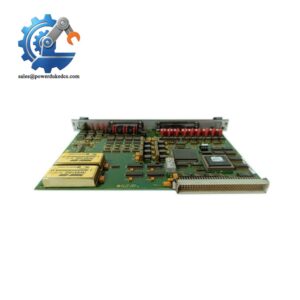
The V7768-312001 is identified in current technical listings as a GE / GE Fanuc / Abaco 6U VMEbus single-board computer, with the 350-9301007768-312001-A0 identifier associated with the board. Published technical data identifies an Intel Core 2 Duo processor, 2 GB DDR2 SDRAM, dual Gigabit Ethernet, four USB 2.0 ports, two SATA interfaces, and a PCI-X PMC expansion site.
Module 3: Commercial-Technical Deep Dive
A failed VME processor board can halt an entire legacy control platform even when the field I/O and application hardware remain serviceable. The GE V7768-312001 350-9301007768-312001-A0 is a 6U VME single-board computer intended to provide the central processing and communications layer within VME-based systems. Its Intel Core 2 Duo processor, local memory, Ethernet interfaces, storage interfaces, USB connectivity, and PMC expansion slot make it suitable for systems that still depend on the VME chassis architecture rather than a modern PCIe-based replacement.
From a maintenance perspective, the key benefit is preserving the installed chassis and software environment. The published configuration provides up to 2.16 GHz CPU performance and 2 GB DDR2 SDRAM, along with two Gigabit Ethernet ports, four USB 2.0 ports, two SATA interfaces, and one PCI-X PMC expansion site. Those interfaces matter during migration because replacing the SBC with a newer computer can introduce driver, operating-system, storage, and I/O-card compatibility problems. (The exact processor speed and installed memory should still be verified against the board label and configuration before shipment.)
Module 4: Compatibility & Installation Traps
Migration/Compatibility
- Replacement type: 6U VMEbus Single Board Computer
- Board Model: V7768-312001
- Manufacturer Part Number: 350-9301007768-312001-A0
- Processor Architecture: Intel Core 2 Duo
- Firmware flash: May be required depending on BIOS, board revision, and installed operating environment.
- Logic rewrite: Not normally required when replacing the same SBC revision and preserving the existing application environment.
- Drop-in status: Potentially direct within a compatible 6U VME chassis, but chassis backplane, operating system, boot media, PMC hardware, and application software must all be checked.
- Expansion: PCI-X PMC site for compatible mezzanine hardware.
⚠️ Field Traps (Watch Out)
1. VME form factor alone does not guarantee compatibility.
The board must match the chassis slot requirements, backplane connections, bus configuration, cooling arrangement, PMC card population, and software image. A mechanically compatible 6U VME CPU can still fail to boot correctly when its BIOS or storage configuration differs from the installed system.
2. Preserve the boot environment before replacement.
The operating system, application image, network settings, and storage media can be just as important as the CPU board itself. Record BIOS settings, boot-device order, IP configuration, and installed storage before removing the original SBC.
3. Check PMC expansion hardware.
The V7768-312001 provides a PCI-X PMC expansion site. Any installed PMC daughterboard must be verified for electrical, mechanical, driver, and operating-system compatibility with the replacement CPU.
4. Cooling is not optional.
The V7768 is a relatively high-performance CPU board for its generation. Verify chassis airflow, fan operation, heatsink condition, and card spacing before commissioning a replacement. A board that boots normally at room temperature can still become unstable inside a poorly ventilated VME enclosure.
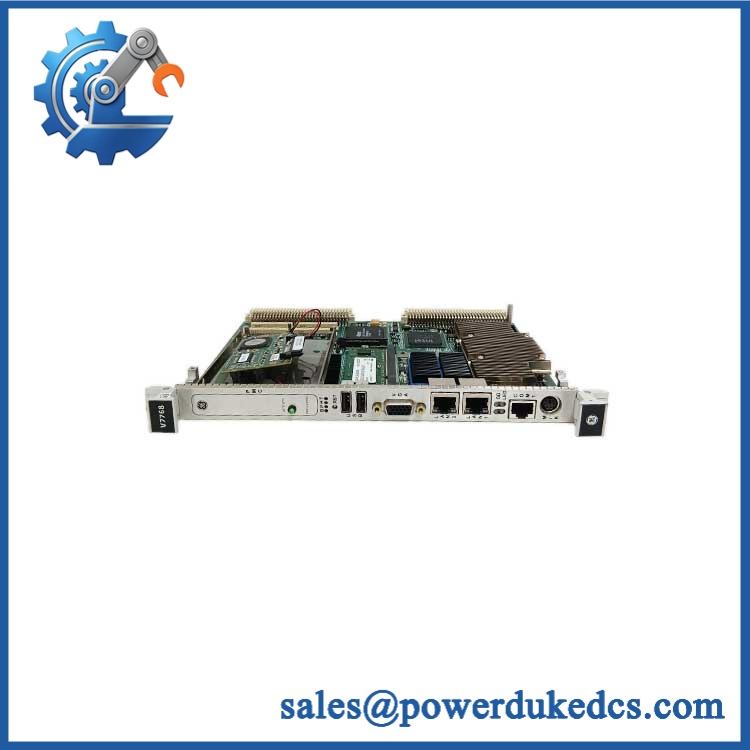
GE V7768-312001 350-9301007768-312001-A0
Module 5: Quality Assurance SOP
Each GE V7768-312001 350-9301007768-312001-A0 unit should pass a documented pre-shipment inspection sequence:
- OEM anti-counterfeit visual inspection: Verify GE / GE Fanuc / Abaco markings, identification, 350-9301007768-312001-A0 number, PCB revision, connector layout, and manufacturing labels.
- Part-number verification: Match the complete board number against the purchase order and installed system BOM where available.
- Processor inspection: Verify the installed CPU family and inspect the heatsink, thermal interface, fan area, and processor-related components for damage or overheating.
- Memory inspection: Confirm the installed RAM configuration where accessible and check the memory sockets or soldered devices for physical damage.
- Connector inspection: Examine VME backplane connectors, Ethernet ports, USB ports, SATA connectors, PMC interface, and any auxiliary headers for bent contacts, contamination, or mechanical damage.
- Power-on self-test (POST): Boot the board in an appropriate VME test chassis and verify BIOS/POST completion, memory detection, processor identification, and absence of persistent hardware errors.
- Storage verification: Where the test configuration permits, verify SATA interface operation and successful boot from the approved system storage device.
- Communication handshake verification: Test both Gigabit Ethernet interfaces for link establishment and controlled network communication.
- PMC verification: Where a compatible PMC test module is available, verify PCI-X PMC initialization and operating-system recognition.
- USB verification: Exercise representative USB 2.0 ports and confirm device enumeration.
- Final QC: Photograph the identification label and revision, record POST and interface-test results, protect the board with ESD-safe packaging, and secure the VME connectors against transit damage.
Module 6: CRO-Driven Buyer FAQ
1. is GE 350-9301007768-312001-A0?
It is a 6U VMEbus single-board computer associated with GE / GE Fanuc / Abaco Systems. Current technical references identify the board as a high-performance VME SBC with an Intel Core 2 Duo processor, local DDR2 memory, Ethernet, USB, SATA, and PMC expansion interfaces.
2. What processor and memoes the use?
Published technical data identifies an Intel Core 2 Duo processor up to 2.16 GHz and 2 GB DDR2 SDRAM. The actual installed processor and memory should be verified from the physical board configuration before shipment.
an the be hot-swapped?
Do not assume hot-swap capability. Standard VME systems require the applicable chassis and system procedure to determine whether live insertion is supported. For maintenance replacement, a controlled power-down is the conservative procedure unless the installed VME architecture explicitly supports and authorizes live replacement.
4. What interfaces are available?
The published configuration includes dual Gigabit Ethernet, four USB 2.0 ports, two SATA interfaces, and a PCI-X PMC expansion site. These interfaces should be checked carefully when replacing an installed SBC because peripheral drivers and application software may depend on the original hardware configuration.
5. What warranty and technical support are provided?
Warranty duration should be stated on the quotation for the exact inventory condition supplied. Technical support should cover part-number verification, hardware-revision review, POST and interface-test documentation, VME chassis compatibility, and replacement guidance within the documented system architecture. Operating-system migration, application recovery, custom PMC integration, and site commissioning remain the responsibility of qualified system personnel.



 Start Chat


