

Description
- Brand: ABB
- Full Model Number: DSTS104 / 3BSE007285R1
- System/Series Family: Advant Controller 160 / Advant OCS
- One-Sentence Core Function: Trigger pulse amplifier card for conditioning and amplifying control pulses within ABB Advant process-control hardware
- Top 3 Hardcore Specs: 24 VDC rated voltage; Trigger pulse amplifier architecture; Advant Controller 160 platform
- Card Type: Trigger Pulse Amplifier Card
- ABB Catalog Description: DSTS 104 Trigger Pulse Amplifier Card
- Rated Voltage: 24 VDC
- Product Lifecycle: Phase-Out
- Reported Dimensions: Approximately 5.0 × 6.8 × 1.3 in
- Reported Weight: Approximately 0.2 kg
- Stock Status: New Surplus / Fully Tested Refurbished subject to availability
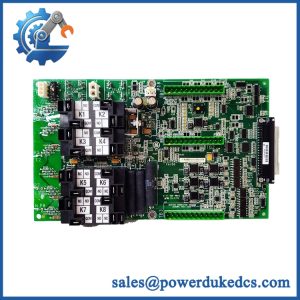
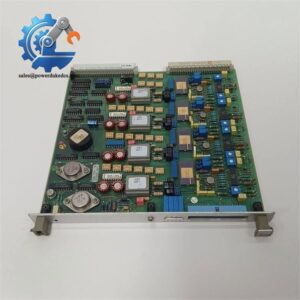
ABB DSTS104, order number 3BSE007285R1, is identified as a DSTS 104 Trigger Pulse Amplifier Card for the Advant Controller 160 family, with a rated voltage of 24 VDC. ABB-oriented product records also associate the card with the Advant OCS platform.
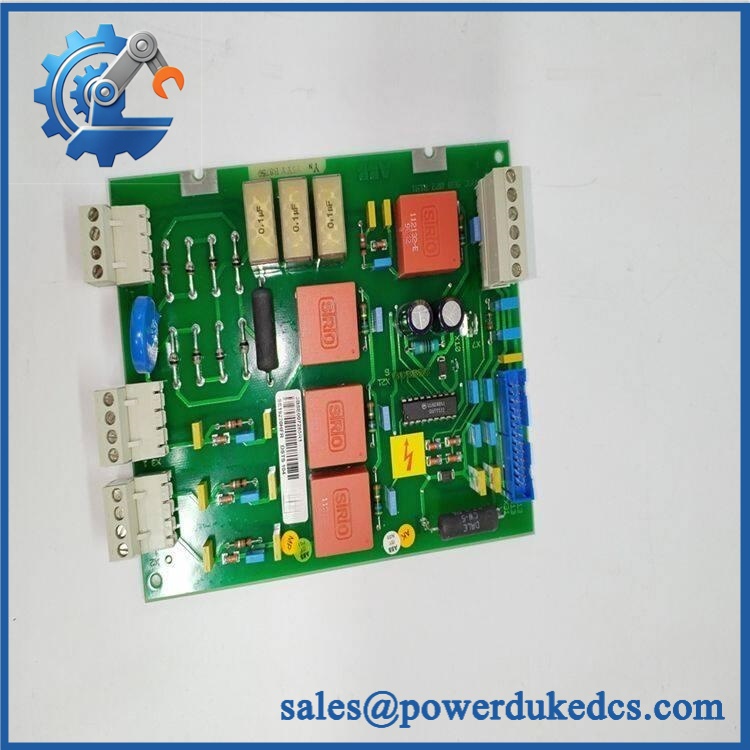
ABB DSTS104 3BSE007285R1
Module 3: Commercial-Technical Deep Dive
A failed trigger interface can interrupt a control path even when the higher-level Advant controller remains operational. The ABB DSTS104 3BSE007285R1 is identified as a trigger pulse amplifier card within the Advant Controller 160 / Advant OCS family. Its job is to condition and amplify trigger-pulse signals so that the downstream switching or power-control circuitry receives the intended control signal. ABB catalog-oriented records specifically classify the unit as a DSTS 104 Trigger Pulse Amplifier Card, with a 24 VDC rated voltage.
The most useful procurement fact is the application identity rather than unsupported electrical detail. Available sources disagree on several secondary specifications, with one listing incorrectly presenting the part as an inverter or generic digital I/O module. Those descriptions are not consistent with the more specific ABB-oriented catalog wording, which identifies 3BSE007285R1 as DSTS104, Trigger Pulse Amplifier Card. Therefore, connector pinout, pulse amplitude, output current, frequency range, and detailed protection characteristics should be verified against the installed Advant Controller 160 documentation before engineering substitution. The card is also reported as a phase-out product, increasing the importance of exact part-number and revision matching.
Module 4: Compatibility & Installation Traps
Migration/Compatibility
- System: ABB Advant Controller 160 / Advant OCS
- ABB Type Designation: DSTS104
- Order Number: 3BSE007285R1
- Catalog Function: Trigger Pulse Amplifier Card
- Rated Voltage: 24 VDC
- Lifecycle: Phase-Out
- Replacement Type: Prefer exact DSTS104 / 3BSE007285R1 matching
- Control Role: Trigger-pulse conditioning/amplification interface
- Logic Rewrite: Normally not expected for a like-for-like hardware replacement
- Application Check: Confirm the installed controller hardware, trigger source, receiving circuit, and connector arrangement before installation
- Electrical Data: Verify pulse-level and output characteristics from the applicable ABB technical documentation; secondary listings contain conflicting specifications.
⚠️ Field Traps (Watch Out)
1. Do not use generic online specifications as design limits.
Some listings describe as an inverter or digital I/O module and attach values such as current ratings, IP67 protection, or operating temperatures without a reliable ABB source. Those specifications should not be used for engineering decisions. The most consistently supported identification is 24 VDC Trigger Pulse Amplifier Card, 3BSE007285R1.
2. Verify the trigger interface before energizing the replacement.
A pulse-amplifier board depends on the electrical characteristics of both its trigger source and receiving circuit. Confirm the original wiring, connector positions, polarity, pulse timing, and downstream device before applying 24 VDC.
3. Do not confuse the card with a general-purpose PLC output module.
Its trigger-amplification role is tied to the Advant control architecture. A physically similar ABB PCB from another controller family cannot be considered interchangeable simply because it also operates from 24 VDC.
Module 5: Quality Assurance SOP
Each available ABB 3BSE007285R1 should pass a controlled inspection and functional-verification sequence before shipment:
- OEM anti-counterfeit visual inspection: Verify ABB markings, complete 3BSE007285R1 order number, designation, board artwork, connector layout, component population, and manufacturing identifiers.
- Part-number verification: Confirm the physical assembly is / 3BSE007285R1 and record all additional revision markings.
- PCB condition inspection: Check for corrosion, contamination, cracked components, damaged connectors, thermal discoloration, lifted components, and evidence of previous repair.
- Connector inspection: Verify connector housings, pins, locking mechanisms, and solder joints for mechanical damage.
- Component inspection: Examine pulse-conditioning components, transformers or magnetic components where fitted, capacitors, resistors, semiconductor devices, and protection components.
- Power-rail precheck: Perform controlled resistance and continuity measurements before applying the 24 VDC supply.
- Power-on self-test (POST): Install the card in an approved Advant Controller 160 test arrangement and verify expected initialization behavior.
- Trigger-input simulation: Apply a controlled test pulse using an isolated laboratory pulse generator.
- Pulse amplification verification: Measure the conditioned output against the approved ABB test specification rather than relying on a simple continuity check.
- Polarity verification: Confirm trigger input and output polarity under controlled conditions.
- Timing verification: Where documented test limits are available, measure pulse width, repetition behavior, and propagation delay.
- Communication/handshake verification: Where the card participates in a monitored controller architecture, verify the host-side recognition and corresponding trigger response.
- Thermal observation: Monitor the card during repeated trigger operation and check for abnormal component heating.
- Final QC record: Document catalog number, designation, revision, supply voltage, pulse-test results, trace information where available, and technician sign-off.
- ESD-safe packaging: Package the card in ESD-protective material with mechanical protection around connectors and exposed components.
For this legacy card, the functional test should focus on the actual trigger waveform, not merely power-up status. A board can consume the expected 24 VDC and still fail to produce the required pulse response. The outgoing test report should therefore record the applicable measured input/output waveform parameters whenever the approved test specification is available.
Module 6: CRO-Driven Buyer FAQ
What is ABB 3BSE007285R1 used for?
ABB , order number 3BSE007285R1, is identified as a Trigger Pulse Amplifier Card for the ABB Advant Controller 160 / Advant OCS family. Its rated voltage is 24 VDC.
Is an inverter module?
No. Some secondary product listings incorrectly or inconsistently describe 3BSE007285R1 as an inverter or digital I/O module. The more specific ABB-oriented catalog identification is DSTS 104 Trigger Pulse Amplifier Card, which should be used for procurement and application matching.
Is ABB 3BSE007285R1 obsolete?
The part is reported as phase-out within the Advant Controller 160 product family. That makes exact identification important for installed-system maintenance, particularly where the existing control architecture depends on the original trigger interface.
Can be replaced while the controller is powered?
Do not assume live replacement. The correct procedure depends on the Advant Controller 160 installation and plant maintenance rules. Isolate the applicable 24 VDC supply and downstream energy sources before removing the card unless the approved ABB procedure specifically permits a controlled live-replacement operation.
What should I verify before ordering ?
Confirm / 3BSE007285R1, the Advant Controller 160 application, rated 24 VDC supply, connector arrangement, trigger-source wiring, downstream receiving device, and board revision. Because secondary sources provide conflicting electrical specifications, use the installed system documentation to verify pulse amplitude, timing, and output characteristics before commissioning.
What warranty and technical support should I expect?
Warranty duration should be stated for the exact unit condition and test status on the quotation. Technical support should cover part-number verification, Advant Controller compatibility, connector identification, trigger-interface review, installation guidance, and documented waveform testing. Control-system engineering or application-specific pulse tuning should be treated separately unless explicitly included.


 Start Chat