

Description
- Brand: GE / General Electric
- Full Model Number: TB43225AF14
- System/Series Family: GE Tri-Break TB43
- Core Function: Fused molded-case circuit breaker for industrial power distribution and branch protection
- Top 3 Hardcore Specs: 225 A trip rating; 600 VAC; 200 kA AIC at 480 VAC
- Poles: 3
- Trip Function: Long-Time + Instantaneous (LI)
- Protection: Thermal-Magnetic
- Connection: Bolt-On
- Current-Limiting Design: TB4 current limiter configuration
- Lugs: Not included as standard
- Stock Status: New Surplus / Re-Certified — verify exact configuration, limiter arrangement, and condition before shipment
GE documentation identifies TB43225AF14 as a TB43 Tri-Break molded-case circuit breaker, rated 225 A, 600 V, with 200 kA interrupting capacity at 480 V and 3 poles. The catalog also identifies the LI trip functions and TB4 current-limiter configuration.
Module 3: Commercial-Technical Deep Dive
When a high-current industrial feeder needs fault protection without replacing the complete switchgear assembly, the GE TB43225AF14 provides a specific molded-case solution. It belongs to GE’s Tri-Break TB43 family and is configured as a 3-pole, 225 A, 600 VAC breaker with thermal-magnetic long-time and instantaneous protection. The published short-circuit rating reaches 200 kA at 480 VAC, making the breaker appropriate for high-fault-duty distribution applications where ordinary low-interrupting-capacity breakers would not be adequate. GE’s catalog also shows the TB43225AF14 with the TB4 current-limiter configuration.
The hard ROI is protection coordination and replacement speed. The breaker combines the thermal and instantaneous trip functions in one molded-case package, while the current-limiting arrangement helps constrain fault energy within the applicable system design. GE’s historical catalog confirms TB43225AF14 as the 225 A TB43 configuration and lists compatible current-limiter and lug options separately. —Do not treat “600 V” as the usable fault rating under every installation condition; available interrupting capacity depends on the system voltage and the specific breaker/current-limiter configuration.
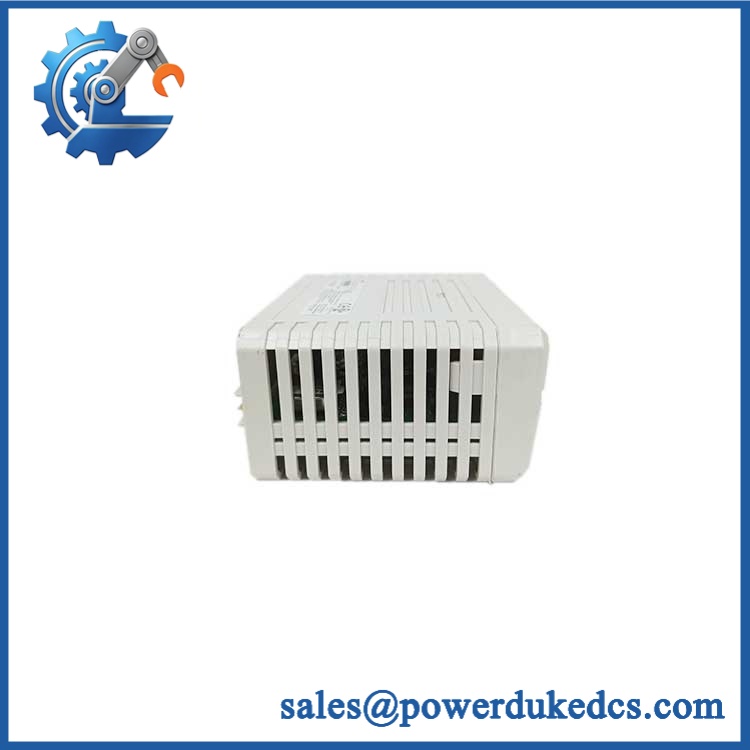
GE TB43225AF14
Module 4: Compatibility & Installation Traps
Migration/Compatibility
For an existing panel or switchgear lineup specified for TB43225AF14, the appropriate replacement strategy is a like-for-like TB43 breaker exchange, provided the frame, pole count, trip configuration, current-limiter arrangement, and termination hardware match.
No firmware or PLC application rewrite applies. This is power-protection hardware. The key engineering checks are electrical rating, available fault current, coordination with upstream/downstream protective devices, mounting arrangement, and the exact accessory configuration.
⚠️ Field Traps (Watch Out)
- Interrupting-rating confusion: The published 200 kA rating applies at 480 VAC. Do not copy that value directly into a 600 VAC application without checking the applicable GE rating table and installed system fault level.
- Current-limiter configuration: is associated with the TB4 current-limiter arrangement. Verify the installed limiter and breaker combination rather than assuming every TB43 225 A frame is electrically equivalent.
- Terminal hardware: The breaker listing specifies that lugs are not included in the base configuration. Confirm the existing lug arrangement and conductor range before ordering a replacement.
- Mechanical installation: This is a bolt-on molded-case breaker. Verify mounting dimensions, bus/conductor clearance, phase spacing, and required torque before energization.
Module 5: Quality Assurance SOP
- OEM anti-counterfeit visual inspection — verify GE markings, /Tri-Break identification, complete number, trip-unit markings, pole arrangement, and evidence of unauthorized modification.
- Part-number reconciliation — photograph the full catalog number and all visible rating labels before testing.
- Mechanical inspection — inspect the molded case, operating mechanism, terminals, mounting points, current-limiter interfaces, barriers, and insulating components for cracks or impact damage.
- Nameplate verification — confirm the 225 A, 600 VAC, 3-pole configuration and applicable interrupting rating from the actual breaker documentation/nameplate.
- Mechanical operation test — verify proper open/close/reset operation and that the trip mechanism resets correctly.
- Insulation resistance test — perform the approved insulation-resistance measurement between phases and to ground using the applicable breaker test procedure.
- Contact-resistance test — measure each pole and compare results against the approved maintenance tolerance.
- Trip-function verification — where calibrated test equipment is available, verify thermal-magnetic trip behavior against the applicable GE test criteria.
- Current-limiter inspection — verify the installed TB4 limiter arrangement and its compatibility with the breaker configuration.
- Terminal verification — inspect lug and conductor interfaces, mounting hardware, and mechanical torque requirements before final release.
- Final QC release — retain nameplate photographs, electrical test readings, mechanical-operation results, configuration details, and packaging inspection records.
For a 225 A protective device, “the handle moves” is not a sufficient functional test. Contact resistance, insulation condition, trip performance, and configuration must be verified.
Module 6: CRO-Driven Buyer FAQ
1. What is GE ?
is a GE Tri-Break molded-case circuit breaker configured for 225 A, 3-pole, 600 VAC service with thermal-magnetic LI protection. Its published interrupting capacity is 200 kA at 480 VAC.
2. Is a 225 A circuit breaker?
Yes. The catalog and historical GE BuyLog data identify 225 A as the breaker trip/rating value for .
3. Is the breaker rated for 200 kA at 600 VAC?
Do not state it that way. The available specification identifies 200 kA at 480 VAC. A 600 VAC application requires checking the specific GE short-circuit rating table for the intended configuration.
4. Can be hot-swapped?
No. A molded-case circuit breaker in a power-distribution assembly should not be removed or installed while energized unless a site-specific procedure and engineered equipment design explicitly authorize such work. Apply the required isolation, lockout/tagout, absence-of-voltage verification, and arc-flash controls.
5. Does include lugs?
The referenced specification lists lugs as not included in the standard breaker configuration. Confirm conductor size, lug type, and current-limiter arrangement before shipment and installation.
6. What warranty and technical support should I expect?
The quotation should clearly identify whether the breaker is new surplus, unused, or re-certified and state the warranty period. Technical support should cover exact part-number verification, rating confirmation, current-limiter configuration, mounting compatibility, and available electrical test records. Protection coordination studies, switchgear modification, and field commissioning remain separate engineering activities.


 Start Chat