

Description
- Brand: GE Energy
- Full Model Number: 201Ci-1
- System/Series Family: HYDRAN 201i Transformer Online Monitoring System
- One-Sentence Core Function: One-channel controller linking a Hydran 201Ti intelligent transmitter to alarm, display, analog-output, and supervisory communications functions
- Top 3 Hardcore Specs: 1 Hydran 201Ti channel; 0–1999 ppm H₂-equivalent display range; RS-485 plus RS-232 communications
- Stock Status: New Surplus / Fully Tested Refurbished — actual unit condition verified before shipment
Module 3: Commercial-Technical Deep Dive
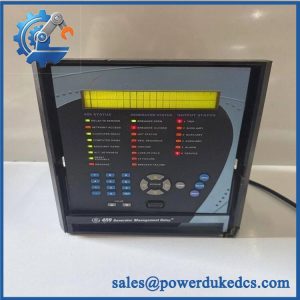
A Hydran installation can lose its monitoring and alarm interface even when the transformer transmitter itself remains operational. The GE 201Ci-1 is the one-channel controller for a Hydran 201i system, supervising one Hydran 201Ti intelligent transmitter while providing the local digital gas-level display, alarm contacts, alarm indicators, isolated analog output, and host-computer communications. GE documentation identifies the controller as a dedicated interface between the transmitter and the site’s monitoring infrastructure. The controller’s display scale reaches 1999 ppm, while its alarm architecture includes separate Gas High, Gas High-High, and Fail relays.
The hard value is in preserving an established transformer-monitoring architecture without replacing the entire measurement chain. The 201Ci-1 communicates with the Hydran transmitter through an optically isolated supervisory link and provides RS-485 networking plus an RS-232 local communication port. GE’s documentation specifies a NEMA 4X controller enclosure, an operating range of -40 to +55 °C, and an isolated standard analog output for retransmission. During maintenance verification, the analog output can be forced and checked electrically; the manual specifies approximately 20.00 ± 0.40 mA at the upper test point and 0.00 ± 0.10 mA in the off condition. Those numbers matter when the controller feeds a DCS or SCADA analog-input card.
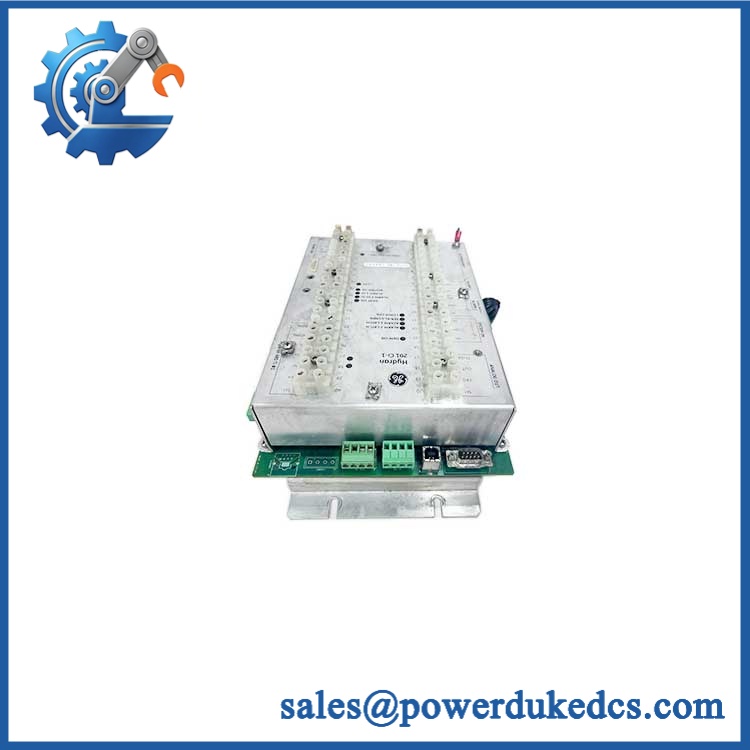
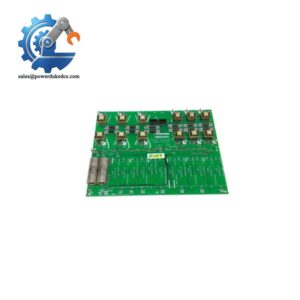
GE 201CI-1
Module 4: Compatibility & Installation Traps
Migration/Compatibility
- Replacement status: The 201Ci-1 is a dedicated one-channel Hydran 201i controller. It is not interchangeable with the 201Ci-C, which is a communications-only controller and does not provide the same numerical display or alarm-relay functions.
- Transmitter compatibility: The controller is designed to supervise one Hydran 201Ti intelligent transmitter. Confirm the installed transmitter and controller family before ordering.
- Firmware/configuration: Do not assume that replacing the controller automatically preserves site-specific alarm thresholds, delays, relay modes, communication settings, or other configuration parameters. Record the existing configuration before removal and verify it after installation.
- Logic rewrite: A like-for-like controller replacement does not normally require a PLC logic rewrite, but DCS/SCADA scaling and alarm mapping must be checked if the previous controller’s analog or relay configuration was customized.
⚠️ Field Traps (Watch Out)
- Alarm relay wiring: The 201Ci-1 has three alarm relays — Gas High, Gas High-High, and Fail — each using NO, NC, and common contacts. The relay terminals are on the main terminal block, so verify every contact against the site wiring drawing before energization.
- Communication cable routing: GE recommends metallic conduit for communication cabling to improve mechanical and electrical protection. The RS-485 network can extend up to 1300 m (4000 ft) using the specified twisted-triad arrangement. Grounding, shielding, topology, and termination should be checked against the installation manual rather than copied from a generic RS-485 practice.
- Analog-output verification: Do not validate the controller only by checking that a display value appears. Confirm the actual retransmission current at the terminal; an incorrect 4–20 mA scaling point can produce a credible-looking but incorrect DCS value.
Module 5: Quality Assurance SOP
Our pre-shipment inspection for a GE 201Ci-1 focuses on both controller hardware and the signal chain it supports:
- OEM anti-counterfeit visual inspection — verify GE/Hydran identification, model marking, labels, enclosure construction, connectors, terminal blocks, display assembly, and PCB condition.
- Model verification — confirm the unit is specifically 201Ci-1, not 201Ci-C or another Hydran controller variant.
- Enclosure inspection — check the NEMA 4X housing, seals, cable-entry areas, terminal insulation, mounting hardware, and signs of moisture ingress or corrosion.
- Power-input inspection — verify the power-supply section and terminal identification before controlled energization.
- Power-on self-test (POST) — apply the correct test supply and observe initialization, display operation, status indicators, and abnormal diagnostic conditions.
- Display verification — confirm the gas-level display responds through the expected operating and test functions, including the documented maximum display scale of 1999 ppm.
- Alarm relay verification — electrically check Gas High, Gas High-High, and Fail relay operation using the controller’s defined test procedures; verify NO/NC/common contact transitions with an ohmmeter.
- Analog output verification — measure the isolated analog output at representative values and confirm forced-output behavior against the documented limits.
- Communication handshake verification — where the available test environment supports it, verify RS-485 and RS-232 communication paths and confirm correct data exchange.
- Supervisory-link verification — test the controller-to-transmitter interface where a compatible Hydran 201Ti test setup is available.
- Final QC record — record model, hardware revision where available, test results, terminal condition, display behavior, and inspection photographs.
- ESD and moisture protection — protect the electronic assembly with antistatic packaging and suitable moisture/mechanical protection before shipment.
GE’s documentation includes dedicated verification procedures for the analog output and alarm relays, which is preferable to relying only on a visual inspection or basic power-up check.
Module 6: CRO-Driven Buyer FAQ
1. Is the GE 201Ci-1 obsolete, and how do I verify that I am buying the correct controller?
The 201Ci-1 belongs to the legacy HYDRAN 201i architecture. The most important identification point is the complete model designation: 201Ci-1. It is specifically the one-channel controller with a numerical display, alarm contacts, and analog output. Do not substitute a 201Ci-C merely because both units belong to the same Hydran family.
2. Can the 201Ci-1 be hot-swapped?
Treat it as a powered industrial monitoring controller, not a hot-swappable PLC I/O module. Before removing the controller, follow the applicable GE maintenance procedure and the site’s electrical isolation requirements. Particular attention is required for the transmitter supervisory link, alarm contacts, and external communication wiring.
3. What does the 201Ci-1 actually monitor?
The controller supervises one Hydran 201Ti intelligent transmitter. The overall Hydran 201i measurement system is intended for dissolved-gas monitoring, while the 201Ci-1 handles the controller-side display, alarms, retransmission, and communications functions.
4. Does the controller provide alarm contacts for a DCS or SCADA system?
Yes. The 201Ci-1 has three alarm relays: Gas High, Gas High-High, and Fail. Each relay provides normally open, normally closed, and common contacts, allowing direct hardwired alarm integration.
5. What warranty and technical support should I expect?
Warranty duration should be stated on the quotation for the exact unit supplied. Technical support should cover model verification, terminal identification, configuration review, communication checks, and interpretation of documented pre-shipment test results. It should not be represented as a substitute for transformer-protection engineering, site electrical safety procedures, or commissioning by qualified personnel.



 Start Chat