

Description
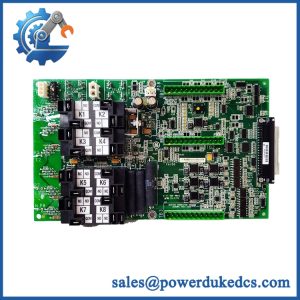
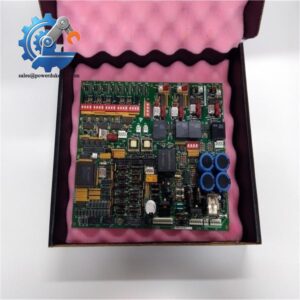
- Model & Brand: GE IC3600EPSA1, a regulator circuit board used within the Speedtronic Mark I / Mark II turbine control family. Multiple independent parts references identify it specifically as a 100-volt regulator board.
- Physical Dimensions: Approximately 12.5 × 5.75 × 1.25 in is reported by one third-party technical listing. Because an original GE mechanical drawing was not located during verification, treat this measurement as an approximate handling reference rather than a certified cabinet dimension.
- Estimated Shipping Weight: Approximately 1.8 lb / 0.82 kg is reported by the same third-party listing. Actual gross shipment weight depends on ESD protection, cushioning, carton, and documentation.
- What’s in the Box: Normally the IC3600EPSA1 regulator board only. Do not assume an extender card, mounting hardware, replacement components, or original GE documentation is included unless those items are explicitly stated on the quotation.
- Board Construction: Available technical descriptions identify two adjustable potentiometers, semiconductor devices, polypropylene capacitors, an electrolytic capacitor, diodes, resistors, integrated circuits, and 25 male connection pins on the board.
- Packaging Requirement: Store and ship the PCB in an ESD shielding bag with rigid cushioning around the board edges and connector pins. Loose handling is inappropriate for a control-board spare.
Product Introduction
Inside a GE Speedtronic Mark I or Mark II turbine control cabinet, the IC3600EPSA1 functions as a dedicated regulator board rather than a modern plug-in PLC I/O card. Parts references consistently identify the board as a 100-volt regulator, and GE Speedtronic inventory catalogs place it in the IC3600 E-series card group.
The board is part of an architecture that predates contemporary microprocessor-based turbine controllers by several generations. That distinction matters during maintenance: an IC3600 spare should be matched by exact board number, physical connector arrangement, circuit revision, and application location, not merely by a similar regulator description. Current industrial spare sources still list the IC3600EPSA1, but market records also identify it as discontinued by the manufacturer, making controlled legacy inventory more important than ordinary replenishment.
Core Technical Specifications
| Parameter | Value |
|---|---|
| Manufacturer | GE / General Electric |
| Product Family | Speedtronic Mark I / Mark II |
| IC3600 Group | E Series |
| Exact Part Number | IC3600EPSA1 |
| Board Type | Regulator Circuit Board |
| Functional Description | 100-Volt Regulator Board |
| Primary Application | GE Speedtronic turbine control |
| PCB Format | Plug-in circuit card |
| Connector Interface | 25 male connection pins reported by technical reference |
| Adjustable Elements | 2 front-access potentiometers |
| Semiconductor Devices | Transistors, diodes, integrated circuits |
| Capacitor Types Reported | Polypropylene and electrolytic |
| Approx. Board Dimensions | 12.5 × 5.75 × 1.25 in |
| Approx. Unit Weight | 1.8 lb / 0.82 kg |
| Cooling Method | Cabinet/card-rack environment; forced-air requirement not independently verified |
| Operating Temperature | Not reliably established from an OEM document located for this exact part |
| Storage Temperature | Not reliably established from an OEM document located for this exact part |
| Rated Power Dissipation | Not reliably established from an OEM document located for this exact part |
| Firmware | None in the modern software sense; this is an analog/electronic circuit board |
The 100 V regulator identification is independently supported by multiple legacy GE Speedtronic parts references.
Power and Thermal Note
Do not use the commonly repeated third-party electrical figures for this board as an approved design basis. One online listing attributes a 110 VAC supply figure and transient current to the IC3600EPSA1, but that information could not be corroborated against a GE installation manual or original circuit specification during this verification.
For an operating turbine cabinet, use the site’s original Mark I/Mark II schematic, card-level documentation, and measured cabinet supply conditions before calculating heat dissipation or substitute-board electrical loading.
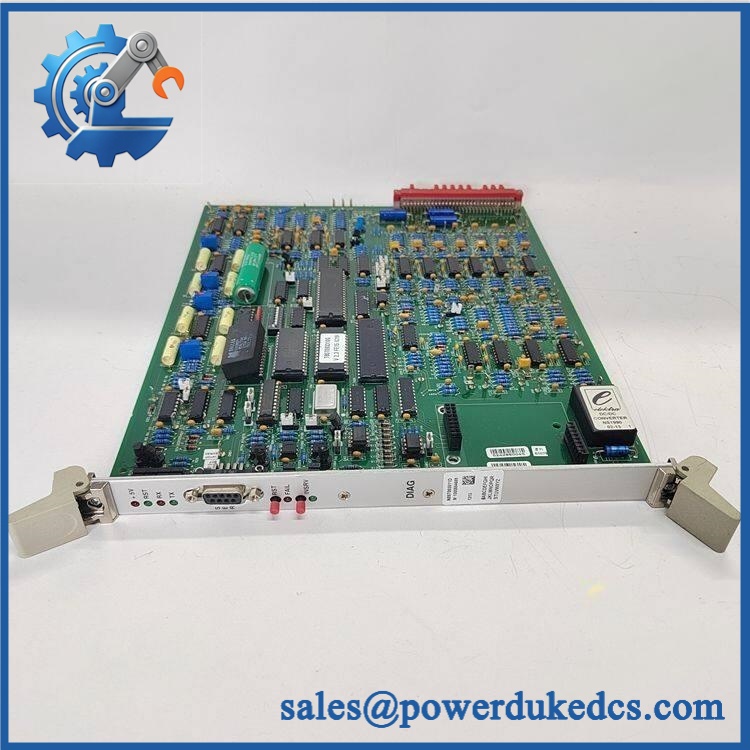
GE IC3600EPSA1
🚨 Global Compliance & Industry Certifications
The belongs to the legacy Speedtronic Mark I/Mark II generation, and certification data for individual IC3600 cards is considerably less transparent than for later GE Mark IV, Mark V, Mark VI, or Mark VIe equipment.
- CE Mark: No authoritative current GE CE declaration for the exact was located during this verification. Do not place a CE claim on the product record without supporting documentation.
- UL / cUL: No exact certificate was identified in the available evidence. A UL claim for another IC3600 component cannot be transferred automatically to this board.
- ATEX / IECEx: Do not represent the as independently ATEX- or IECEx-certified without an exact certificate covering the board and its intended installation.
- Marine approvals: DNV, ABS, or other marine certification should likewise be treated as unverified for this exact board.
- Legacy system compliance: The relevant safety assessment may depend on the complete Speedtronic control assembly, enclosure, electrical segregation, power supply, and plant installation—not simply the PCB.
For audit purposes, the absence of a located certificate should be recorded as “certification to be verified”, not converted into an unsupported “certified” statement.
Verify specific lot certifications with OEM.
🚨 Long-Term Storage & Asset Preservation Guide
Keep the inside an ESD shielding bag. The 25-pin connector contacts and exposed PCB surfaces should not be handled with bare fingers (skin oils and particulate contamination can become a contact problem after years of storage).
Pay particular attention to the electrolytic capacitor. The board description includes an orange PCB-mounted electrolytic capacitor. Long shelf storage does not automatically mean the component is failed, but age, electrolyte condition, leakage, and capacitance drift deserve inspection before the card is installed in a live turbine controller.
Protect the two adjustment potentiometers from accidental movement. Their positions may represent calibrated operating parameters. Never rotate them during warehouse inspection simply to check mechanical movement. Record their physical condition and use the original maintenance procedure for any adjustment.
Because the IC3600 generation is decades old, component age is itself an asset-management variable. Maintain a history of storage condition, inspection date, board condition, and any previous repair or rework. Current surplus-market records demonstrate that these boards remain available through legacy inventory channels, but supply is not equivalent to new production.
Physical Installation Prerequisites
The is a plug-in control card, so the cabinet backplane/card-slot architecture is the first mechanical constraint. It should not be treated as a generic DIN-rail module.
Before installation:
- Verify the exact card slot against the original Mark I/Mark II cabinet drawing.
- Match connector position and keying before applying insertion force.
- Inspect the 25 male pins for oxidation, bending, contamination, or mechanical damage.
- Check the mating backplane connector for worn or recessed contacts.
- Use an ESD-controlled work area when handling the board.
- Avoid touching the potentiometer adjustment screws unless the approved calibration procedure specifically requires it.
- Ensure cabinet airflow and ambient conditions remain within the original turbine-control design limits. A universal “50 mm clearance” rule should not be substituted for the actual GE cabinet drawing.
- Confirm supply voltages with the site’s original Speedtronic electrical schematics before energizing a replacement.
One practical warning: a regulator PCB can appear electrically simple while having a direct effect on downstream control voltages. A wrong card in the correct-looking slot can therefore create a secondary fault elsewhere in the control system.
Buyer’s FAQ
Q1. What HS tariff code should be used for the ?
There is no sufficiently reliable customs ruling located for this exact legacy regulator board. A third-party listing assigns 8537.10.9090, but that should be regarded only as an indicative commercial classification.
For formal export documentation, have the importer or customs broker validate the applicable HS/HTS classification based on the board’s function as a regulator circuit card for industrial turbine control equipment.
Q2. What should be declared as Country of Origin?
Do not infer COO from the seller’s warehouse or shipping point. For a legacy GE board, establish origin from the physical nameplate, manufacturer records, supplier declaration, or historical procurement documentation.
Where documentary evidence is unavailable, the commercial invoice should not contain an unsupported origin statement simply because the part carries a GE identification.
Q3. Should a shipment of one be insured?
For a Mark I/Mark II turbine installation, the answer is usually yes when the board is a critical spare. The unit is physically small and is reported at roughly 1.8 lb, but replacement availability is limited and a damaged card can carry a much larger operational consequence than its freight weight suggests.
Use ESD packaging, rigid edge protection, moisture protection, and documented pre-shipment photographs. Record the board number and visible condition before sealing the carton.
Q4. Does the contain firmware or require a firmware update?
No conventional firmware-update procedure applies to this board. The is an electronic regulator PCB within the Mark I/Mark II hardware architecture, not a modern software-configurable PLC or network module. Technical references describe discrete analog circuitry, potentiometers, semiconductor devices, and integrated circuits rather than a field-loaded firmware package.
For replacement purposes, board identity and circuit revision are more important than firmware level. Do not substitute an variant or related regulator board without checking the original Speedtronic schematic and card application.
Lifecycle & Asset-Control Note
The is a legacy, discontinued turbine-control board associated with the GE Speedtronic Mark I/Mark II platform. Current industrial-part sources continue to list the exact part, while other market records explicitly describe it as discontinued by the manufacturer.
For critical turbine assets, maintain at least one application-verified spare rather than relying solely on future market availability. Record the exact board number, circuit revision, physical condition, repair history, storage location, and test status. A later-looking regulator board is not an acceptable substitute merely because its nominal voltage appears similar.



 Start Chat