

Description
- Brand: GE Fanuc
- Full Model Number: IC670CHS001
- System/Series Family: Field Control Distributed I/O
- One-Sentence Core Function: Barrier-style I/O terminal block providing field wiring and module connection for GE Field Control I/O stations
- Top 3 Hardcore Specs: 37 barrier terminals; supports Field Control I/O modules; AWG #14 to #22 field wiring
- Product Type: I/O Terminal Block
- Terminal Style: Barrier terminal
- Terminal Count: 37
- I/O Module Interface: Field Control module connector interface
- Wire Capacity: 1 or 2 wires up to AWG #14 per terminal
- Recommended Wire: Copper, 90°C insulation
- Recommended Terminal Torque: 8 lb-in
- Associated Station Hardware: IC670GBI002 Genius BIU / Field Control station
- Compatible I/O Module Family: IC670 series Field Control modules
- Hot Insertion: Not supported on IC670CHS001/101 terminal blocks
- Stock Status: New Surplus / Factory Sealed / Fully Tested Refurbished subject to availability
GE Fanuc Field Control documentation identifies IC670CHS001 as the I/O Terminal Block with Barrier-style Terminals. The terminal block has 37 terminals, and each terminal can accommodate one or two wires up to AWG #14. GE also identifies IC670CHS001 as part of the Field Control station hardware alongside the Genius BIU and Field Control I/O modules.
Module 3: Commercial-Technical Deep Dive
The GE IC670CHS001 is not an electronic I/O module; it is the barrier-style terminal base that provides the physical field-wiring interface for a Field Control I/O station. That distinction matters during spare-part procurement. The Field Control architecture separates the terminal block from the plug-in I/O electronics, allowing field wiring to remain attached while compatible modules are serviced. GE documentation identifies IC670CHS001 as the 37-terminal barrier version, while other Field Control terminal styles use different catalog numbers and connector arrangements.
Mechanical and wiring details become the practical differentiators. Each terminal accommodates one or two wires up to AWG #14, and GE recommends copper conductors with 90°C insulation and a terminal torque of 8 lb-in. The barrier terminal architecture is intended for the Field Control I/O modules rather than acting as a standalone controller. One important field limitation: GE documentation states that the /101 terminal blocks do not support hot insertion or removal because they lack the alignment-tab arrangement used by later terminal blocks. I/O station power should therefore be off when modules are installed or removed on this terminal-block family.
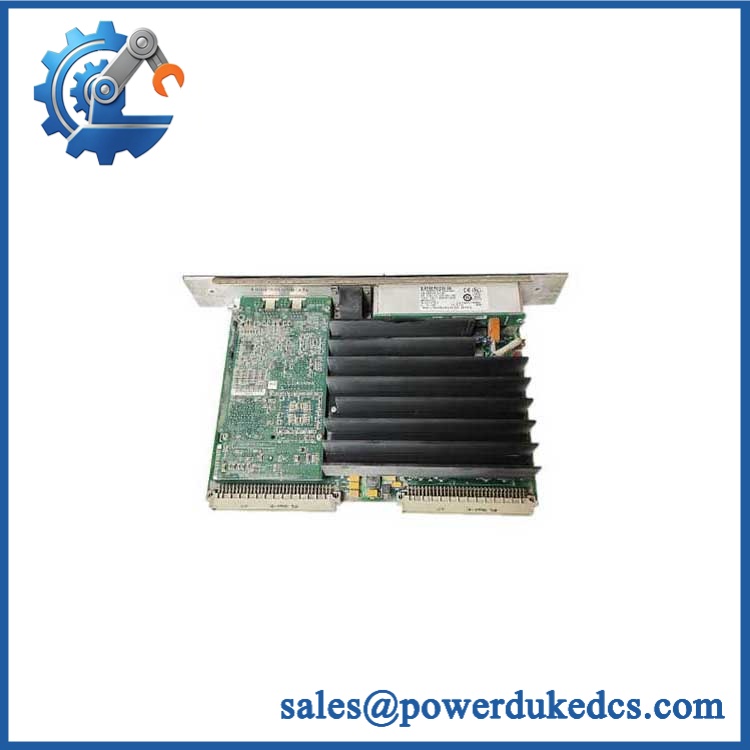
GE IC670CHS001
Module 4: Compatibility & Installation Traps
Migration/Compatibility
- System: GE Fanuc Field Control Distributed I/O
- Full Model:
- Product Type: Barrier-style I/O Terminal Block
- Terminal Count: 37
- Terminal Capacity: One or two wires up to AWG #14
- Compatible Module Family: GE Field Control IC670 series I/O modules
- Station Interface: Field Control I/O module and station wiring architecture
- Related Terminal Styles: IC670CHS002 box-style; IC670CHS003 connector-style
- Associated BIU: IC670GBI002 for Genius Field Control stations
- Replacement Type: Exact mechanical and wiring match preferred
- Hot Insertion: Not supported for /101
- Logic Rewrite: Not applicable to the terminal block; module configuration and field wiring must still be verified
- Wiring: Preserve original terminal-to-channel mapping before replacement
⚠️ Field Traps (Watch Out)
1. Do not treat as a hot-swap terminal base.
GE documentation specifically states that , IC670CHS002, and IC670CHS003 lack the alignment tabs required for supported hot insertion/removal. The I/O station power should be turned off before modules are installed or removed on these terminal blocks.
2. Match the terminal style exactly.
is the barrier-terminal version. IC670CHS002 uses box-style terminals, while IC670CHS003 uses wire-to-board connectors. These are not merely cosmetic variants; the field wiring and mating interface are different.
3. Verify the installed I/O module before ordering.
The terminal block provides the field interface for the installed Field Control module. Confirm the module catalog number and terminal assignment before moving conductors. A terminal block can be mechanically correct while still being wrong for the application’s wiring scheme.
4. Respect terminal wire capacity and torque.
GE documentation specifies one or two wires up to AWG #14 per barrier terminal and recommends 8 lb-in terminal torque. Excessive torque can damage the terminal; insufficient torque can increase contact resistance and produce heating.
5. Do not mix incompatible terminal-block revisions casually.
GE documentation distinguishes the older 00x and later 10x terminal-block families. Mixing them within the same Field Control station is not recommended.
Module 5: Quality Assurance SOP
Each available GE should undergo a documented terminal-block inspection and integration check before shipment:
- OEM anti-counterfeit visual inspection: Verify GE Fanuc / Field Control identification, complete catalog number, barrier-terminal arrangement, molded markings, and manufacturing identifiers.
- Terminal-count verification: Confirm the physical assembly has the expected 37-terminal barrier configuration.
- Mechanical inspection: Check terminal housing, mounting points, module-retention features, guide interfaces, screws, barriers, and cable entry areas for damage.
- Terminal inspection: Examine all terminals for oxidation, cracked insulation, damaged threads, loose hardware, discoloration, and signs of overheating.
- Continuity inspection: Verify representative terminal-to-module-interface continuity against the applicable Field Control wiring diagram.
- Insulation check: Perform the approved low-voltage insulation and isolation checks before integration with field circuits.
- Module mating test: Install a compatible Field Control I/O module and verify correct mechanical seating and connector engagement.
- Station integration test: Where the test rack is available, install the terminal block with a compatible BIU and I/O module and verify normal station operation.
- Field-channel test: Exercise representative input/output channels through the terminal block and confirm correct signal transfer.
- Terminal-load test: Verify representative loaded circuits remain stable without abnormal terminal heating.
- Torque verification: Confirm terminal connections are tightened to the applicable 8 lb-in recommendation when the test procedure includes field wiring.
- Retention test: Confirm the installed module remains mechanically secure during controlled vibration or handling where applicable.
- Configuration check: Record associated BIU, I/O module, station position, and terminal assignment.
- Final QC record: Document catalog number, terminal count, physical condition, mating-module test results, continuity results, and technician sign-off.
- ESD-safe and mechanical packaging: Protect the terminal block from impact, contamination, and damage to the barrier terminals during shipment.
For this component, functional validation should be performed with a compatible Field Control module installed. A terminal block can look perfect and still have an intermittent connection at the module interface or a damaged terminal that only fails under load.
Module 6: CRO-Driven Buyer FAQ
What is GE ?
GE is the Field Control I/O Terminal Block with barrier-style terminals. It provides the field-wiring interface for compatible GE Field Control I/O modules within a distributed I/O station.
How many terminals does have?
The barrier-style has 37 terminals. Each terminal can accommodate one or two wires up to AWG #14.
Is the same as an I/O module?
No. is the terminal block/base, while the actual Field Control electronics are supplied by the compatible plug-in I/O module. The terminal block and electronics should be specified separately when diagnosing a failure.
What wire size and terminal torque are specified?
GE documentation specifies one or two wires up to AWG #14 per terminal, recommends 90°C-rated copper wire, and gives a recommended terminal torque of 8 lb-in.
Can be hot-swapped?
No. GE’s Field Control documentation states that the /101 terminal blocks do not support hot insertion/removal. The I/O station power should be off before installing or removing modules associated with this terminal-block family.
What is the difference between , IC670CHS002, and IC670CHS003?
They are different Field Control terminal styles: uses barrier terminals, IC670CHS002 uses box-style terminals, and IC670CHS003 uses wire-to-board connectors. Match the exact field-wiring architecture before ordering.
What should I verify before ordering ?
Confirm the exact catalog number, 37-terminal barrier configuration, installed Field Control I/O module, terminal wiring, station/BIU architecture, and mechanical revision. Also verify that the installation does not depend on a later terminal-block family with different module-insertion features.
What warranty and technical support should I expect?
Warranty duration should be stated for the exact unit condition and test status on the quotation. Technical support should cover part-number verification, terminal-style matching, I/O-module compatibility, field-wiring review, continuity testing, and documented integration checks. Field Control application programming and commissioning should be treated separately unless explicitly included.


 Start Chat