

Description
- Brand: GE Fanuc
- Full Model Number: IC670CPU350
- System/Series Family: Genius Field Control
- One-Sentence Core Function: Processor module providing local control execution and station-level processing within a GE Genius Field Control architecture
- Top 3 Hardcore Specs: 32-bit processor architecture; 128 KB reported user logic/data/configuration memory; up to 4096 I/O points reported across local and Genius remote I/O
- Stock Status: New Surplus / Fully Tested Refurbished — exact CPU hardware revision and field-control configuration verified before shipment
Module 3: Commercial-Technical Deep Dive
A distributed I/O station becomes far harder to recover when its local processor fails, because the issue is no longer limited to one analog or discrete channel. The GE Fanuc IC670CPU350 is identified in current industrial references as a Genius Field Control CPU module, intended for local processing within the Field Control architecture. Unlike the separate IC670GBI002 Genius Bus Interface Unit, which provides the fieldbus interface and scanning functions for a group of I/O modules, the CPU350 is associated with local execution of control logic at the field-control station. Current technical listings report a 32-bit processor, 128 KB combined user logic/data/configuration memory, and support for up to 4096 I/O points across local and Genius remote I/O.
The procurement risk is configuration compatibility, not just processor speed. Public references for this exact part are inconsistent, with some sources incorrectly conflating IC670CPU350 with the similarly numbered IC693CPU350 Series 90-30 CPU. The latter is a different product family and should not be used as the specification basis for the Field Control CPU. For the IC670CPU350, preserve the original application program, station configuration, network parameters, and any battery-backed data before replacement. The available Field Control documentation confirms that Genius Field Control uses dedicated bus-interface hardware and distributed I/O modules, so a CPU replacement must be validated against the actual station architecture rather than a generic GE PLC description.
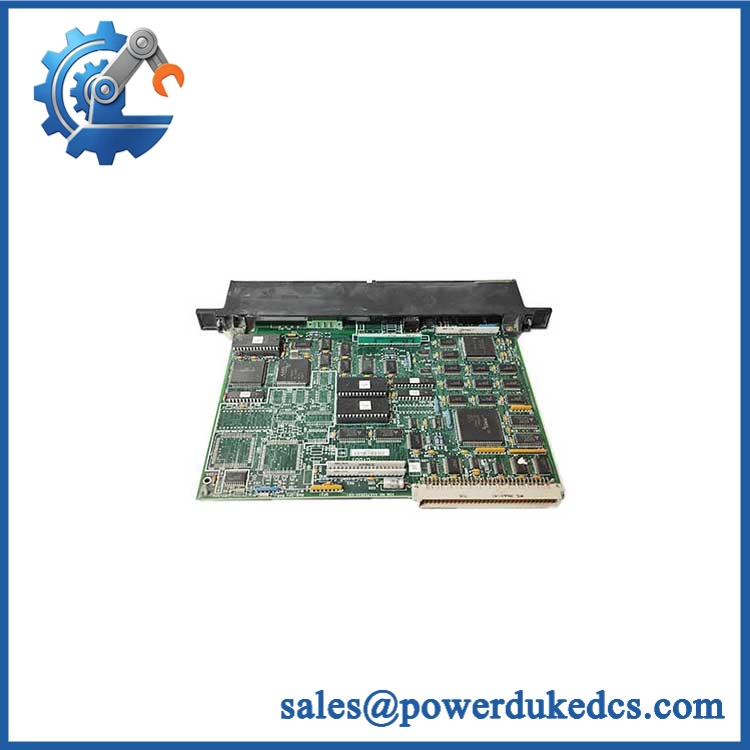
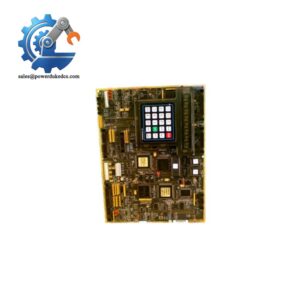
GE IC670CPU350
Module 4: Compatibility & Installation Traps
Migration/Compatibility
- Replacement status: Configuration-specific Genius Field Control CPU module.
- Functional identity: Local processor for the Field Control architecture; not the same component as the IC670GBI002 Genius Bus Interface Unit.
- System family: GE Fanuc Field Control / Genius I/O.
- Firmware requirement: Record the existing CPU firmware and application environment before replacement. Do not assume a different processor revision will accept the original application without validation.
- Logic rewrite: Normally not required for a same-part-number replacement, but the complete application, station configuration, Genius Bus parameters, and I/O mapping must be restored and verified.
- Memory: Current technical references report 128 KB combined user logic/data/configuration memory. Treat this as a reported specification and verify the exact hardware revision before engineering use.
- I/O capacity: Current references report up to 4096 I/O points across local and Genius remote I/O. This should be confirmed against the installed Field Control configuration.
⚠️ Field Traps (Watch Out)
- IC670CPU350 versus IC693CPU350: These are different products. Several current listings incorrectly describe IC670CPU350 using Series 90-30 IC693CPU350 specifications such as a 25 MHz processor and 32 KB memory. Do not use those values for .
- CPU versus BIU: The IC670GBI002 is the Genius Bus Interface Unit used for intelligent I/O scanning and communication; it is not the same hardware as the CPU350. Verify which component has failed before ordering.
- Application backup: A replacement CPU is not a copy of the customer’s field-control application. Preserve the original logic, configuration, addresses, and retained data before removal.
- Network configuration: Genius Bus node identity and I/O mapping must be restored correctly. A CPU can complete startup while the distributed station remains functionally incorrect.
- Battery-backed data: Where the installed configuration uses battery-backed memory or clock functions, verify the backup arrangement before power-down.
- ESD and power isolation: Remove applicable control power and use grounded ESD handling during CPU extraction and installation.
Module 5: Quality Assurance SOP
Our pre-shipment inspection for a focuses on processor initialization, memory integrity, Field Control communications, and exact product identification:
- OEM anti-counterfeit visual inspection — verify GE Fanuc/Genius markings, complete identifier, revision information, PCB artwork, connectors, status indicators, and manufacturing labels.
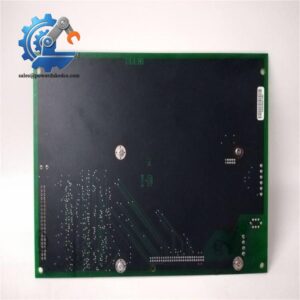
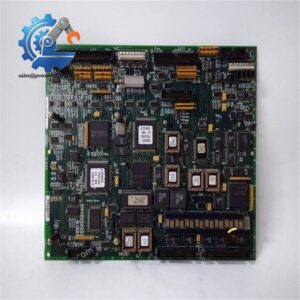
- Part-number capture — photograph the front, rear, labels, connectors, and all secondary identification markings.
- Product-family verification — confirm the unit is Field Control hardware, not the similarly numbered IC693CPU350 Series 90-30 CPU.
- Hardware-revision inspection — record CPU revision and compare it with the customer’s existing processor where photographs or documentation are available.
- PCB inspection — check processor circuitry, memory devices, connectors, battery interface where fitted, contamination, corrosion, and signs of thermal damage.
- Controlled power-up — energize the CPU in a compatible GE Field Control test environment and monitor startup current, diagnostics, and status indications.
- Power-on self-test (POST) — verify processor initialization, memory detection, diagnostic state, and normal startup sequence.
- User-memory test — perform controlled read/write verification on the available application memory using a dedicated diagnostic program.
- Application execution test — load a controlled Field Control test application and verify processor execution, timers, counters, and logic-state changes.
- Genius communication handshake verification — connect the CPU to a compatible Field Control/Genius test environment and verify expected communication with the associated bus architecture.
- Local I/O verification — exercise representative local I/O modules and confirm correct processor recognition and state updates.
- Remote-I/O verification — where the test environment supports it, verify representative Genius remote-I/O data exchange and station diagnostics.
- Fault-detection test — introduce controlled communication or I/O faults and verify that the processor reports the expected diagnostic state.
- Power-cycle and retention test — perform controlled restart cycles and verify stable processor initialization and retention of the approved test configuration.
- Extended observation — monitor CPU status, memory behavior, I/O communication, and temperature during continuous operation.
- Configuration record — document part number, hardware revision, firmware information, memory test results, test application, Genius configuration, and photographs.
- Final QC review — cross-check all recorded identifiers against the customer’s exact requirement.
- ESD packaging — protect the CPU module, connectors, and memory/battery interfaces against ESD, dust, moisture, and mechanical impact.
The most important QA checkpoint is product-family verification. Current online references demonstrate a recurring error in which is described using the specifications of IC693CPU350. Those numbers belong to a different GE controller family and should not be carried into a purchase specification for this Field Control CPU.
Module 6: CRO-Driven Buyer FAQ
1. Is GE obsolete?
The Genius Field Control family is a legacy GE Fanuc platform and is no longer manufactured as a current-generation control system. Current installed-base suppliers still list as a replacement part, while Field Control system references identify the family as legacy equipment.
2. Is the same as IC693CPU350?
No. This is an important identification issue. belongs to the Genius Field Control family, while is a Series 90-30 CPU. Current listings sometimes mix the two, so the complete part number must be verified before procurement.
3. What does do?
It provides local processor functionality within the GE Field Control architecture. It should not be confused with the IC670GBI002 Genius Bus Interface Unit, which performs bus-interface and I/O-scanning functions for Field Control I/O modules.
4. How much memory does have?
A current Field Control-specific technical listing reports 128 KB of user logic/data/configuration memory. Because public sources for this older product are not fully consistent, the installed hardware revision and applicable GE documentation should be used as the final engineering reference.
5. Can be hot-swapped?
Do not assume energized replacement is permitted. The CPU is part of the Field Control station’s processing architecture, so removal can interrupt local logic execution and I/O control. Isolate the applicable power supply, follow the GE Field Control maintenance procedure, and apply the site’s approved LOTO process before removal.
6. What should be backed up before replacing ?
Preserve the complete application logic, station configuration, Genius Bus parameters, I/O mapping, communication settings, and any retained data associated with the installed system. A replacement CPU should be treated as hardware only; it should not be assumed to contain the customer’s application.
7. What warranty and technical support should I expect?
Warranty duration should be stated on the quotation for the exact physical CPU supplied. Technical support should cover Field Control part-number verification, CPU-versus-BIU identification, hardware-revision matching, application restoration guidance, Genius communication testing, and documented pre-shipment QA results. It should not substitute for PLC application engineering, distributed-I/O commissioning, or site control-system authorization.



 Start Chat