

Description
- Brand: GE General Electric
- Full Model Number: IS200JPDDG1AAA
- Lifecycle Status: Legacy / Mark VIe installed-base component
- Core Function: DC Power Distribution Board for discrete loads
- Top 3 Technical Specs: 15 A 250 V fuse type; 12 output fuses; 6 output circuits
- Functional Acronym: JPDD
- System: GE Mark VIe Control System
- Primary Function: DC power distribution; voltage isolation; branch-circuit protection; contact wetting
- Fuse Type: 1/4 × 1-1/4 in 15 A 250 V
- Input Options: 3
- Manual Jumpers: None
- Mounting: Installation plate suitable for DIN-rail mounting
- Typical Loads: Relays, solenoids, contact-wetting circuits
- Diagnostics: No dedicated diagnostic signals
- PCB Coating: Normal coating
- Revision: G1 / A / A / A marking; verify nameplate
- Stock & Condition: Exact stock confirmation required; New Surplus / Tested Refurbished; emergency shipping subject to cutoff
GE references identify IS200JPDDG1AAA as a DC Power Distribution Board in the Mark VIe family. Its documented functions include DC distribution, voltage isolation, branch-circuit protection, and contact-wetting applications; the board uses twelve output fuses and six output circuits.
Module 3: Obsolescence & Supply Chain Deep Dive
A failed IS200JPDDG1AAA can interrupt power to discrete DC loads such as relays and solenoids even when the Mark VIe controller and I/O processors remain operational. This JPDD board is a power-distribution device, not a CPU or conventional I/O acquisition card. Published technical information identifies three input options, six outputs, twelve output fuses, and no manually movable hardware jumpers.
From a TCO perspective, replacing the matched JPDD board can preserve the existing Mark VIe cabinet wiring and discrete-load distribution scheme. A complete cabinet redesign would add rewiring, engineering review, loop checks, outage work, and documentation costs without addressing the underlying requirement any better. The exact board revision and installed voltage arrangement still need verification because public references disagree on some detailed electrical ratings. (For an emergency replacement, photograph the installed board and fuse arrangement before removing it.)
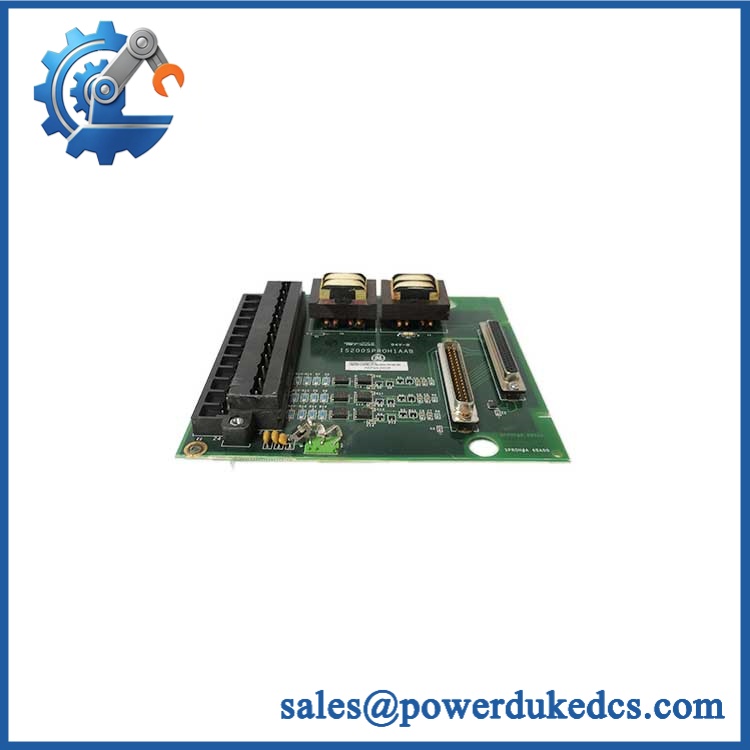
GE IS200JPDDG1AAA
Module 4: Compatibility & Replacement Matrix
| Approval Item | Engineering Assessment |
|---|---|
| Exact Part Replacement | Drop-in Replacement when the installed board is IS200JPDDG1AAA and the field wiring/configuration matches |
| Software Compatibility | Not applicable to the passive distribution board |
| Firmware Flash | Not applicable |
| Hardware Modification | Normally none for an exact board match |
| Functional Acronym | JPDD |
| Output Fuses | 12 |
| Output Circuits | 6 |
| Fuse Rating | 15 A, 250 V fuse type documented |
| Input Options | 3 |
| Manual Jumpers | None |
| Mounting | DIN-rail-compatible installation plate |
| Estimated Physical Swap | 1–2 hours |
| Engineering / Commissioning Allowance | 250–1,000 planning range |
| Post-Replacement Testing | Required for every energized branch circuit |
⚠️ Field Traps — Watch Out
- Voltage Configuration: Public references disagree about the supported nominal input voltage, with some listing multiple DC voltages. Do not assume 24, 48, or 125 VDC compatibility from a catalog description. Verify the actual nameplate, board documentation, fuse arrangement, and cabinet schematic before energizing.
- JPDD vs Other Power Boards: Do not substitute JPDF, JPDH, or other Mark VIe power-distribution boards solely because the boards share the JPD family designation. Their functions and connected loads differ.
Module 5: Quality Assurance & Testing SOP
- OEM anti-counterfeit visual inspection — verify GE markings, IS200JPDDG1AAA identification, functional acronym JPDD, labels, fuse holders, terminals, connectors, and manufacturing traceability.
- Revision audit — record all visible revision markings, including the G1/A/A/A identifiers.
- Mechanical inspection — inspect mounting hardware, terminal blocks, fuse holders, connector interfaces, PCB edges, and installation plate for cracks or deformation.
- PCB condition inspection — check for corrosion, contamination, overheated components, damaged traces, cracked joints, and unauthorized rework.
- Fuse verification — confirm the installed fuse type and rating against the approved site documentation; do not infer the required fuse from appearance alone.
- Electrical pre-screening — verify continuity, grounding, isolation, and absence of unintended shorts before energization.
- Power-on self-test (POST) — energize the board under a controlled test setup and verify expected power-distribution behavior.
- Input-path verification — apply the confirmed site DC voltage and verify stable distribution through the board.
- Branch-output testing — independently energize each configured output circuit and verify correct voltage delivery.
- Fuse-path testing — verify continuity and expected branch behavior through all applicable fuse positions.
- Switch / isolation testing — where the installed configuration includes associated disconnect/control hardware, verify each branch can be isolated as documented.
- Contact-wetting verification — test applicable contact-wetting circuits under controlled load conditions.
- Load testing — apply representative relay/solenoid loads and monitor voltage stability, current, terminal temperature, and fuse behavior.
- Fault simulation — under a controlled test fixture, simulate an approved branch overcurrent condition and verify the affected protection path interrupts as intended.
- No-diagnostics verification — confirm that the board itself is not expected to report digital diagnostic data; use electrical measurements and local indicators where provided.
- Extended energized run — monitor branch stability, temperature rise, fuse-holder condition, and intermittent power loss.
- Final QC release — photograph the exact identification and fuse arrangement, retain branch-by-branch test results, package for mechanical protection, and preserve full traceability.
This board should not be tested like a processor or I/O card. The meaningful acceptance criteria are correct DC distribution, branch isolation, fuse-path integrity, load behavior, and protection response.
Module 6: Procurement & Lifecycle FAQ
Q1. Is GE IS200JPDDG1AAA genuinely in stock, and what is the cutoff for emergency shipping?
Exact availability should be confirmed against , quantity, condition, and destination before PO release. Current industrial inventory references show this part as available from some suppliers, but emergency fulfillment should be based on verified physical stock and the applicable warehouse dispatch cutoff.
Q2. How do you verify the condition and authenticity of an obsolete ?
Require complete part-number and revision verification, OEM marking inspection, PCB and terminal examination, fuse-holder inspection, electrical continuity/isolation checks, controlled DC energization, individual branch-output testing, and representative load testing. Record the exact fuse arrangement with the QC report.
Q3. Are there any firmware compatibility issues I should warn my engineers about before issuing the PO?
No firmware is associated with the JPDD board itself. The engineering concern is electrical configuration: confirm the actual input voltage, connected discrete loads, fuse ratings, field wiring, and cabinet schematic before replacement. Public references contain conflicting voltage claims, so the installed documentation should control.
Q4. Can replace JPDF, JPDH, or another Mark VIe power board?
No automatic substitution should be approved. JPDD is documented as a DC Power Distribution Board for discrete-load applications, while other Mark VIe power boards serve different distribution functions. Match the exact board number, connected load type, terminal arrangement, and electrical rating.
Q5. What warranty and return terms should procurement require?
Require a written warranty period, DOA criteria, return-authorization procedure, exact part-number traceability, and exclusions for incorrect voltage, incorrect fuse selection, wiring errors, electrical overstress, and unauthorized board modification. The quotation should explicitly identify , its verified revision, and the tested condition.



 Start Chat