

Description
- Model & Brand: GE IS200TRPAH2AHE
- Series: GE Mark VI / Mark VIe Turbine Control
- Part Type: TRPA Aeroderivative Turbine Primary Trip Terminal Board
- Primary Application: Aeroderivative turbine primary-trip and emergency-protection interface
- Architecture: Designed for use with up to three turbine I/O packs in a TMR protection arrangement
- Primary Inputs: Passive and active turbine-speed pickup inputs; E-Stop input; trip-string voltage detection
- Primary Outputs: TMR-voted trip contacts for the main-breaker trip circuit
- Field Trip Voltage Class: 125 VDC output configuration
- Terminal Blocks: 2 barrier-style terminal blocks; 24 terminals per block
- Connectors: PR3, PS3, PT3 and JR4, JS4, JT4 interfaces for TMR configurations
- Jumper Configuration: JP1 and JP2 for speed-pickup signal fanning
- Physical Dimensions: Exact OEM W × H × D for the H2AHE configuration not reliably established from the available manufacturer material
- Estimated Shipping Weight: Approximately 0.8–1.2 kg packed for freight planning; verify actual unit and packaging
- What’s in the Box: IS200TRPAH2AHE board; ESD protection; terminal hardware, cables, I/O packs, and manuals only when expressly included on the PO
- Handling Class: ESD-sensitive turbine protection hardware; treat terminal blocks, jumper headers, and cable connectors as controlled components
GE’s Mark VIe/VIeS safety documentation identifies the TRPA as the Aeroderivative Turbine Primary Trip terminal board. It provides speed inputs, a fail-safe E-Stop input, TMR-voted trip contacts, and trip-string voltage monitoring.
Product Introduction
Architecture Hook
The IS200TRPAH2AHE belongs to the GE TRPA primary-trip architecture used with aeroderivative turbine protection. The TRPA terminal board forms the physical interface between turbine speed-sensing circuits, E-Stop circuitry, trip-string monitoring, and the associated turbine I/O packs. In a TMR arrangement, the signal paths fan out to the R, S, and T protection sections through the designated connectors.
For asset-control purposes, the exact H2AHE configuration should remain attached to the serialized spare record. Independent sources sometimes describe this part inconsistently, including incorrect classifications as calibration or power-distribution equipment; the GE safety documentation instead places TRPA in the turbine primary-trip function. That distinction is critical during receiving inspection and engineering approval (especially where a substitute part could alter the trip architecture).
Core Technical Specifications
| Parameter | Value |
|---|---|
| Manufacturer | GE |
| Complete Part Number | IS200TRPAH2AHE |
| Functional Family | TRPA |
| Product Type | Aeroderivative Turbine Primary Trip Terminal Board |
| System | GE Mark VI / Mark VIe |
| Primary Function | Turbine primary-trip and emergency-protection interface |
| Speed Inputs | 12 passive pulse-rate inputs or 6 active pulse-rate inputs, depending on configuration |
| Speed Input Arrangement | Four passive inputs per R/S/T section or fanned configuration |
| E-Stop Input | 24–125 VDC fail-safe input |
| Trip-String Monitoring | 4 voltage-detection circuits |
| Primary Trip Outputs | Two 125 VDC TMR-voted output contacts to main-breaker trip coil |
| TMR Architecture | R/S/T redundant signal distribution |
| Terminal Blocks | 2 barrier-style blocks |
| Terminals per Block | 24 |
| Connector Groups | PR3/PS3/PT3 and JR4/JS4/JT4 in TMR arrangements |
| Jumpers | JP1, JP2 |
| Jumper Function | Speed-pickup signal fanning configuration |
| Field Wiring | TB1/TB2 terminal interfaces |
| Firmware | No standalone application firmware in the terminal board |
| Physical Dimensions | Not reliably established for the exact H2AHE configuration |
| Standalone Weight | Not reliably established by OEM documentation |
| Lifecycle | Legacy Mark VI/Mark VIe hardware |
GE safety documentation states that TRPA supports twelve passive pulse-rate devices or six active pulse-rate inputs, a 24–125 VDC fail-safe E-Stop input, two 125 VDC TMR-voted contacts, and four 24–125 VDC trip-string voltage-detection circuits.
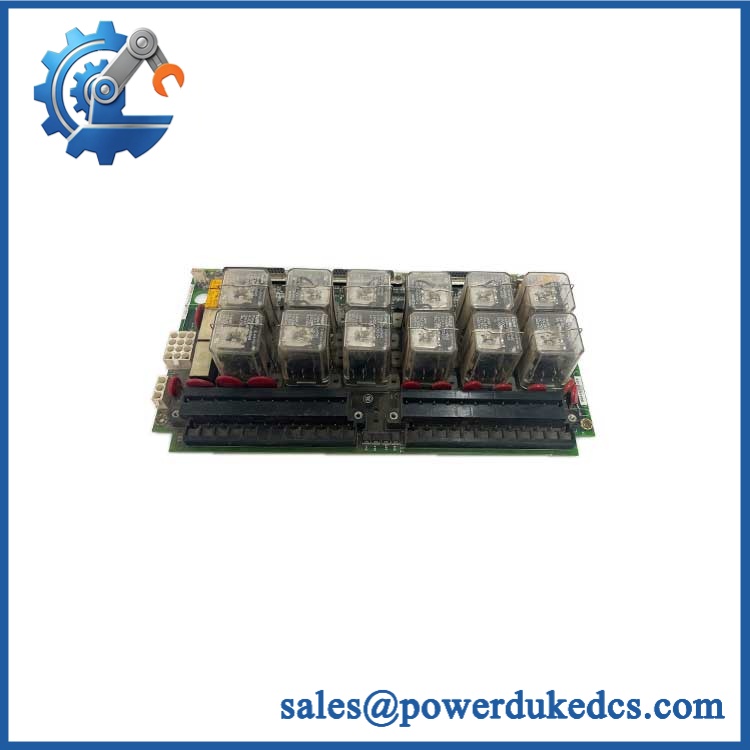
GE IS200TRPAH2AHE
🚨 Global Compliance & Industry Certifications
- CE Mark: Do not assign standalone CE conformity to the bare IS200TRPAH2AHE without a declaration covering the applicable GE control-system configuration.
- UL / cUL: No exact standalone UL/cUL certificate for this specific H2AHE configuration was verified from the available evidence.
- ATEX / IECEx: GE maintains hazardous-area certifications for defined Mark VIe equipment configurations, but those certificates do not automatically certify every individual Mark VI/Mark VIe PCB. The exact certificate scope must include the installed assembly.
- Marine / DNV: GE has published DNV type approval for defined Mark VIe and VIeS turbine-control configurations. That system-level approval should not be transferred automatically to the standalone TRPA PCB.
- Functional Safety: TRPA is part of the primary-trip safety architecture. GE’s Mark VIeS safety documentation specifically identifies speed, E-Stop, and related trip functions within the safety system.
For a Class I Division 2, ATEX, IECEx, or marine installation, the relevant certification must cover the complete approved hardware arrangement, enclosure, wiring, and installation conditions—not simply the replacement PCB.
Verify specific lot certifications with OEM.
🚨 Long-Term Storage & Asset Preservation Guide
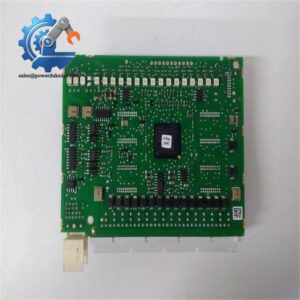
Keep the board inside an ESD shielding bag. TRPA has exposed terminal hardware, connector interfaces, and jumper headers. Protect those contact surfaces from dust, oxidation, and electrostatic discharge throughout storage.
Maintain warehouse humidity below 60% RH where practical. The important preservation targets are the terminal contacts, connector pins, and PCB surfaces. Avoid condensation cycles and storage near turbine-room washdown, steam, or outdoor air intake.
Archive JP1 and JP2 positions with the serialized asset. These jumpers control the fanning arrangement of speed-pickup inputs, so a spare with an undocumented jumper state is not installation-ready. GE’s safety documentation explicitly assigns JP1 and JP2 to this signal-distribution function.
Preserve terminal mapping as well. Photograph TB1, TB2, PR3/PS3/PT3, and JR4/JS4/JT4 before the board enters long-term storage. Do not rely on a technician remembering the configuration years later (that is precisely how a controlled spare becomes a commissioning problem).
Physical Installation Prerequisites
Install IS200TRPAH2AHE only in the intended GE aeroderivative turbine primary-trip architecture and with the compatible turbine I/O packs or TTUR/TRPA arrangement. GE documentation identifies TRPA as the terminal board used with YTUR turbine I/O packs or TTUR in the Mark VIeS architecture.
No reliable OEM-specific 50 mm top-and-bottom clearance was established for this exact terminal board. Do not add a generic clearance value to a cabinet drawing. Preserve the original cabinet layout and maintain sufficient space for the two barrier terminal blocks, cable bend radius, connector access, and board removal.
The two terminal blocks accept field wiring, while shield termination is referenced to chassis ground. Keep shield and signal routing consistent with the approved turbine-protection wiring design.
De-energization is mandatory. The H2 configuration is associated with 125 VDC trip contacts, so maintenance personnel must isolate the applicable control and trip power sources, verify zero hazardous voltage, and apply the plant’s lockout/tagout procedure before disconnecting TB1/TB2 or the TMR cable interfaces.
Before installation, verify the speed-pickup arrangement and JP1/JP2 settings. A wrong fanning configuration can distribute the speed signal incorrectly across the R/S/T protection sections.
Buyer’s FAQ — Logistics & Compliance Focus
Q1. What HS tariff code should be used for ?
Do not assign a final HS code from the model number alone. Customs treatment may vary because this is a dedicated turbine primary-trip terminal board rather than a general-purpose I/O module. Use a precise description such as “GE Mark VI/Mark VIe Aeroderivative Turbine Primary Trip Terminal Board, ”, then have the destination-country customs broker validate the final classification.
Q2. Does the GE brand establish Country of Origin?
No. Brand identity does not determine manufacturing origin. COO must be supported by shipment-specific documentation tied to the actual unit or lot. Retain the supplier declaration, commercial invoice, serial number, and any manufacturer-origin evidence together.
Q3. Should shipping insurance cover replacement value rather than board weight?
Yes. A TRPA board is physically compact, but the financial exposure can be significant because it belongs to a turbine primary-trip circuit. Record serial number, hardware revision, condition, declared value, package dimensions, gross weight, and pre-shipment photographs before carrier handoff.
Q4. Does a New Original include the latest firmware pre-loaded?
No standalone firmware package should be expected on the TRPA terminal board itself. Its critical configuration is hardware-based, including terminal wiring, connector assignment, and JP1/JP2 speed-signal distribution. Software compatibility resides primarily in the associated turbine I/O packs and control-system configuration.
Q5. What documentation should receiving inspection retain?
Keep the complete identity, serial number, hardware revision, certification evidence where applicable, COO documentation, physical-condition photographs, and the original TB1/TB2 wiring and JP1/JP2 configuration record. For a turbine protection spare, those configuration records are part of the asset—not optional paperwork.



 Start Chat