

Description
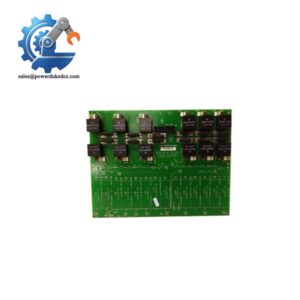
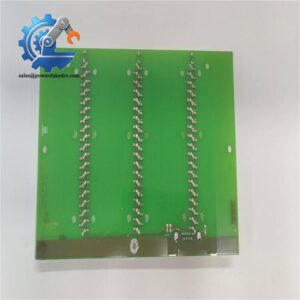
- Model & Brand: GE IS200TSVCH1A
- Functional Designation: TSVC
- Product Family: GE Mark VI / Mark VIe
- Part Type: Servo Input/Output Terminal Board
- Primary Application: Electro-hydraulic servo-valve control and LVDT position feedback for turbine fuel or steam valves.
- Approx. Physical Dimensions: Approximately 330.2 H × 177.8 W mm; one current technical record reports these PCB dimensions.
- Estimated Net Weight: Approximately 0.3–0.5 kg, depending on terminal hardware and mounting accessories.
- Estimated Shipping Weight: Approximately 0.7–1.0 kg with ESD shielding, cushioning, and export carton.
- Board Revision: Functional Revision A
- PCB Coating: Conformal Coating.
- Power Requirement: 28 VDC via J28.
- LVDT Inputs: 8 windings
- Pulse Inputs: 2 pulse-rate inputs, supporting magnetic or TTL signals.
- Servo Valve Capability: Supports 10, 20, 40, 80, and 120 mA valve coil configurations.
- Trip Connections: JD1 / JD2
- Typical Associated Hardware: PSVO I/O pack and WSVO servo driver; current technical records state that TSVC is not compatible with VSVO.
- What’s in the Box: IS200TSVCH1A board unless the purchase order expressly includes associated I/O packs, servo drivers, cables, terminal blocks, or mounting hardware.
GE’s Mark VIe asset references also identify IS200TSVCH1A as a servo terminal board used on Mark VIe systems, confirming its role within turbine-control equipment.
Product Introduction
The GE IS200TSVCH1A sits at the field-interface layer of a Mark VIe turbine servo-control architecture. It receives valve-position feedback from LVDT circuits, accepts pulse-rate signals, provides excitation for position sensors, and interfaces with servo-valve circuitry. The board is designed around electro-hydraulic valve applications where accurate position feedback is required for fuel or steam control.
This is a specialized termination assembly, not a generic analog I/O card. GE technical records identify the TSVC as compatible with the PSVO I/O pack and WSVO servo driver, while noting that it is not compatible with the VSVO processor. That compatibility boundary should remain in the warehouse master because a visually similar Mark VIe servo board can still be functionally unsuitable.
Core Technical Specifications
| Parameter | Value |
|---|---|
| Manufacturer | General Electric |
| Product Family | Mark VI / Mark VIe |
| Model | IS200TSVCH1A |
| Functional Acronym | TSVC |
| Product Type | Servo Input/Output Terminal Board |
| Functional Revision | A |
| PCB Coating | Conformal Coating |
| Primary Function | Servo-valve interface and LVDT position-feedback termination |
| Supply Voltage | 28 VDC |
| Power Connector | J28 |
| LVDT Inputs | 8 windings |
| Pulse-Rate Inputs | 2 |
| Pulse-Rate Signal Types | Magnetic pickup / TTL |
| LVDT Excitation Sources | 4 transformer-isolated; 2 non-transformer-isolated |
| Pulse Excitation | 2 × 24 VDC outputs |
| Servo Valve Current Ratings | 10 / 20 / 40 / 80 / 120 mA |
| Servo Valve Coils | Up to 3 coils per servo valve |
| Trip Connections | JD1 / JD2 |
| Associated I/O Pack | PSVO |
| Associated Servo Driver | WSVO |
| VSVO Compatibility | Not supported |
| Typical System | Mark VIe turbine control |
| Approx. Dimensions | 330.2 × 177.8 mm PCB footprint |
| Approx. Weight | 0.3–0.5 kg estimated |
| Lifecycle | Legacy / Availability-Dependent |
The electrical interface and sensor/servo capabilities above are reported consistently in current technical records.
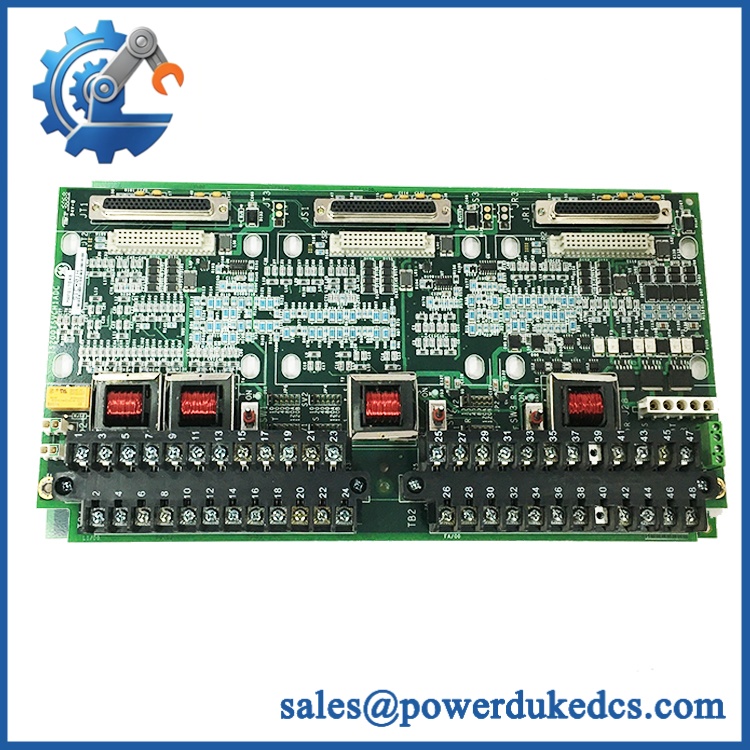
GE IS200TSVCH1A
Global Compliance & Industry Certifications
The IS200TSVCH1A should be treated as a component of the Mark VIe turbine-control assembly. Certification claims for the complete turbine-control cabinet should not automatically be transferred to the loose PCB.
- CE Mark: Verify the applicable Mark VIe system Declaration of Conformity and exact hardware configuration before recording CE status.
- UL/cUL: Do not state standalone UL/cUL certification without the corresponding GE agency documentation.
- ATEX / IECEx: The TSVC should not be treated as an intrinsically safe device. Hazardous-area suitability depends on the complete control installation, barriers, enclosure, field wiring, and approved equipment.
- Marine / DNV: No standalone DNV approval was reliably established for this exact TSVC board.
- EMC: The conformal-coated board is intended for industrial turbine-control equipment, but EMC conformity should be documented at the complete Mark VIe assembly level.
- Functional Safety: Servo control can be safety-critical within a turbine, but the TSVC board alone should not be assigned a SIL certification without an applicable system-level certificate.
The distinction is important for auditors: hardware redundancy, conformal coating, and turbine-protection use are not themselves certification claims.
Verify specific lot certifications with OEM.
Long-Term Storage & Asset Preservation Guide
Keep the TSVC sealed in an ESD shielding bag. The board has multiple connectors, sensor interfaces, and exposed termination hardware; direct contact with conductive shelving is unacceptable for controlled spare inventory.
Keep humidity below 60% RH where practical. Stable, dry storage reduces connector oxidation and contamination of the LVDT and servo-control interfaces. Avoid storage next to battery rooms, chemical stores, steam lines, or equipment producing corrosive vapors.
Protect the connector hardware from mechanical loading. The board is relatively large and lightweight, so it can flex if stored improperly. Support the perimeter with clean foam rather than placing load directly against connector housings.
Record the revision and associated hardware. Preserve and the known PSVO/WSVO relationship in the asset record. Do not consolidate it into a generic “Mark VI servo board” stock description.
Physical Installation Prerequisites
The is a Mark VIe terminal-board assembly, not a standard DIN-rail I/O module. Current records describe it as suitable for rack or mounting arrangements associated with Mark VIe turbine-control equipment.
Mechanical clearance: Preserve the original cabinet spacing and cable-routing envelope. Do not impose an arbitrary 50 mm clearance if the Mark VIe cabinet drawing specifies a different arrangement.
Power: The board requires 28 VDC through J28. Verify the source, polarity, current capability, and associated Mark VIe power-distribution arrangement before energization.
LVDT wiring: Confirm all eight LVDT windings against the turbine valve’s approved wiring diagram. A single swapped winding can create incorrect valve-position feedback even though the board itself powers normally.
Servo-valve wiring: Verify the required valve current class—10, 20, 40, 80, or 120 mA—before connecting a servo valve. Do not assume that every TSVC installation uses the same coil rating.
Associated electronics: Confirm that the installed arrangement uses the appropriate PSVO/WSVO combination. Do not substitute a VSVO processor based only on physical fit.
Grounding and shielding: Preserve the Mark VIe cabinet’s protective-earth and signal-shielding scheme. LVDT and pulse-signal wiring should follow the original cable and shield arrangement.
Thermal conditions: Maintain the environment specified for the complete Mark VIe cabinet. Do not rely solely on generic supplier temperature claims when the actual turbine installation has a stricter cabinet specification.
Buyer’s FAQ — Logistics & Compliance Focus
Q: What HS Tariff Code should be used for ?
A: A classification under HS 8538.90 may be considered because this is a terminal/interface board used with electrical control equipment. The final national tariff code should be validated against the destination country’s tariff schedule and the declared function. For customs documentation, describe it as a GE Mark VIe Servo Input/Output Terminal Board rather than simply “PCB.”
Q: What Country of Origin should I declare?
A: Use the actual manufacturing origin shown on the physical unit or supported by GE traceability records. Do not substitute the supplier’s warehouse location. Several secondary records identify U.S. manufacture for GE Mark VI hardware, but lot-specific evidence should control the declaration.
Q: Should I insure an international shipment of one TSVC board?
A: Yes when it supports a production-critical turbine. The board is physically small—roughly 0.3–0.5 kg estimated—but a failed servo-interface board can prevent proper fuel or steam-valve operation. Use ESD shielding, rigid cushioning, connector protection, tracking, and cargo insurance based on documented replacement value.
Q: Does include the latest firmware pre-loaded?
A: No. The TSVC is a terminal/interface board, not the programmable Mark VIe processor itself. Firmware belongs to the associated intelligent I/O or controller hardware. Acceptance should focus on board identity, revision, connector condition, LVDT circuits, servo interfaces, and compatibility with the PSVO/WSVO arrangement.
Q: Can I substitute a VSVO-based arrangement for the PSVO/TSVC architecture?
A: Not automatically. Current technical references explicitly identify PSVO and WSVO compatibility for TSVC and state that VSVO is not supported. Treat a change to another servo-control architecture as an engineering migration, not a like-for-like spare replacement.


 Start Chat