

Description
- Brand: GE
- Full Model Number: IS200TTURH1CCC S1DF00Z
- System/Series Family: Mark VI Speedtronic Turbine Control
- One-Sentence Core Function: Turbine terminal board interfacing turbine speed-pickup signals and related field circuits with the Mark VI turbine-control architecture
- Top 3 Hardcore Specs: 12 passive speed-pickup inputs; 3 × 37-pin interface connectors; 125 VDC field supply application
- Board Type: TTUR Turbine Terminal Board
- Speed Inputs: 12 passive magnetic speed pickups
- Connector Architecture: Three 37-pin field/interface connectors plus three mating connections to associated protection/control hardware
- System Architecture: Simplex / TMR
- Associated Protection Board: VTUR
- PCB Construction: Conformal-coated industrial PCB
- Revision: H1 / CC functional and artwork revision family
- Additional Identifier: S1DF00Z
- Stock Status: New Surplus / Fully Tested Refurbished subject to availability
Module 3: Commercial-Technical Deep Dive
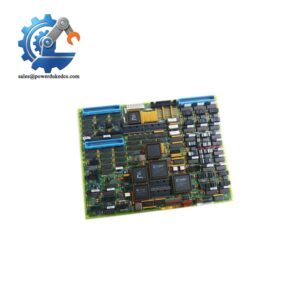
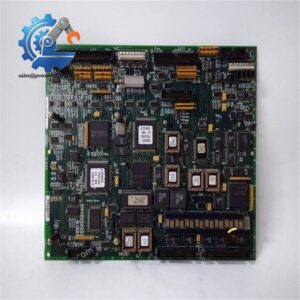
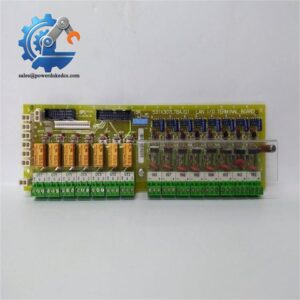
A turbine-speed signal failure can become a protection-system problem very quickly. The GE IS200TTURH1CCC is the TTUR turbine terminal board used in the Mark VI turbine-control architecture, providing the field interface for multiple turbine signals, with particular emphasis on passive speed-pickup inputs. Available technical records identify 12 passive speed-pickup inputs and an interface architecture using multiple 37-pin connectors. The board is associated with the VTUR turbine-protection circuitry and can be deployed within simplex or TMR control arrangements. This makes exact board identification important: TTUR is not a generic terminal block, and its connector and signal architecture must match the installed cabinet.
For maintenance procurement, the field-interface count is the useful number. Twelve passive speed pickups provide the acquisition path needed for turbine rotational-speed monitoring, while the associated terminal and connector arrangement transfers those signals to the appropriate protection/control electronics. The S1DF00Z identifier should be retained as part of the purchasing record because secondary technical records associate it with the exact supplied assembly. Public sources disagree on some environmental and detailed electrical values, so specifications such as operating temperature should not be promoted as guaranteed limits without the applicable GE documentation. The safer replacement strategy is exact part-number, revision, connector, and system-architecture matching.
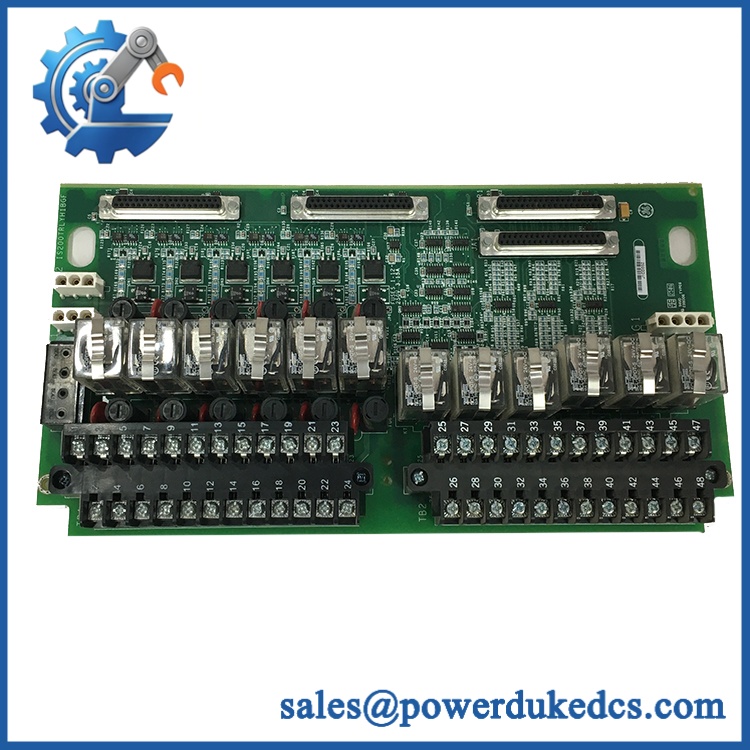
GE IS200TTURH1CCC
Module 4: Compatibility & Installation Traps
Migration/Compatibility
- System: GE Mark VI / Speedtronic turbine control
- Functional Designation: TTUR
- Full Part Number: IS200TTURH1CCC
- Additional Identifier: S1DF00Z
- Primary Role: Turbine terminal/interface board
- Speed Inputs: 12 passive speed-pickup channels
- Associated Protection Hardware: VTUR turbine protection board
- System Architecture: Simplex and TMR applications
- Interface: Multiple 37-pin connectors plus field terminal blocks
- Replacement Type: Exact IS200TTURH1CCC assembly preferred
- Configuration: Preserve original field wiring, connector assignment, speed-pickup channel mapping, and system redundancy arrangement
- Logic Rewrite: Normally not required for an exact terminal-board replacement; channel assignment and system diagnostics must be validated
- Revision Matching: Match the complete H1CCC and S1DF00Z identification before shipment
⚠️ Field Traps (Watch Out)
1. Do not swap speed-pickup channels based on terminal proximity.
The twelve passive speed-pickup circuits form part of the turbine protection and monitoring chain. Record the original channel-to-sensor mapping before disconnecting the terminal board. A physically successful replacement can still produce incorrect speed feedback if the field conductors are landed on the wrong channels.
2. Match the VTUR interface and redundancy architecture.
The TTUR board operates with associated Mark VI turbine-protection hardware, and TMR installations use multiple signal paths. Verify the exact connector assignment and redundant path before commissioning.
3. Do not assume every IS200TTURH1C variant is interchangeable.
The IS200TTURH1C family includes multiple suffix combinations. The requested IS200TTURH1CCC S1DF00Z should be matched against the installed board’s complete identification rather than ordering a generic TTUR board.
4. Treat the speed-pickup wiring as a protection circuit.
Do not introduce temporary jumpers or unverified signal sources into production speed-input circuits. Confirm the sensor type, cable shielding, polarity/termination requirements, and applicable GE wiring diagram before applying test signals.
Module 5: Quality Assurance SOP
Each available GE IS200TTURH1CCC S1DF00Z should undergo a documented turbine-terminal-board inspection and functional test before shipment:
- OEM anti-counterfeit visual inspection: Verify GE identification, complete catalog number, marking, TTUR designation, connector arrangement, terminal labeling, and PCB artwork.
- Revision verification: Record all visible functional and artwork revision markings and confirm the complete requested assembly identifier.
- Mechanical inspection: Check the PCB, mounting holes, terminal blocks, connectors, standoffs, and board edges for damage.
- PCB condition inspection: Examine for corrosion, contamination, cracked components, thermal discoloration, lifted components, damaged traces, and evidence of previous repair.
- Conformal-coating inspection: Check coated surfaces for cracking, peeling, moisture intrusion, contamination, or localized thermal stress.
- Connector inspection: Verify all 37-pin connector interfaces for bent pins, contamination, broken retainers, and mechanical deformation.
- Terminal inspection: Check every field terminal for secure mechanical attachment, oxidation, and abnormal heating evidence.
- Power-path precheck: Perform controlled continuity/resistance checks against the approved GE test procedure before energization.
- Power-on self-test (POST): Install the board in an approved Mark VI test fixture and verify expected supply and diagnostic behavior.
- Speed-pickup simulation: Apply controlled, isolated simulated pulse signals to representative passive speed-pickup channels and verify correct signal transfer.
- All-channel verification: Test all 12 speed-input paths individually where the laboratory fixture supports complete channel testing.
- Signal-isolation check: Verify representative channels independently so that cross-channel leakage or wiring faults are detected.
- VTUR interface verification: Connect the board to an approved VTUR-compatible test arrangement and verify signal transfer through the intended protection path.
- Simplex/TMR path test: For boards designated for TMR service, verify each applicable redundant interface separately.
- Terminal continuity test: Confirm field-terminal-to-connector continuity against the applicable wiring documentation.
- Diagnostic verification: Introduce controlled input-loss conditions and verify expected system-side diagnostic behavior.
- Final QC record: Record exact part number, identifier, revision, all tested channels, connector checks, simulated input frequency/levels, and technician sign-off.
- ESD-safe packaging: Protect the PCB in ESD-safe packaging with rigid protection around connectors and terminal blocks.
The most valuable test evidence is channel-by-channel speed-input verification. A simple continuity check does not confirm that the board correctly transfers the pulse characteristics required by the turbine protection system.
Module 6: CRO-Driven Buyer FAQ
What is GE ?
GE is a TTUR turbine terminal board used in the Mark VI turbine-control architecture. Available technical records associate it with turbine speed-pickup interfacing and VTUR turbine-protection hardware. The identifier should be retained as part of the exact procurement specification.
How many speed-pickup inputs does the TTUR board provide?
Available technical records identify 12 passive speed-pickup inputs on the configuration. These inputs are used to transfer turbine rotational-speed signals into the Mark VI protection/control architecture.
Is compatible with TMR Mark VI systems?
Yes, available technical references associate the board with both Simplex and TMR arrangements. For an actual replacement, verify the exact redundant connector assignment and associated VTUR configuration before commissioning.
Is the the same as the VTUR board?
No. The TTUR is a turbine terminal/interface board, while VTUR is the associated turbine-protection PCB. The TTUR provides the field signal interface; the VTUR performs the relevant protection/control processing.
Can the TTUR board be replaced while the Mark VI system is powered?
Do not assume live replacement. The board is connected to turbine speed-pickup and protection-related wiring. Follow the approved GE Mark VI maintenance procedure, isolate the appropriate control power, and verify the turbine protection system is in the required maintenance state before removal.
What should I verify before ordering ?
Confirm the complete part number, identifier, board revision, terminal-board wiring, speed-pickup channel count, VTUR interface, and whether the installation is Simplex or TMR. A clear photograph of the installed board label and connector side is recommended for exact matching.
What warranty and technical support should I expect?
Warranty duration should be stated for the exact unit condition and test status on the quotation. Technical support should cover part-number verification, revision matching, VTUR compatibility, terminal mapping, speed-pickup testing, and documented bench-test results. Turbine protection engineering, overspeed-trip testing, and production commissioning should be treated separately unless explicitly included.


 Start Chat