

Description
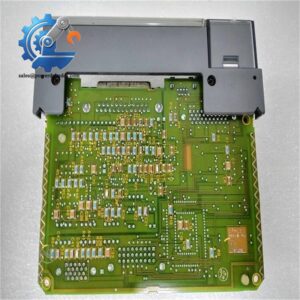
- Model & Brand: GE IS200VPROH1BEF
- Series: GE Mark VI Speedtronic
- Functional Acronym: VPRO
- Part Type: Emergency Turbine Protection Board
- Primary Function: Independent emergency overspeed and emergency-stop protection
- Protection Architecture: Triple-redundant VPRO arrangement
- Related Terminal Boards: TPRO and TREG
- Trip Solenoid Capacity: Up to 3 trip solenoids through the associated TREG/TRPG architecture
- Trip Supply: 125 VDC
- Communication: IONet Ethernet
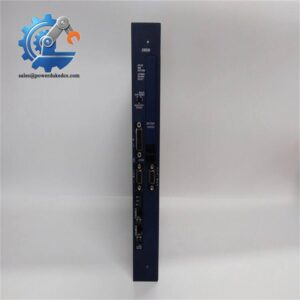
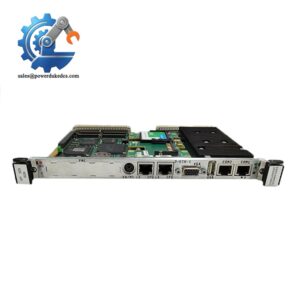
- Front Interfaces: J3, J4, J5, J6 latching connections; J7 125 VDC power connection
- Physical Dimensions: Exact OEM dimensions for the H1BEF configuration are not reliably established from the available GE documentation
- Estimated Shipping Weight: Approximately 0.7–1.2 kg packed for freight planning; verify the actual serialized unit before shipment
- Mounting: VME/Protection Module installation
- PCB Construction: Conformal-coated Mark VI protection electronics
- What’s in the Box: IS200VPROH1BEF board and ESD protective packaging; cables, terminal boards, mounting hardware, and manuals only when expressly listed on the PO
- Handling Class: ESD-sensitive turbine-protection electronics; treat the 125 VDC connector and front-panel connectors as controlled interfaces
GE documentation identifies the VPRO as an Emergency Turbine Protection Board. The VPRO, TPRO, and TREG assemblies form an independent emergency overspeed protection system separate from the primary turbine control system. ([GEH-6421M Mark VI Turbine Control System Guide])
Product Introduction
Architecture Hook
The IS200VPROH1BEF belongs to the GE Mark VI VPRO protection architecture, where three independent VPRO boards perform emergency turbine protection functions. Each VPRO has its own processor, I/O interface, power supply, and IONet communications path. The protection system controls the trip-solenoid voting circuitry through TREG and receives speed, voltage, and other protection inputs from TPRO. ([GEH-6421M Mark VI Turbine Control System Guide])
For asset control, the complete IS200VPROH1BEF identification should remain attached to the serialized spare. The H1B architecture superseded the earlier H1A design and supports an optional second TREG board through J4; H2B versions have a different architecture and do not provide that second-TREG capability. This distinction is critical when selecting a replacement (a visually similar VPRO card is not automatically equivalent).
Core Technical Specifications
| Parameter | Value |
|---|---|
| Manufacturer | GE |
| Complete Part Number | IS200VPROH1BEF |
| Functional Family | VPRO |
| Product Type | Emergency Turbine Protection Board |
| System | Mark VI Speedtronic |
| Protection Function | Emergency overspeed and emergency stop |
| Architecture | Triple Modular Redundancy |
| Associated Terminal Board | TPRO |
| Associated Trip Relay Board | TREG |
| Trip Solenoid Capacity | Up to 3 |
| Trip Supply | 125 VDC |
| Board Power Source | On-board conversion from 125 VDC |
| On-Board Supply Outputs | 5 VDC and 28 VDC |
| Communications | IONet Ethernet |
| J3/J4/J5/J6 | TPRO/TREG and protection-system interfaces |
| J7 | 125 VDC power input |
| VME Interface | Available for programming/testing; neutralized in the Protection Module |
| Thermocouple Inputs | 9, primarily for gas-turbine exhaust over-temperature protection |
| Analog Inputs | 3 current inputs associated with TPRO |
| Synchronization Protection | Backup synch-check function |
| Functional Revision | H1B family |
| Artwork Revision | F |
| Firmware | VPRO firmware/configuration dependent |
| Physical Dimensions | Not reliably established for exact H1BEF configuration |
| Standalone Weight | Not reliably established by OEM documentation |
| Lifecycle | Legacy Mark VI hardware |
GE’s Mark VI system guide states that each VPRO has an independent power supply generating 5 VDC and 28 VDC from a 125 VDC cabinet supply, while the protection architecture operates with three independent VPRO boards.
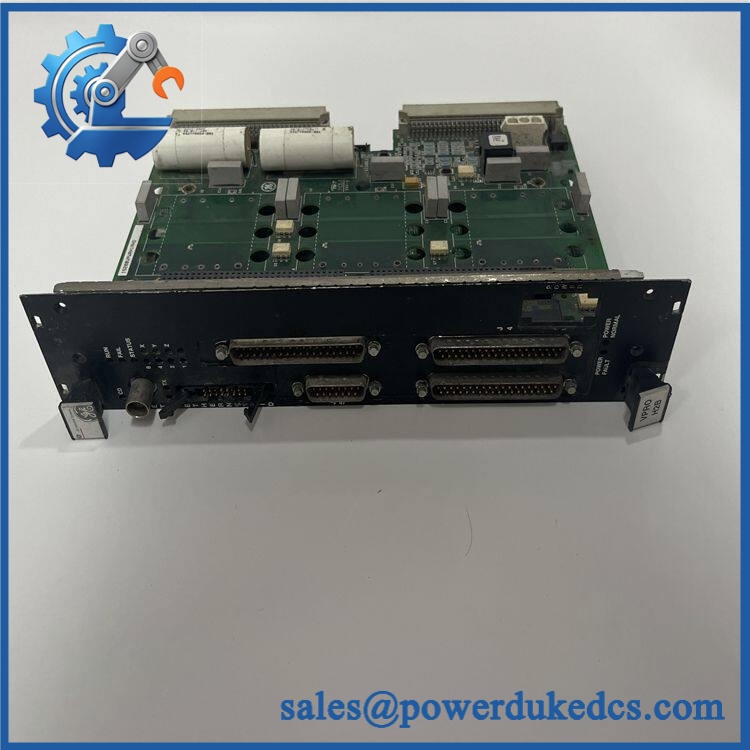
GE IS200VPROH1BEF
🚨 Global Compliance & Industry Certifications
- CE Mark: Do not assume standalone CE conformity for the IS200VPROH1BEF PCB. Any conformity declaration should cover the applicable Mark VI equipment configuration.
- UL / cUL: No exact standalone UL/cUL certificate for this particular H1BEF revision was verified from the available documentation.
- ATEX / IECEx: GE has published ATEX certification for defined Mark VIe programmable-controller configurations, but that certification should not automatically be applied to this Mark VI VPRO board. Certificate scope must match the exact equipment and installation.
- Marine / DNV: No VPROH1BEF-specific DNV certificate was verified. Marine approval must be established from the complete approved control-system configuration.
- Functional Safety: VPRO forms part of an independent emergency overspeed and emergency-stop protection system. Its correct operation directly affects turbine protective action.
- EMC: IONet communications and low-level protection signals operate in a turbine environment with significant electrical switching energy; grounding, shielding, and cable routing must follow the approved GE installation design.
A safety-related certificate should never be inferred simply because the PCB belongs to a Mark VI turbine system. The certificate scope, hardware revision, enclosure, wiring, and installation conditions all matter.
Verify specific lot certifications with OEM.
🚨 Long-Term Storage & Asset Preservation Guide
Keep in an ESD shielding bag. The board contains processor electronics, communications circuitry, connector assemblies, and an onboard power supply. Do not store the PCB directly against cardboard, foam, or other bare circuit boards.
Keep warehouse humidity below 60% RH where practical. Long-term exposure to high humidity can degrade connector contacts and create surface contamination around the high-density interfaces. Avoid condensation cycles when transferring the spare between cold storage and a warm turbine-control room.
Preserve the complete revision and firmware record. Record H1BEF, serial number, hardware revision, artwork revision, date code, and available firmware/version information. VPRO replacements may require firmware verification before return to service, so losing that information reduces the value of an otherwise usable spare.
Do not apply a generic capacitor-reforming schedule without GE-specific evidence. The available VPRO documentation does not establish a universal periodic reforming interval for this exact board. Use controlled inspection and functional testing before installation.
Physical Installation Prerequisites
Install only in the appropriate GE Mark VI Protection Module/VPRO architecture. The board interfaces with TPRO and TREG through the front-panel connections, while its protection electronics remain separate from the main turbine-control system.
The VPRO installation procedure requires the relevant VME/Protection Module power to be controlled before physical insertion, followed by correct seating of the edge connectors and tightening of the captive front-panel screws. After installation, diagnostic indicators must be checked during power-up.
No verified GE-specific universal 50 mm top-and-bottom clearance was established for this exact board. Do not place an arbitrary value on the cabinet drawing. Preserve the original Protection Module ventilation, connector access, cable bend radius, and service clearance.
Treat J7 as a high-energy control connection. The VPRO architecture uses a 125 VDC supply, which is converted internally to 5 VDC and 28 VDC. Isolate the applicable power source and verify zero hazardous voltage before disconnecting the board.
Before installation, verify the TPRO/TREG cable arrangement. H1B supports a second TREG connection through J4, whereas H2B does not; therefore, the installed system architecture must be established before approving a substitution.
Buyer’s FAQ — Logistics & Compliance Focus
Q1. What HS tariff code should be used for ?
Do not assign a final HS classification from the model number alone. The appropriate tariff heading depends on the importing country’s tariff schedule and customs interpretation of a dedicated turbine-protection control board. Use a precise description such as “GE Mark VI VPRO Emergency Turbine Protection Board, ”, then have the destination-country broker validate the final tariff code.
Q2. What should be declared as Country of Origin?
Do not infer COO from the GE brand or warehouse location. Obtain a shipment-specific origin declaration tied to the actual serialized unit or lot. Retain the COO evidence with the commercial invoice, packing list, and asset record.
Q3. Should shipping insurance cover the board’s replacement value?
Yes. Physical weight is not the correct measure of risk for a turbine-protection spare. A VPRO failure can create significant downtime and engineering exposure when an exact replacement is unavailable. Record the serial number, hardware revision, condition, declared value, package dimensions, gross weight, and pre-shipment photographs.
Q4. Does a New Original include the latest firmware pre-loaded?
Do not assume so. VPRO is a processor-based protection board with firmware/configuration dependencies, and current technical references note that a firmware update may be required during installation. The replacement should be checked against the installed system firmware and configuration before it is placed into service.
Q5. What should receiving inspection retain before this spare enters controlled inventory?
Record the complete identity, serial number, hardware/artwork revision, firmware information where accessible, certification evidence, COO documentation, connector condition, physical condition, and photographs. Also retain the installed TPRO/TREG/J4 architecture record, because H1B and H2B VPRO configurations are not interchangeable where a second TREG is used.


 Start Chat