

Description
- Brand: GE / General Electric
- Full Model Number: IS215UCCCM04A
- System/Series Family: GE Mark VIe / Speedtronic Turbine Control
- Core Function: CompactPCI/VME controller assembly for Mark VIe turbine control
- Top 3 Hardcore Specs: 1600 MHz processor; 256 MB DRAM; 128 MB Flash
- Network Interface: 6 Ethernet-type ports
- Storage: 128 MB SD card
- Board Revision: A
- PCB Coating: M04 protective coating
- Stock Status: New Surplus / Fully Tested Refurbished — verify exact condition and test report before shipment
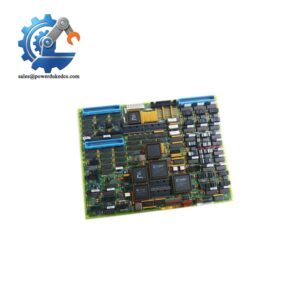
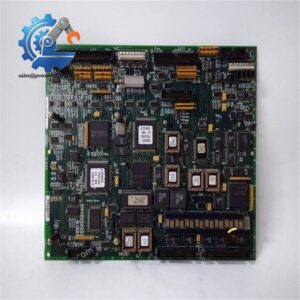
Published technical references identify IS215UCCCM04A as a UCCC Compact PCI controller associated with the GE Mark VI turbine-control family. Available hardware documentation also identifies 1600 MHz processing, 256 MB DRAM, 128 MB Flash, six Ethernet-type ports, and a 128 MB SD card on the assembly.
Module 3: Commercial-Technical Deep Dive
When a Mark VIe turbine controller fails, the replacement has to match more than the connector footprint. IS215UCCCM04A is identified as a UCCC controller board used within GE’s turbine-control architecture, with a CompactPCI/VME-style assembly, six Ethernet-type ports, onboard memory, status indicators, and a local reset function. The available hardware references list a 1600 MHz processor, 256 MB DRAM, 128 MB Flash, and a 128 MB SD card, making this a controller-level spare rather than a simple communications interface. GE’s Mark VIe documentation confirms that its control platform is used for gas, steam, and hydro turbine applications, with networked control, monitoring, alarm, and trip functions.
The hard ROI comes from restoring the correct computing platform without redesigning a legacy turbine-control cabinet around unrelated hardware. Six labeled Ethernet interfaces can simplify reconnection where the original system used multiple dedicated network paths, while the onboard flash, DRAM, and removable SD storage support the controller’s installed software environment. The important limitation is configuration: a powered-up spare is not automatically a commissioned spare. The replacement must match the installed hardware revision and approved Mark VIe application image. —Record the existing controller identification and software state before removal; that information can be more valuable than the board itself during recovery.
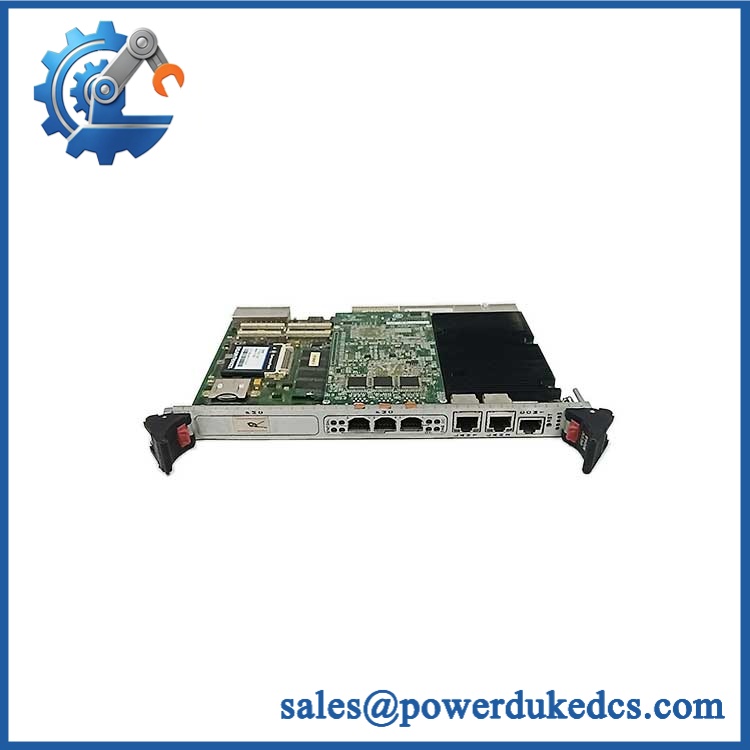
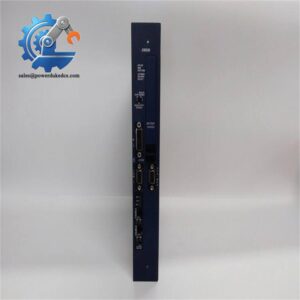
GE IS215UCCCM04A
Module 4: Compatibility & Installation Traps
Migration/Compatibility
For an existing GE Mark VIe installation that specifies IS215UCCCM04A, the correct approach is a like-for-like controller replacement, subject to verification of the rack architecture, hardware revision, software image, and project configuration. The board is described as a CompactPCI/VME controller for GE’s Mark VI turbine-control platform, so it should not be treated as a generic VME processor that can be substituted without checking the system BOM.
A firmware or application reload may be required after hardware replacement, depending on how the customer’s Mark VIe system is provisioned. Do not promise a plug-and-play recovery solely from the part number. The safest procedure is to document the existing software revision, controller identity, network configuration, and removable-media contents before taking the failed unit out of service.
⚠️ Field Traps (Watch Out)
- Network-port misidentification: The board has six Ethernet-type ports, and the faceplate labels distinguish their intended uses. Photograph every cable position before removal and reproduce the approved topology on the replacement. Swapping network connections can leave the controller apparently healthy while isolating it from the required control or service network.
- Software/image mismatch: Memory capacity does not prove application compatibility. A controller can complete power-up diagnostics yet fail to perform its intended turbine-control function if the installed application, configuration, or system revision does not match the site. Preserve the original software state before replacement.
- ESD and connector damage: This is a processor-level board with multiple integrated circuits and a backplane connector. Use controlled ESD handling and avoid flexing the PCB or touching exposed contacts during extraction and installation.
Module 5: Quality Assurance SOP
For surplus inventory and legacy turbine-control boards, the pre-shipment process should be documented rather than limited to a visual check:
- OEM anti-counterfeit visual inspection — verify GE labels, board number, revision marking, connector arrangement, faceplate labeling, PCB coating, and evidence of unauthorized rework.
- Part-number reconciliation — record and photograph IS215UCCCM04A and every additional identification marking visible on the assembly.
- PCB condition inspection — inspect the CompactPCI/VME backplane connector, Ethernet ports, SD-card interface, LEDs, reset switch, heat sink, capacitors, solder joints, and PCB surface for corrosion or mechanical damage.
- Power-on self-test (POST) — install the board in an appropriate test environment and verify expected startup behavior, initialization, and available diagnostic/status indications.
- Memory verification — where the test platform permits direct confirmation, verify the documented memory architecture, including 256 MB DRAM and 128 MB Flash.
- Ethernet interface verification — test each applicable Ethernet-type interface according to its intended system function and verify link establishment.
- Communication handshake verification — confirm successful communication with the representative Mark VIe test environment rather than relying on power-up alone.
- Storage verification — inspect and, where technically appropriate, verify the 128 MB SD-card subsystem and its physical seating.
- Thermal and stability observation — operate the controller long enough to identify abnormal temperature rise, intermittent link behavior, resets, or diagnostic faults.
- Final QC release — attach identification photographs, POST results, communication-test results, software information, and packaging inspection records to the shipment file.
For this class of controller, the meaningful test question is not “does the board power on?” It is “does the controller initialize, communicate, and remain stable in a representative Mark VIe environment?”
Module 6: CRO-Driven Buyer FAQ
1. Is GE IS215UCCCM04A obsolete?
The part is associated with the legacy GE Mark VI/Mark VIe turbine-control architecture and is now primarily encountered through spare and replacement inventory channels. One technical supplier specifically identifies the board as having reached last-time-buy status in 2011, so exact-part sourcing and condition verification are important for installed systems that still depend on it.
2. Is a direct replacement for every GE UCCC controller?
No. UCCC is a functional designation, not a guarantee of interchangeability. Match the complete part number, revision, chassis architecture, network arrangement, and application requirements. A different UCCC assembly may have different hardware or software dependencies.
3. Can I hot-swap the ?
Do not assume hot-swap capability. This is a turbine-control processor assembly rather than a routine field-replaceable I/O module. Follow the site shutdown, isolation, and GE equipment-specific replacement procedure unless the applicable system documentation explicitly permits energized replacement.
4. Does the replacement need firmware or application loading?
Possibly. Hardware replacement does not guarantee that the existing Mark VIe application will automatically be present or correctly configured. Capture the installed controller image, software revision, network parameters, and configuration before removing the failed unit, then restore only the site-approved image and settings.
5. What warranty and technical support should I expect?
The quotation should explicitly state whether the unit is new surplus, unused, or tested refurbished, together with the warranty period. Technical support should cover exact-part identification, hardware compatibility, available test evidence, and installation guidance. Application recovery, control-logic changes, and turbine commissioning should be treated as separate engineering work.



 Start Chat