

Description
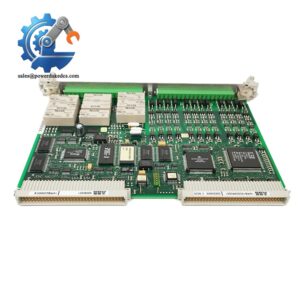
- Model & Brand: GE IS215UCVEM10A
- Functional Designation: UCVE / VMIC VME Controller
- Product Family: GE Speedtronic Mark VI
- Part Type: VMEbus Single-Board Computer / Controller
- Primary Function: Provides the computing platform used within the Mark VI VME control architecture.
- Associated VMIC Platform: Secondary technical records identify the board with the VMIVME-7614 family; however, published records conflict on the exact -132 versus -133 commercial configuration. Verify the physical label before ERP release.
- Processor: VMIC VME CPU platform; secondary records variously identify Socket 370/Celeron implementations, but processor details should be verified against the actual assembly.
- Memory: Published secondary records report configurations including DRAM, Flash, and battery-backed SRAM; exact capacity is revision-dependent and should not be inferred from the base model alone.
- Form Factor: 6U VMEbus board/assembly
- Estimated Net Weight: Approximately 1–2 kg, depending on the complete assembly and installed accessories.
- Estimated Shipping Weight: Approximately 1.5–2.5 kg with ESD shielding, rigid cushioning, and export carton.
- Physical Dimensions: Use the actual board and packaging for freight master data; reliable OEM dimensions for this exact IS215UCVEM10A configuration were not established.
- Storage Media: Some secondary records report CompactFlash or removable storage support for the associated VMIC platform.
- What’s in the Box: IS215UCVEM10A board/assembly only unless the purchase order specifically includes removable media, cables, or mounting accessories.
- Receiving Control: Record IS215UCVEM10A, all VMIC model markings, board revision, processor identification, storage media, and battery/date information.
The part is consistently identified as a GE Mark VI VME controller / CPU card, but secondary sources provide conflicting details for processor, memory, and exact VMIC suffix. That conflict should be resolved from the physical nameplate and board revision before engineering acceptance.
Product Introduction
The GE IS215UCVEM10A occupies the computer/controller layer of the legacy Mark VI VME architecture. Unlike a terminal board or discrete I/O card, it provides the processing environment required for control-system application execution and VMEbus communication. In an installed turbine cabinet, its compatibility is determined by the VME backplane, companion boards, application software, and the exact controller revision.
For asset preservation, the complete hardware identity matters more than a generic description such as “Mark VI CPU.” Public secondary records associate this model with VMIC VME computer platforms, but they disagree on detailed CPU and memory configurations. Store the exact physical label, board revision, processor information, storage media, and battery condition with the asset record (that information can determine whether an apparently similar controller is actually usable).
Core Technical Specifications
| Parameter | Value |
|---|---|
| Manufacturer | General Electric / GE Fanuc |
| Product Family | Speedtronic Mark VI |
| Model | IS215UCVEM10A |
| Functional Type | VME CPU / Controller |
| Product Type | VMEbus Single-Board Computer |
| System Role | Mark VI control-system processor |
| Bus Architecture | VMEbus |
| Form Factor | 6U VME |
| Associated VMIC Family | VMIVME-7614 family reported |
| Processor | Revision/configuration dependent; verify actual board |
| Memory | Revision/configuration dependent; verify actual board |
| Flash / Storage | Configuration dependent |
| Battery-Backed Memory | Reported on associated VMIC platforms; verify physical unit |
| Ethernet | Reported on associated VMIC controller configurations |
| Serial Interfaces | Reported on associated VMIC controller configurations |
| Operating System | Application/platform dependent |
| Mounting | Mark VI VME rack |
| Standalone I/O Function | None |
| Exact Power Consumption | Not reliably established for this exact revision |
| Exact Heat Dissipation | Not reliably established |
| Exact Dimensions | Not reliably established from primary documentation |
| Lifecycle Position | Legacy / Obsolete |
Current secondary references consistently describe the , but several suppliers publish mutually inconsistent claims such as AMD G-series processors, Intel Socket 370/Celeron processors, and large modern memory capacities. Those values should not be entered into an engineering master record unless verified from the physical board or original VMIC documentation.
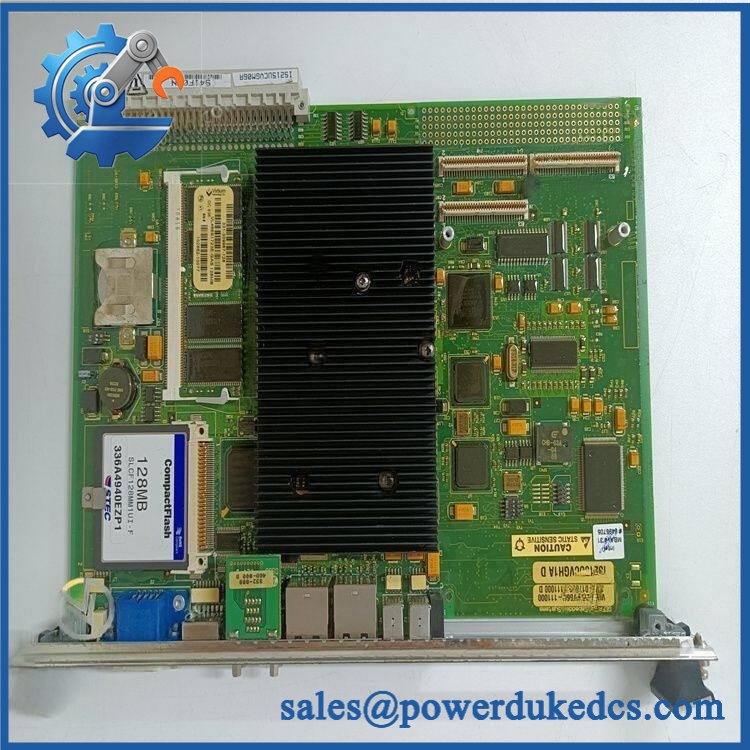
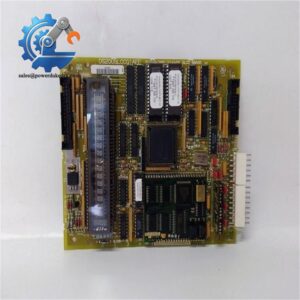
GE IS215UCVEM10A
Global Compliance & Industry Certifications
This controller should be evaluated as a component of the Mark VI turbine-control system.
- CE Mark: Verify the applicable GE Mark VI system conformity documentation and hardware revision. Do not assign standalone CE conformity to the loose VME board without supporting documentation.
- UL/cUL: No reliable standalone UL/cUL certification was established for the exact assembly.
- ATEX / IECEx: The VME controller should not be classified as intrinsically safe solely from its part number. Hazardous-area suitability depends on the complete Mark VI system, enclosure, interfaces, and installation method.
- Marine / DNV: No standalone DNV approval was reliably established for this exact controller.
- EMC: Preserve the original Mark VI rack grounding, shielding, cable routing, and cabinet arrangement.
- Functional Safety: The controller may participate in turbine control functions, but that does not establish an independent SIL certification for the board.
For audit purposes, retain the board nameplate, revision, system certificate, software revision, storage-media identity, and installation-specific approval as separate records.
Verify specific lot certifications with OEM.
Long-Term Storage & Asset Preservation Guide
Keep the controller inside an ESD shielding bag. The VME edge connector is particularly vulnerable to contamination and mechanical damage. Never place the connector directly against metal shelving or unprotected packaging.
Maintain warehouse humidity below 60% RH where practical. Stable, dry conditions are preferable for multi-year storage because oxidation at VME contacts can cause intermittent backplane communication after installation.
Check the battery-backed memory condition. VMIC controller configurations associated with this family can include battery-backed memory. Do not remove or replace a battery as a generic warehouse activity; record the battery identification and condition, then follow the applicable manufacturer maintenance procedure.
Preserve removable storage media. Where CompactFlash or other removable media are present, keep the media associated with the original controller and protect it against ESD, magnetic fields, contamination, and accidental overwriting (application software can be as important as the hardware).
Physical Installation Prerequisites
The is a 6U VME controller board intended for a compatible Mark VI VME chassis.
Rack compatibility: Verify the exact VME backplane, slot location, companion boards, and Mark VI cabinet configuration before insertion. A generic VME rack is not necessarily electrically equivalent to the GE turbine-control rack.
Mechanical clearance: Preserve the original VME card guides, front-panel spacing, rear cable clearance, and engineered airflow. Do not impose an arbitrary 50 mm clearance where the chassis design uses a defined card pitch.
Power: Do not bench-apply an assumed voltage. Determine the exact VME power-rail requirements from the installed Mark VI hardware and the board documentation before energization.
Grounding: Maintain the Mark VI chassis protective-earth and signal-ground arrangement. Do not substitute communication or signal returns for protective earth.
Cooling: Keep rack fans, ventilation openings, and card spacing unobstructed. CPU-based VME boards are sensitive to airflow degradation, particularly in older turbine cabinets.
Storage media: Preserve any original CompactFlash or other application media. A replacement CPU without the correct application image may not restore the control system.
Battery: Verify the backup-memory battery condition before commissioning long-stored inventory. Battery leakage or loss of retention can create a configuration problem even when the controller otherwise passes startup testing.
Software compatibility: Confirm the operating environment and Mark VI application before release from stores. This controller should be considered an application-specific computing asset, not a generic VME SBC.
Buyer’s FAQ — Logistics & Compliance Focus
Q: What HS Tariff Code should be used for ?
A: A classification under HS 8471.50 may be considered because the item functions as a processing unit, while HS 8538.90 may be considered where customs treats it primarily as a control-system module. The final national tariff code must be validated against the importing country’s tariff schedule and the actual commercial description.
Q: What Country of Origin should appear on the invoice?
A: Use the actual manufacturing origin supported by the physical nameplate or traceable GE/VMIC documentation. Do not use the seller’s warehouse location. Where supplier records conflict, physical-unit evidence should control the customs declaration.
Q: Should I insure one for international transport?
A: Yes for a production-critical Mark VI installation. The board is relatively compact, but controller scarcity and turbine downtime can make replacement exposure much larger than freight cost. Use ESD shielding, rigid support around the VME connector, moisture protection, tracking, and cargo insurance based on documented replacement value.
Q: Does the include the latest firmware pre-loaded?
A: Do not assume it. This is a VME computer/controller, and its software environment can depend on the specific hardware revision and installed storage media. Before commissioning, verify the board revision, processor identity, memory configuration, operating environment, application image, and Mark VI software compatibility.
Q: Are all boards identical?
A: No. Secondary records show conflicting processor and VMIC configuration descriptions for this model, so exact revision control is essential. Do not accept a replacement solely because the front label says ; photograph the complete board, revision markings, processor, storage media, and battery arrangement before purchasing.
Q: What should be recorded in the warehouse asset master?
A: Record GE, , complete VMIC identification, board revision, processor type, memory/storage configuration, battery condition, serial number, COO evidence, certification status, received condition, and test status. For legacy Mark VI controllers, that level of traceability materially reduces the risk of issuing an incompatible spare.



 Start Chat


