

Description
- Brand: GE / GE Digital Energy
- Full Model Number: H201Ti / HYDRAN 201Ti
- System/Series Family: GE HYDRAN 201i Mark IV
- Core Function: Online dissolved-gas monitor for power-transformer insulating oil
- Primary Measurement: Hydrogen-equivalent dissolved gas concentration
- Measurement Range: 0–2,000 ppm
- Accuracy: ±10% of reading ±25 ppm
- Gas Rate: Hourly or daily rate-of-change monitoring
- Analog Output: 4–20 mA for 0–2,000 ppm
- Digital Communication: Isolated RS-485; Modbus and HYDRAN protocols
- Alarm Outputs: 3 SPDT dry-contact relays
- Enclosure: NEMA 4X / IP66
- Operating Ambient: -40°C to +55°C
- Oil Temperature: -40°C to +105°C with finned heat-sink adapter
- Oil Pressure: 0–700 kPa / 0–100 psi
- Installed Weight: 5.6 kg
- Stock Status: New Surplus / Fully Tested Refurbished — verify exact generation, power configuration, and sensor condition
Module 3: Commercial-Technical Deep Dive
Transformer failures rarely announce themselves with a single obvious electrical fault. The GE HYDRAN 201Ti provides continuous dissolved-gas monitoring directly at the transformer, using a fuel-cell sensor behind a gas-permeable membrane and reporting hydrogen-equivalent gas concentration from 0 to 2,000 ppm. GE specifies approximately ±10% of reading ±25 ppm accuracy, with gas-level trend monitoring based on hourly or daily rate of change. The unit also provides 4–20 mA output, isolated RS-485 communications, and three alarm relay contacts for integration with transformer protection and supervisory systems.
The hard ROI is earlier visibility into transformer insulation and oil-condition changes without waiting for periodic laboratory sampling. A 4–20 mA output can feed an established protection or SCADA system, while the isolated RS-485 interface supports Modbus or HYDRAN protocol communication. The H201Ti operates from -40°C to +55°C ambient, and GE specifies oil temperatures up to +105°C when the optional finned heat-sink adapter is used. One field constraint matters: sensor installation location has a direct effect on response quality. GE recommends mounting on a 1.5-inch valve, preferably on a straight cooler-return section with suitable oil circulation.
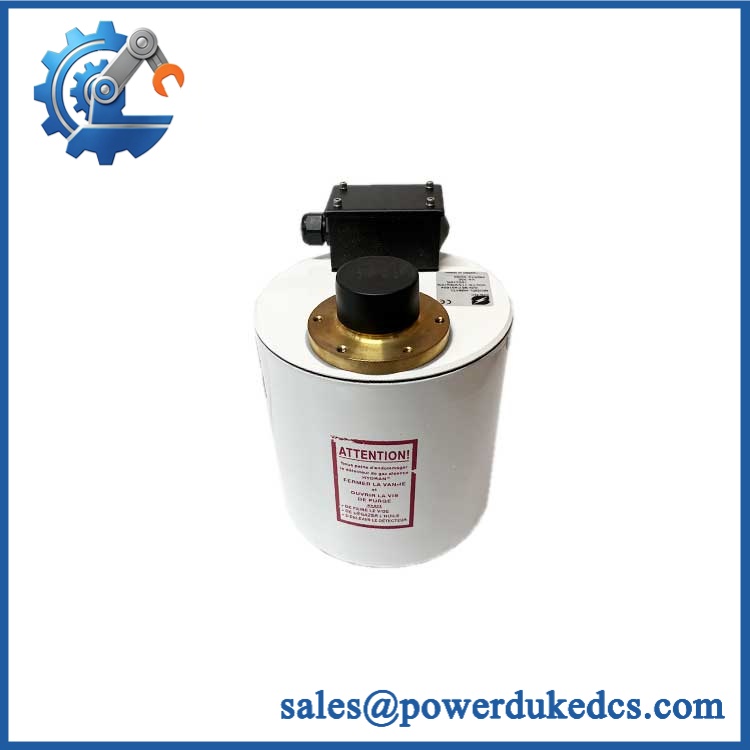
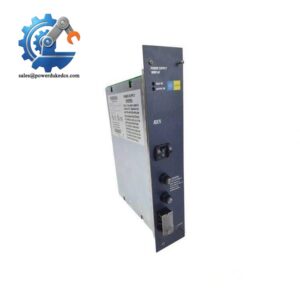
GE H201Ti
Module 4: Compatibility & Installation Traps
Migration/Compatibility
For a transformer monitoring installation already specified for H201Ti, the preferred replacement is a like-for-like HYDRAN 201Ti exchange. The monitor can operate independently or connect to optional H201Ci-1 or H201Ci-C controllers through the supervisory link. GE documentation also supports networking through RS-485, with up to 32 controllers or 201Ti units in a daisy-chain and a maximum total cable distance of approximately 1,200 m.
A PLC logic rewrite is not normally required because the H201Ti is an intelligent monitoring instrument rather than a general-purpose PLC CPU. Configuration still matters: each H201Ti requires a unique identification number, network communication parameters must match the installed system, and the selected power-input range must correspond to the specific unit. GE documentation shows different H201Ti power configurations across product generations, so the nameplate should be checked rather than relying on a generic voltage statement.
⚠️ Field Traps (Watch Out)
- Power-input variant: H201Ti documentation exists with different AC supply configurations, including switchable 90–132 VAC / 180–264 VAC versions and earlier configurations. Verify the nameplate and internal power arrangement before energizing.
- Sensor installation location: GE recommends a 1.5-inch valve and a location with suitable oil flow; mounting position affects response quality and measurement stability.
- RS-485 network addressing: Every H201Ti on a local network requires an exclusive ID, and network communication settings such as baud rate and protocol parameters must be coordinated across the installation.
- Line-voltage safety: The H201Ti uses AC line power. GE’s installation instructions explicitly require power isolation before electrical connections and a proper protective ground.
Module 5: Quality Assurance SOP
- OEM anti-counterfeit visual inspection — verify GE HYDRAN markings, H201Ti identification, enclosure condition, labels, connector arrangement, keypad/display, and evidence of unauthorized repair.
- Part-number reconciliation — photograph the complete H201Ti identification, serial number, hardware revision, and rated supply information.
- Enclosure and sensor inspection — inspect the NEMA 4X/IP66 housing, valve adapter, sensor assembly, membrane area, cable entry, and mechanical interfaces.
- Power-on self-test (POST) — energize the unit using a controlled test supply matching its nameplate and verify display startup, status LEDs, and absence of fail alarms.
- Sensor response verification — use an approved calibration or simulation method to verify the hydrogen-equivalent gas measurement path across representative points.
- Analog-output verification — confirm the documented 4–20 mA / 0–2,000 ppm output relationship using calibrated measurement equipment.
- RS-485 communication handshake — connect a controlled Modbus/HYDRAN test master and verify communication, unit identification, and data acquisition.
- Alarm verification — test the three SPDT alarm contacts under controlled conditions and verify Hi, Hi-Hi, and service/fail alarm behavior.
- Trend-function verification — confirm gas-level and rate-of-change data reporting using the approved test or simulation environment.
- Environmental-condition review — verify enclosure integrity and inspect the sensor and mounting hardware for evidence of moisture ingress, corrosion, or thermal damage.
- Stability observation — operate the unit under controlled conditions and monitor measurement stability, communications, display behavior, and alarm status.
- Final QC release — retain identification photographs, calibration results, communication logs, alarm-test results, and packaging inspection records.
For an online transformer gas monitor, a functioning display is only the first acceptance gate. The meaningful QA evidence is calibrated gas-signal verification plus communication and alarm testing.
Module 6: CRO-Driven Buyer FAQ
1. What is GE H201Ti?
The H201Ti is the GE HYDRAN 201Ti Intelligent Transmitter, designed for continuous dissolved-gas monitoring of transformer insulating oil. It measures hydrogen-equivalent gas from 0–2,000 ppm and provides analog, digital, and alarm outputs.
2. What gases does the H201Ti detect?
The sensor responds to dissolved combustible gases with hydrogen used as the reference concentration. GE’s published relative sensitivities identify hydrogen at 100%, carbon monoxide at approximately 15%, acetylene at approximately 8%, and ethylene at approximately 1.5% relative sensitivity.
3. Is H201Ti a direct replacement for every HYDRAN 201i unit?
Not automatically. Verify the exact hardware generation, AC input configuration, communication arrangement, sensor assembly, and installed controller architecture. GE documentation shows variations in power requirements across H201Ti generations.
4. Can the H201Ti be hot-swapped?
Do not assume hot-swap capability. The unit connects to transformer oil through a valve and also uses AC line power. GE’s installation procedure requires power isolation before electrical connections, and maintenance should follow the transformer manufacturer’s safety and isolation procedures.
5. Does the H201Ti require PLC programming?
No conventional PLC programming is required. Configuration involves the instrument’s identification number, communication parameters, alarms, measurement settings, and optional controller/network integration. A downstream PLC or SCADA system may still require correct scaling of the 4–20 mA signal or configuration of Modbus data points.
6. What warranty and technical support should I expect?
The quotation should state whether the H201Ti is new surplus, unused, or tested refurbished and specify the warranty period. Technical support should cover exact-unit identification, power-configuration verification, sensor condition, communication testing, calibration evidence, and installation documentation. Transformer protection engineering, dissolved-gas diagnosis, and site commissioning should remain separate specialist services.





 Start Chat