

Description
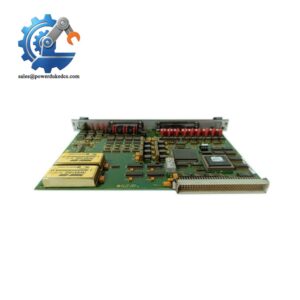
- Model & Brand: GE General Electric IS215UCVFH2A
- Product Family: GE Mark VI Speedtronic
- Part Type: UCVF VME Controller Board
- Physical Dimensions: Approximately 241 × 194 × 25 mm (W × H × D) for the bare-board envelope; packaged shipping dimensions will be larger.
- Estimated Shipping Weight: Approximately 1.0 kg net; use the actual packed weight for freight and commercial-invoice calculations.
- What’s in the Box: IS215UCVFH2A controller board, ESD shielding protection, mechanical protection, and applicable inspection documentation. A VME rack, cables, or removable accessories are not assumed unless specifically listed on the quotation.
Product Introduction
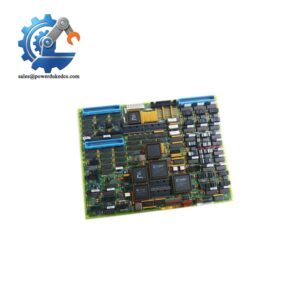
The GE IS215UCVFH2A mounts as a double-slot VME controller board inside the Mark VI control-module rack. It functions as the controller’s computing and VME-bus interface layer, exchanging data with Mark VI I/O boards while providing Ethernet and serial communications to the surrounding control architecture. This is therefore a controller-level spare, not a conventional signal I/O card (which is important when assigning warehouse criticality).
Its 850 MHz Intel Pentium III, 32 MB DRAM, and 16 MB or 128 MB flash configuration place it firmly in the legacy Mark VI generation. The board is conformal-coated and includes two 10/100Base-TX Ethernet ports, two serial interfaces, USB, SVGA, and local keyboard/mouse connections. For a brownfield turbine site, preserving the exact memory configuration and application image matters as much as matching the front-panel label.
Core Technical Specifications
| Parameter | Value |
|---|---|
| Manufacturer | GE General Electric |
| Model | IS215UCVFH2A |
| Series | Mark VI Speedtronic |
| Functional Acronym | UCVF |
| Product Type | VME Controller Board |
| Controller Architecture | Double-slot VME |
| Processor | Intel Pentium III |
| Processor Speed | 850 MHz |
| Main Memory | 32 MB DRAM |
| Flash Memory | 16 MB or 128 MB, configuration dependent |
| Operating System | QNX |
| VME Interface | VMEbus master/controller |
| Ethernet Ports | 2 × 10BaseT/100BaseTX RJ-45 |
| LAN 1 Function | Unit Data Highway / configuration / peer communication |
| LAN 2 Function | Separate IP logical subnet / expansion I/O functions |
| Serial Interfaces | COM1 and COM2 |
| USB | 1 service/peripheral interface |
| Video Interface | SVGA |
| Keyboard/Mouse | Dedicated local interface |
| Mezzanine Interface | Expansion opening with board-specific jumper configuration |
| Input Power | Mark VI VME-rack supplied DC power |
| Reported Supply Rating | Approximately 24 VDC / 1 A in aftermarket technical records; verify the rack-level supply specification before energizing |
| Board Construction | Conformal coated |
| Approx. Board Dimensions | 241 × 194 × 25 mm |
| Approx. Net Weight | 1 kg |
| Installation | Mark VI Control Module VME rack |
| Firmware / Application | QNX and turbine/application-specific software |
| Hot Replacement | Do not assume live replacement |
| Lifecycle | Legacy / Restricted |
Power and thermal considerations
Public technical records are not completely consistent on the exact UCVFH2A rack-power specification, so the actual Mark VI rack power distribution documentation should control the installation voltage and current limits. Do not apply a generic external 24 VDC source directly to the board simply because reseller records list 24 VDC.
At roughly the 1 kg physical class, this board is not a lightweight communication card. Its processor, memory, VME interface circuitry, and associated power electronics contribute to cabinet heat load, while the actual thermal performance depends on rack airflow and neighboring module density.
The 16 MB versus 128 MB flash configuration is a real procurement issue. Verify the installed flash size against the removed controller or site asset record before accepting a replacement.
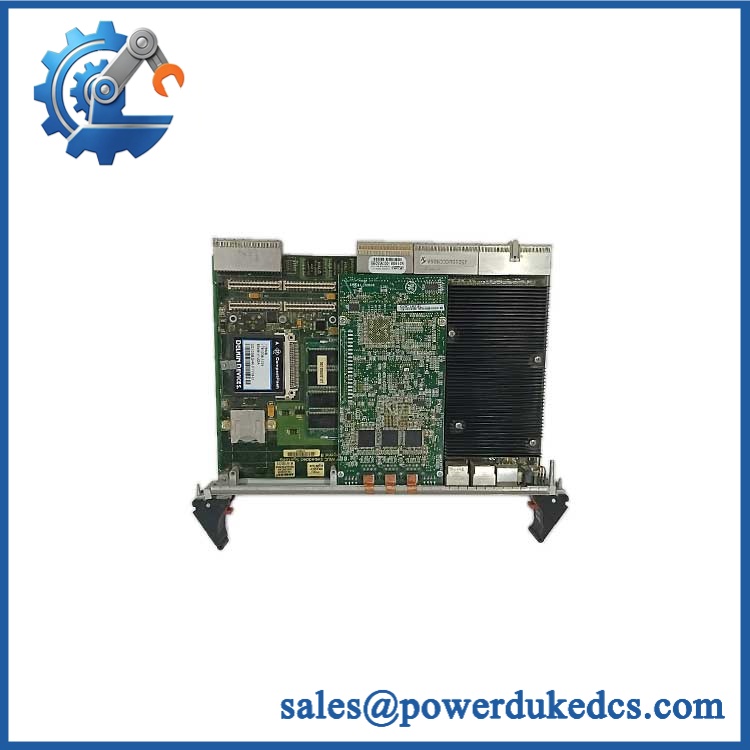
GE IS215UCVFH2A
Global Compliance & Industry Certifications
The IS215UCVFH2A is legacy turbine-control hardware. Certification should therefore be evaluated against the complete GE Mark VI system or cabinet configuration, not inferred from the controller PCB alone.
For audit-controlled purchasing:
- CE Mark: May apply to the applicable Mark VI equipment configuration; verify the exact system declaration.
- UL/cUL: Confirm against the specific Mark VI rack/cabinet assembly and revision.
- ATEX / IECEx: Do not assume hazardous-area approval for the standalone UCVF board. Where the controller is part of a certified Mark VI installation, the certification boundary and conditions must be checked.
- Marine approvals: DNV or other marine approvals should be established from the actual project equipment documentation; they should not be assumed from the generic Mark VI designation.
- Country of Origin: Establish from manufacturing traceability or supplier documentation for the actual board.
- HS classification: Final tariff classification should be confirmed by the importer or customs broker based on the product’s intended classification in the destination country.
For safety and hazardous-area work, certification matters because the allowable cabinet environment, wiring method, and equipment combination can depend on the certified assembly rather than the electronic board in isolation.
Verify specific lot certifications with OEM.
Long-Term Storage & Asset Preservation Guide
Keep the UCVFH2A inside an ESD shielding bag with the complete identification label visible. The exposed VME connector edge should be protected from repeated handling (contaminated edge contacts are a common source of intermittent rack faults).
Maintain a dry, stable storage environment without condensation. For long-term warehouse storage, keeping relative humidity below approximately 60% RH is a sensible control target, even where the equipment’s formal operating envelope permits higher non-condensing humidity.
Inspect the conformal coating, VME connector edge, Ethernet ports, serial connectors, USB/SVGA interfaces, and electrolytic components before issue. Do not automatically reform capacitors or replace batteries without confirming that the exact board revision contains the applicable components and that GE’s maintenance documentation requires the procedure.
Record the flash-memory configuration—16 MB or 128 MB—in the warehouse master data. That field can prevent an apparently identical board from being issued to the wrong turbine application.
Physical Installation Prerequisites
Install the IS215UCVFH2A only in the specified GE Mark VI Control Module VME rack and correct double-slot position. The VME backplane connector must align squarely; never force the board into the rack.
Maintain the rack’s specified service clearance and cooling airflow. Because exact Mark VI cabinet clearance varies by rack and enclosure design, follow the manufacturer’s cabinet layout rather than applying a universal 50 mm rule. Keep the VME card edge and guide rails clean.
Before energizing, inspect the rack power distribution and verify the correct supply rails at the VME backplane. The board’s COM, Ethernet, USB, SVGA, and mezzanine interfaces should be connected only as defined by the turbine’s approved configuration.
Preserve every jumper setting before replacement. In particular, any configuration associated with the mezzanine interface should be photographed and recorded before removing the original controller.
Buyer’s FAQ — Logistics & Compliance Focus
Q: What HS tariff code should I use for ?
A: The final Harmonized System classification depends on the importing country’s tariff schedule and customs interpretation. Treat any supplier-suggested code as preliminary and have the importer or customs broker confirm the declaration before shipment.
Q: Does the COO come from where the board ships from?
A: No. Country of Origin should reflect the applicable manufacturing origin and be supported by traceability documentation. Shipping location, warehouse address, and export port are not sufficient evidence of COO.
Q: Does the ship with the latest firmware already loaded?
A: Do not assume it. The UCVF operates with QNX and application-specific Mark VI software, and the correct controller image depends on the turbine installation. A replacement should be matched against the approved application backup, hardware revision, and flash-memory configuration before commissioning.
Q: What should shipping insurance cover for this legacy controller?
A: Insure the shipment for the documented commercial value, including the cost exposure associated with loss or physical damage in transit. Use ESD shielding, rigid edge protection, cushioning around the VME connector, moisture protection, and an outer carton capable of resisting impact and compression.



 Start Chat