

Description
- Brand: GE
- Full Model Number: IS220UCSAH1AK
- System/Series Family: Mark VIe / Mark VIeS
- One-Sentence Core Function: Embedded UCSA controller executing Mark VIe control applications and exchanging real-time data with distributed I/O over dedicated Ethernet networks
- Top 3 Hardcore Specs: 667 MHz Freescale PowerQUICC III processor; 256 MB DDR SDRAM; 1 GB NAND flash
- Controller Type: UCSA embedded processor/controller
- Operating System: QNX Neutrino
- Power Input: 18–36 VDC
- Ethernet: Multiple dedicated Ethernet interfaces for IONet and control-network functions
- Serial Service: RS-232 / RS-485 interfaces according to system configuration
- Time Synchronization: IEEE 1588 support through Mark VIe network architecture
- Cooling: Fanless convection cooling
- Architecture: Simplex, dual, or TMR system configurations
- Associated GE Part Number: 104W5452P001
- Manual Reference: GEH-6725
- Stock Status: New Surplus / Fully Tested Refurbished subject to availability
Available technical records identify IS220UCSAH1AK as the UCSA-H1A Mark VIe processor/controller, with associated part number 104W5452P001. The exact K-revision configuration appears in field inventory records as a GE UCSA processor used in Mark VIe turbine-control systems.
Module 3: Commercial-Technical Deep Dive
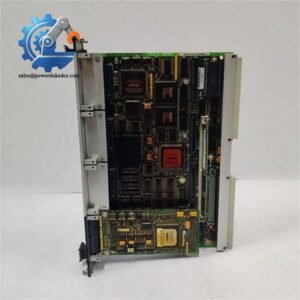
A failed IS220UCSAH1AK affects the control processor itself, not merely one I/O point. The module belongs to GE’s Mark VIe UCSA controller family and executes the real-time application while communicating with distributed Mark VIe I/O over dedicated Ethernet paths. Available technical records identify the unit as a UCSA-H1A Mark VIe processor, associated with 104W5452P001. The platform is based on a Freescale PowerQUICC processor architecture and runs QNX Neutrino; it is intended for real-time turbine and balance-of-plant control rather than general-purpose computing.
The replacement decision should focus on configuration identity, not processor speed alone. Published field records describe the K-version with a 667 MHz PowerQUICC III / MPC8349-class processor, 256 MB DDR memory, and flash storage, while other secondary sources report differing memory and interface details. Because the available public data is inconsistent, the exact IS220UCSAH1AK nameplate, associated hardware revision, firmware image, network assignment, and system configuration should be treated as the controlling references. Before commissioning, confirm the controller’s IONet assignments, plant-network connections, redundancy role, and application image.
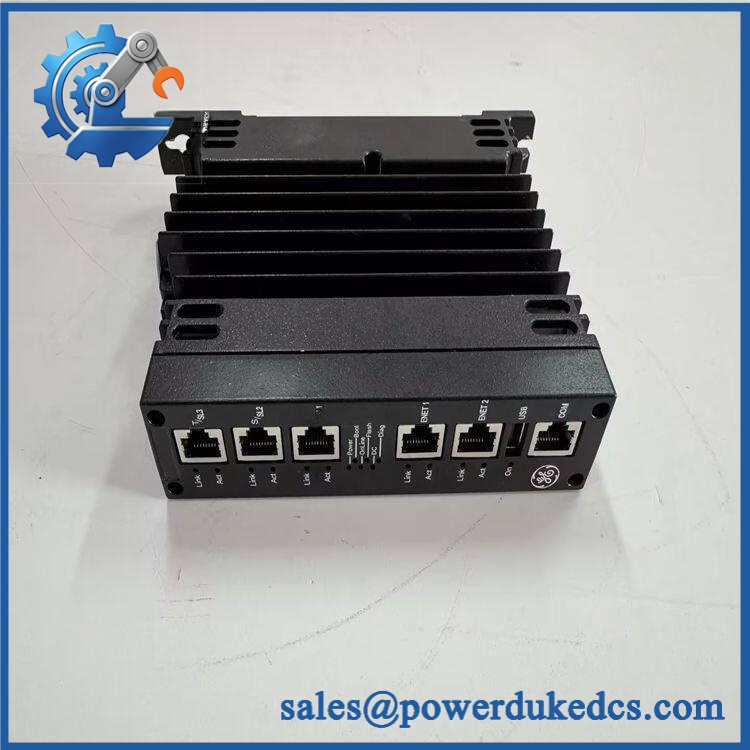
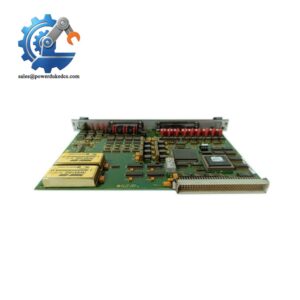
GE IS220UCSAH1AK
Module 4: Compatibility & Installation Traps
Migration/Compatibility
- System: GE Mark VIe / Mark VIeS
- Controller Family: UCSA
- Full Model: IS220UCSAH1AK
- Associated Part Number: 104W5452P001
- Processor Platform: Freescale PowerQUICC III / MPC8349-class architecture
- Operating System: QNX Neutrino
- Supply Range: 18–36 VDC reported for the UCSA platform
- Network Role: Mark VIe IONet and control-network processing
- Redundancy: Supports simplex, dual, and TMR system architectures where configured
- Replacement Type: Exact part-number and revision match strongly preferred
- Firmware: Application image and controller firmware must match the installed Mark VIe project
- Configuration: Preserve IONet assignments, network settings, controller role, and application data
- Logic Rewrite: Normally not required for a genuine like-for-like replacement, but configuration restoration and system acceptance testing are required
⚠️ Field Traps (Watch Out)
1. Do not substitute another UCS-family controller by appearance alone.
The UCS family contains multiple controller variants. A different processor model can have different firmware, network architecture, performance, or application compatibility. Match IS220UCSAH1AK and the associated hardware identification before shipment.
2. Preserve the original network assignment.
Mark VIe controllers communicate with distributed I/O through dedicated Ethernet networks. Swapping physical Ethernet connections without confirming the intended IONet and control-network assignments can produce a controller that boots normally but cannot establish the expected I/O data exchange.
3. Verify the application image and controller configuration.
A replacement controller is not necessarily field-ready merely because QNX starts. The controller software image, hardware configuration, network parameters, and redundancy role must correspond to the installed Mark VIe application.
4. Do not rely on conflicting public specifications.
Public listings for report different processor, memory, temperature, and interface values. For critical procurement, use the physical nameplate and applicable GE documentation as the final authority.
Module 5: Quality Assurance SOP
Each available GE should undergo a documented controller-level inspection and functional test before shipment:
- OEM anti-counterfeit visual inspection: Verify GE identification, complete catalog number, revision marking, connector layout, front-panel labels, and manufacturing identifiers.
- Associated part-number verification: Where present, record 104W5452P001 and all additional board or assembly identifiers.
- Mechanical inspection: Check enclosure, mounting hardware, Ethernet connectors, service connector, power terminals, and ventilation openings.
- PCB condition inspection: Examine accessible electronics for corrosion, contamination, cracked components, thermal discoloration, loose hardware, and evidence of previous repair.
- Power-rail precheck: Verify controlled resistance and continuity before applying the 24 V-class DC supply.
- Power-on self-test (POST): Energize the controller in an approved Mark VIe test fixture and verify normal boot and diagnostic behavior.
- Processor and memory verification: Confirm controller startup, memory recognition, and correct software-image loading within the approved test environment.
- IONet handshake verification: Connect the controller to a controlled Mark VIe I/O test network and verify communication with representative I/O packs.
- Network-interface testing: Verify each applicable Ethernet interface independently and confirm correct link/activity behavior.
- Time-synchronization test: Where the test fixture supports it, verify the expected network time-synchronization behavior used by the Mark VIe architecture.
- Application execution test: Load an approved diagnostic application and confirm cyclic processing, I/O exchange, alarms, and controller status.
- Redundancy test: For units intended for dual or TMR service, verify the applicable controller role and synchronization behavior using a dedicated test arrangement.
- Fault-diagnostic verification: Introduce controlled communication or I/O faults and confirm the controller reports the expected diagnostic state.
- Storage verification: Confirm the installed non-volatile storage is recognized and accessible within the approved software environment.
- Thermal observation: Monitor controller temperature during sustained operation and inspect for abnormal heating.
- Final QC record: Record catalog number, revision, associated part number, firmware/software image, network configuration, I/O test results, redundancy test results, and technician sign-off.
- ESD-safe packaging: Package the controller in ESD-safe material with mechanical protection around connectors and the enclosure.
A credible outgoing report should identify the exact controller revision and tested software image. For a Mark VIe processor, those details are much more useful than a generic statement that the unit “powers on.”
Module 6: CRO-Driven Buyer FAQ
What is GE ?
GE is a UCSA embedded controller/processor module used in Mark VIe control systems. Available GE inventory records associate it with part number 104W5452P001 and identify it as a Mark VIe processor.
What processor and memory does the use?
Available field documentation identifies the platform with a Freescale PowerQUICC III / MPC8349-class processor, with secondary records commonly specifying approximately 667 MHz and 256 MB DDR memory. Because some public listings conflict on the exact K-revision configuration, the physical hardware label and approved GE documentation should be used for final verification.
Is a Mark VIe controller or an I/O pack?
It is a controller/processor module, not a conventional Mark VIe I/O pack. Its job is to execute control applications and coordinate data exchange with distributed I/O over the Mark VIe network architecture.
Can I replace with another UCSA variant?
Do not assume interchangeability. Different UCSA variants can have different processor, memory, firmware, interface, or application requirements. Exact matching is the preferred maintenance strategy unless the applicable GE documentation provides an approved cross-reference.
Can the controller be replaced while the Mark VIe system is powered?
Do not assume live replacement is permitted for every installation. The correct procedure depends on the simplex, dual, or TMR architecture and the specific Mark VIe cabinet design. Follow the approved GE maintenance procedure and site energy-control requirements before removing the controller.
What should I verify before ordering ?
Confirm the complete identifier, associated 104W5452P001 part number where present, hardware revision, firmware/software image, controller role, IONet assignments, connected I/O architecture, and redundancy configuration. A photograph of the installed controller label is strongly recommended for exact matching.
What warranty and technical support should I expect?
Warranty duration should be stated for the exact unit condition and test status on the quotation. Technical support should cover part-number verification, hardware-revision matching, controller configuration review, IONet checks, application-image verification, and documented bench-test results. Mark VIe application engineering, turbine-control commissioning, or production logic modification should be treated separately unless explicitly included.



 Start Chat


