

Description
- Brand: GE
- Full Model Number: IS220YDOAS1A
- Functional Abbreviation: YDOA
- System/Series Family: GE Mark VIeS Functional Safety System
- One-Sentence Core Function: Safety discrete-output I/O pack interfacing Mark VIeS IONet with approved relay-output terminal boards
- Top 3 Hardcore Specs: 12 relay-output channels; 18–32 VDC input range; Simplex or TMR architecture
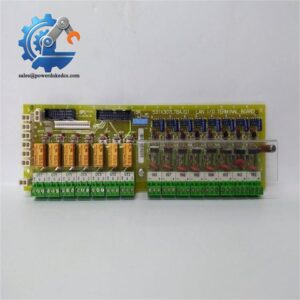
- Associated Terminal Boards: IS200TRLYS1F, IS200TRLYS2F, IS400TRLYS1F, IS400TRLYS2F
- Operating Temperature: -30 to +65 °C
- Stock Status: New Surplus / Fully Tested Refurbished subject to actual inventory inspection
Module 3: Commercial-Technical Deep Dive
A safety discrete-output fault can remove command signals to relays, solenoids, alarms, or shutdown circuits even while the Mark VIeS controller remains healthy. The GE IS220YDOAS1A is the YDOA Safety Discrete Output I/O Pack used in the Mark VIeS functional-safety architecture. GE documentation identifies it as a safety discrete-output module, and GE’s approved hardware combinations pair it with IS200TRLYS1F, IS200TRLYS2F, IS400TRLYS1F, or IS400TRLYS2F relay-output terminal boards. The module is covered for hazardous-location use under the relevant certification when the approved I/O-pack/terminal-board combination is maintained.
The operational value is concentrated in the output interface: the YDOA pack can control up to 12 relay channels and receives terminal-board-specific feedback for output-circuit diagnostics. Published technical references specify a 28 VDC nominal supply, with an 18–32 VDC operating range, and support for Simplex or TMR configurations. The I/O pack contains a common processor board and an acquisition board specific to the discrete-output function; startup diagnostics check the processor hardware, flash memory, Ethernet ports, and RAM. For a safety-system replacement, matching the YDOA pack alone is not enough—the approved terminal-board combination, redundancy arrangement, firmware, and safety configuration all have to agree.
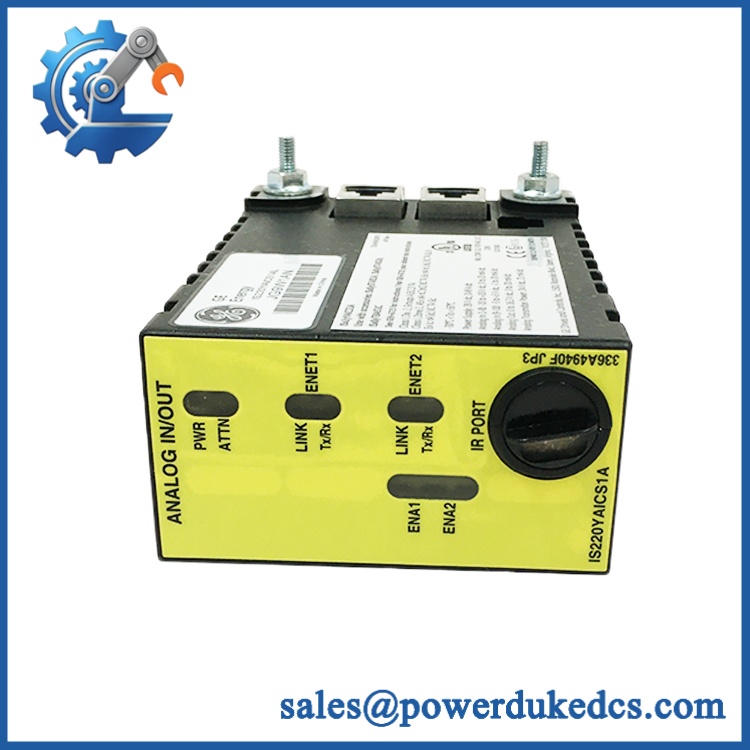
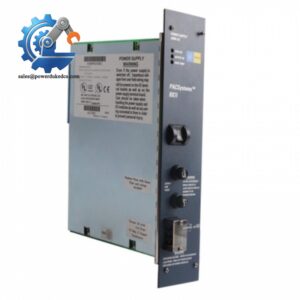
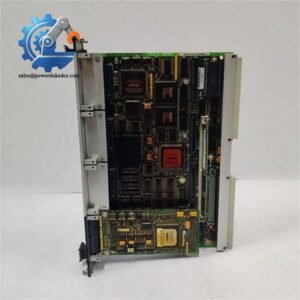
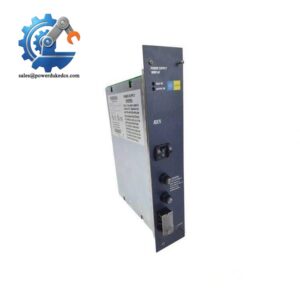
GE IS220YDOAS1A
Module 4: Compatibility & Installation Traps
Migration/Compatibility
- Replacement status: GE Mark VIeS YDOA Safety Discrete Output I/O Pack
- Logic rewrite: Normally not required for a true like-for-like I/O-pack replacement when the existing Mark VIeS project and safety configuration are retained.
- Firmware update: Configuration dependent. Verify the installed YDOA firmware and ControlST environment before any update.
- Drop-in status: Potentially direct only when the terminal board, IONet architecture, redundancy configuration, and safety application match.
- Output capacity: Up to 12 relay channels.
- Power: 28 VDC nominal, 18–32 VDC operating range according to current industrial technical references.
- Redundancy: Simplex or TMR configurations are supported.
- Approved terminal boards: IS200TRLYS1F, IS200TRLYS2F, IS400TRLYS1F, and IS400TRLYS2F are identified by GE for the IS220YDOAS1A in the approved Mark VIeS safety architecture.
⚠️ Field Traps (Watch Out)
- Terminal-board mismatch: Do not pair the YDOA pack with a visually similar relay board that is outside GE’s approved combination list. The terminal board determines the relay interface and feedback path.
- TMR channel assignment: In TMR systems, three YDOA packs are used. Preserve the R/S/T network and channel assignment during replacement; an incorrect network position can create voting disagreement or diagnostic faults.
- Field-power isolation: Relay outputs can be connected to externally powered solenoids, contactors, alarms, or shutdown circuits. Isolate the applicable field supplies before disconnecting the terminal board.
- Safety configuration mismatch: A replacement pack can pass its startup diagnostics while the safety project, firmware, device identity, or channel assignment remains incorrect.
- Environmental limit: The documented Mark VIeS safety rating for this module is -30 to +65 °C. Do not assume the broader temperature range of another Mark VIe I/O family applies to YDOA.
Module 5: Quality Assurance SOP
Before shipment, the GE IS220YDOAS1A should undergo a safety-I/O-specific inspection sequence:
- OEM anti-counterfeit visual inspection — verify GE markings, IS220YDOAS1A identification, YDOA functional designation, connector geometry, PCB construction, labels, and enclosure.
- Part-number reconciliation — photograph and document the exact catalog number before release.
- Mechanical inspection — inspect IONet connectors, terminal-board interface, mounting hardware, enclosure, ventilation features, and PCB surfaces for impact, corrosion, contamination, or unauthorized modification.
- Terminal-board compatibility verification — confirm the intended IS200TRLYS1F, IS200TRLYS2F, IS400TRLYS1F, or IS400TRLYS2F interface according to the customer’s system.
- Controlled 24 VDC power-up — apply a current-limited source within the documented supply range.
- Power-on self-test (POST) — verify processor hardware, flash memory, Ethernet-port diagnostics, RAM, and module status indications.
- IONet communication handshake — connect the pack to a controlled Mark VIeS test network and verify network initialization and module identification.
- Relay-output verification — command representative output channels and verify relay actuation through the approved terminal-board assembly.
- Output-circuit feedback verification — confirm that terminal-board feedback is correctly reported to the I/O pack for representative healthy and faulted conditions.
- Simplex/TMR test — where the test environment permits, verify correct channel identity and redundancy behavior.
- Safety diagnostic verification — verify expected fault annunciation for controlled loss of communication, output-circuit faults, or terminal-board feedback abnormalities.
- Final QC record — document exact part number, firmware identification, terminal-board pairing, redundancy role, test results, photographs, and packaging condition.
For a safety discrete-output pack, normal boot status is only the beginning. IONet communication, relay actuation, circuit-feedback diagnostics, and redundancy behavior provide the meaningful acceptance evidence.
Module 6: CRO-Driven Buyer FAQ
1. Is GE IS220YDOAS1A obsolete, and how do I verify an authentic replacement?
GE documentation continues to identify as the Mark VIeS Safety Discrete Output I/O Pack, and GE’s approved hardware documentation specifies its compatible terminal boards. For procurement, verify the complete physical marking, terminal-board combination, firmware environment, and safety-system configuration rather than ordering from the generic “YDOA” designation.
2. Can I hot-swap the ?
Do not assume universal hot-swap capability. Online replacement depends on the specific Mark VIeS redundancy architecture and GE-approved maintenance procedure. Because the outputs may drive safety-critical field devices, isolate the applicable circuits and follow site LOTO and functional-safety maintenance procedures before removal.
3. Will replacing the YDOA pack require rewriting the Mark VIeS safety application?
Normally not a complete logic rewrite for a genuine like-for-like replacement. However, the I/O pack identity, firmware, terminal-board association, channel mapping, redundancy role, and safety configuration must be verified before the system is returned to service.
4. How many outputs does the support?
The YDOA architecture is documented as supporting up to 12 relay channels. The actual field utilization depends on the connected terminal board and the Mark VIeS safety application.
5. Which terminal boards are approved with ?
GE documentation identifies IS200TRLYS1F, IS200TRLYS2F, IS400TRLYS1F, and IS400TRLYS2F as approved terminal-board combinations for the safety discrete-output pack. Do not substitute a standard Mark VIe relay board solely because its connector appears similar.
Warranty and Technical Support
Warranty duration should be stated according to the actual inventory condition, such as new surplus or tested refurbished. Technical support should cover exact YDOA identification, terminal-board compatibility, Mark VIeS safety configuration, IONet topology, firmware verification, relay-output testing, and documented pre-shipment QA. Safety validation, field wiring, and live turbine shutdown-system commissioning remain the responsibility of qualified functional-safety and turbine-control personnel.


 Start Chat