

Description
- Model: IS415UCVHH1A
- Brand: GE
- Series: Mark VIe Turbine Control System
- Part Type: UCVH VME Processor Control Card
- Core Function: Executes turbine application code and serves as the central processing element within a compatible Mark VIe VME control architecture.
- Processor: Intel Ultra-Low-Voltage Celeron, 1.06 GHz
- Memory: 1 GB SDRAM
- Flash Storage: 128 MB
- Form Factor: 6U VME single-slot controller
- Network: 2 × 10/100 Ethernet
- Service Interfaces: Published references identify serial and USB service connectivity.
- PCB Construction: Conformal-coated
- Faceplate Diagnostics: 5 alarm/status LEDs
- Approx. Weight: 3 lb / 1.36 kg according to secondary field references
- Lifecycle Focus: Older Mark VIe VME controller technology; availability and exact system compatibility should be checked before replacement.
Product Introduction
Structure B — Technical Direct
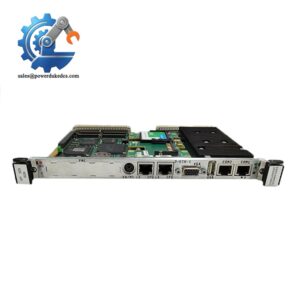
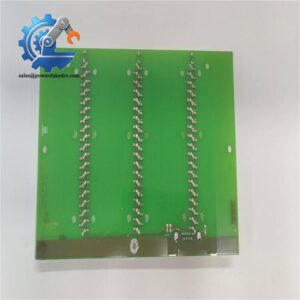
Positioned in the 6U VME control chassis, the GE IS415UCVHH1A acts as a UCVH application processor for the Mark VIe turbine control system. Unlike an ordinary I/O board, it executes control application software and handles the computing workload required by the turbine control environment. The documented hardware uses an Intel Ultra-Low-Voltage Celeron processor at approximately 1.06 GHz, together with 1 GB SDRAM and 128 MB flash storage in commonly documented configurations.
Communication is handled through two 10/100 Ethernet ports, while service and system-integration interfaces are provided through the controller’s external interface set. The card uses a 6U VME form factor and is identified as a single-slot processor board. (That mechanical distinction matters when replacing older controller hardware in mixed-generation cabinets.)
For spare-parts planning, IS415UCVHH1A should be treated as a legacy Mark VIe processor asset rather than a generic VME computer. Application files, QNX/software compatibility, controller configuration, and the installed VME backplane architecture all need verification before commissioning. Secondary documentation consistently identifies the UCVH as a Mark VIe VME controller, while memory figures vary across supplier databases; the actual board label and project documentation should therefore control the procurement specification.
Core Technical Specifications
| Parameter | Value |
|---|---|
| Manufacturer | GE |
| Model | IS415UCVHH1A |
| Functional Abbreviation | UCVH |
| Series | Mark VIe Turbine Control System |
| Product Type | VME Processor Control Card |
| Form Factor | 6U VME |
| Slot Configuration | Single-slot controller |
| Processor | Intel Ultra-Low-Voltage Celeron |
| Processor Frequency | Approximately 1.06 GHz |
| System Memory | 1 GB SDRAM |
| Flash Memory | 128 MB |
| Ethernet Ports | 2 × 10/100 Mbps Ethernet |
| Service Interface | Serial communication interface |
| USB | 1 USB service interface is identified in secondary technical references |
| Operating Environment | GE Mark VIe turbine-control application |
| Control Software | ControlST / ToolboxST environment |
| Operating System | QNX-based Mark VIe controller environment |
| PCB Finish | Conformal coated |
| Faceplate Indicators | 5 alarm/status LEDs |
| Approx. Board Weight | 3 lb / 1.36 kg |
| Mounting | Compatible Mark VIe VME rack/backplane |
| Redundancy | Can participate in simplex, dual, or TMR control architectures where the corresponding system design supports it |
| Lifecycle Position | Legacy / availability-dependent |
The 1 GB SDRAM, 128 MB flash, 1.06 GHz processor, dual Ethernet, 6U VME format, and conformal coating are supported by current secondary references, but some supplier records give inconsistent memory descriptions. For an audit-controlled replacement, compare the delivered board against the site’s original GE documentation before accepting those values as a contractual specification.
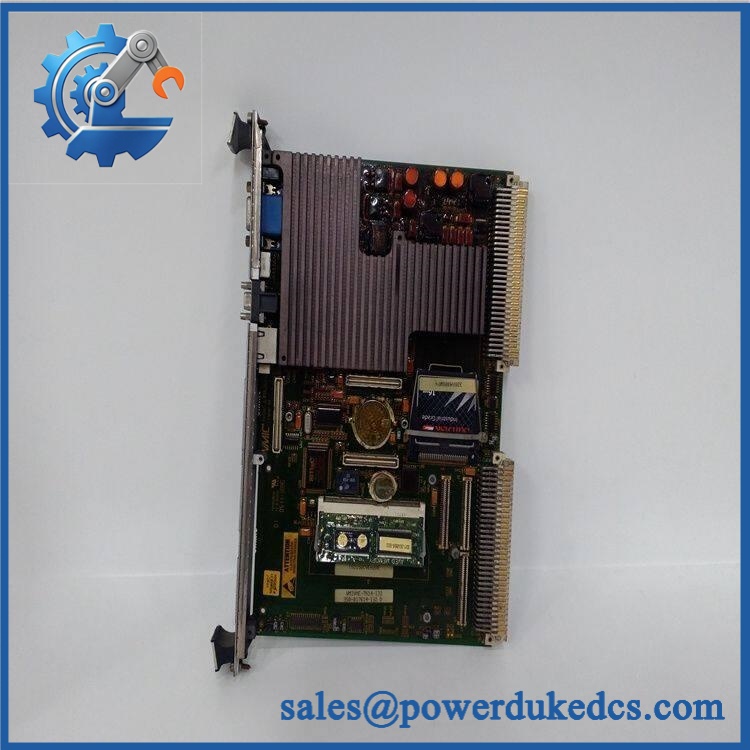
GE IS415UCVHH1A
Application Scenarios & Pain Points
A failed UCVH controller can stop an entire turbine-control partition even when every I/O pack in the cabinet remains healthy. That makes controller spares a different inventory category from ordinary signal modules.
Gas Turbine Main Control
A Mark VIe gas-turbine controller may carry application code responsible for startup, shutdown, sequencing, protection coordination, and process-control functions. Losing the processor can therefore affect a large functional block rather than one signal group.
Steam Turbine Control
Within a steam-turbine installation, the UCVH may sit at the center of a VME-based control architecture handling real-time turbine logic. During troubleshooting, controller diagnostics and application-state recovery deserve priority before swapping field I/O.
Power Generation Control Cabinets
When cabinet temperatures exceed 50°C, thermal loading becomes a practical concern for an aging processor assembly. Inspect cooling fans, rack airflow, power connections, and cabinet filters before interpreting intermittent CPU behavior as purely software-related.
Legacy Mark VIe Retention
For an older fleet where the installed application depends on UCVH hardware, one tested spare can protect against an extended outage while engineering evaluates controller modernization.
Redundant Control Architectures
In dual or TMR arrangements, the replacement strategy has to consider the complete controller population. A single failed processor may be replaceable without rebuilding the entire application, but the new board still has to match the required software, configuration, and redundancy architecture.
🚨 Common Error Codes & Diagnostic Symptoms
Symptom/Code: All controller-dependent I/O appears unavailable while field modules retain power
→ Diagnosis: A processor, VME backplane, controller power, or system-communication failure is more likely than simultaneous I/O-module failure.
→ Action: Check UCVH status LEDs, controller power, VME seating, and system diagnostics; replace the controller after the backplane and power path are verified.
Symptom/Code: Repeated controller reboot / application does not remain in RUN
→ Diagnosis: Possible CPU hardware fault, memory/storage corruption, unstable power, watchdog activation, or incompatible application/software environment.
→ Action: Preserve diagnostics and application backups, verify power and software compatibility, then replace the UCVH if the fault follows the controller.
Symptom/Code: Ethernet communication repeatedly drops on both network paths
→ Diagnosis: If both network connections fail while local controller health is otherwise abnormal, suspect the processor’s communication subsystem or board-level fault after checking cables and network equipment.
→ Action: Validate both physical network paths and replace the controller when the communication fault remains localized to the UCVH.
🚨 Cross-Reference & Lifecycle Migration
Cross-Reference
- IS415UCVHH1A is the GE UCVH VME processor/controller board for the Mark VIe family.
- Public references also associate the UCVH designation with related GE processor configurations such as IS415UCVHH1AB. Do not treat the added suffix as an automatic drop-in equivalence without checking the full nameplate.
- The UCVH is a 6U single-slot VME controller, so it should be matched to the correct VME chassis and backplane arrangement.
- The board is not an I/O pack and should not be substituted with an IS220-series distributed I/O assembly.
Firmware and Application Compatibility
Firmware and application recovery should be treated as a separate engineering task from hardware replacement.
Before commissioning a replacement:
- Record the existing controller hardware revision.
- Back up the turbine application and controller configuration.
- Verify the installed ControlST/ToolboxST version.
- Check the supported QNX/controller software baseline.
- Confirm network and redundancy configuration.
- Load the approved application image rather than assuming the spare contains the site’s project software.
A replacement processor can be electrically healthy yet unusable until its software environment and application configuration are brought into alignment.
Lifecycle Status
Status: Legacy / availability-dependent
IS415UCVHH1A is best managed as a strategic controller spare. For a turbine that depends on this VME generation, buffer-stock requirements should account for procurement lead time, test capacity, and the difficulty of reproducing an obsolete controller configuration.
Do not reduce the spare count solely because a later Mark VIe controller exists. Migration typically affects application software, rack hardware, communications, cabinet wiring, and commissioning procedures.
Field Engineer’s Tech Notes
Warning 1 — Do not pull the controller before preserving the application state.
A board swap can be mechanically easy and still create a long recovery event if the original application, configuration, firmware record, or network settings have not been backed up. Capture the controller state first.
Warning 2 — Check VME seating and rack cooling before blaming the CPU.
Intermittent resets can originate from poor backplane contact, unstable supply rails, or degraded airflow. In an older rack, inspect the connector engagement and cooling arrangement while the controller is out of service.
For warehouse stock, keep the card in ESD-safe packaging and avoid storing it in an uncontrolled cabinet directly above heat-generating equipment. Conformal coating protects the PCB surface from selected environmental exposure; it does not make the assembly immune to condensation or connector corrosion.
Strict QA & Testing SOP
Step 1 — Inbound Identity Verification
Record:
- GE
- UCVH designation
- Serial number
- Hardware revision
- PCB identification
- Faceplate markings
Photograph the complete board before installation.
Step 2 — Mechanical Inspection
Check:
- VME connector pins
- Faceplate hardware
- Mounting guides
- PCB coating condition
- Connector housings
- Signs of impact or contamination
- Evidence of moisture or corrosion
Step 3 — Power and Startup Test
Install the controller in a controlled compatible VME test rack. Confirm correct supply conditions, startup behavior, and expected LED sequence.
Record current draw and abnormal temperature rise where test equipment permits.
Step 4 — Processor and Memory Verification
Confirm successful initialization of:
- CPU
- SDRAM
- Flash storage
- Controller operating environment
- System hardware identification
A hardware diagnostic or BIOS/QNX-level report should be retained when accessible.
Step 5 — VME Interface Test
Verify correct interaction with the compatible VME backplane and representative system hardware. A controller that boots independently but fails backplane communication should not be released as service-ready.
Step 6 — Ethernet Test
Exercise both Ethernet ports and verify:
- Link establishment
- Packet communication
- Stable data transfer
- Controller recognition
- No repeated link loss
Step 7 — Application Test
Load an approved test application or controlled system image and verify:
- Controller initialization
- Application startup
- Real-time execution
- Diagnostic reporting
- Network communication
- Controlled I/O data exchange
Step 8 — Extended Run
Where the test rig permits, perform an extended powered run and monitor CPU behavior, temperature, memory stability, communications, and unexpected resets.
Step 9 — Final QC Record
The release file should contain:
- Exact part number
- Serial number
- Hardware revision
- Test date
- Rack/test-rig identification
- Power results
- CPU/memory results
- VME results
- Ethernet results
- Application test results
- Technician sign-off
Step 10 — Preservation Packaging
After testing, return the controller to an ESD-safe antistatic package with impact protection and moisture control. Keep the test report physically associated with the spare.
Test videos are available when video evidence is included in the individual inspection package.
Buyer’s FAQ
A: Do not assume so. A processor board is materially different from a routine Mark VIe distributed I/O pack, and removal can affect the active controller architecture. Follow the installed Mark VIe rack procedure and the site’s approved shutdown, redundancy, and maintenance controls.
Q: How do I verify a New Original ?
A: Check the GE nameplate, full catalog number, serial number, UCVH marking, revision, board construction, and traceability documents. For a controller, also verify that the delivered hardware is the exact VME generation required by the site’s rack.
Q: Does a replacement controller arrive with my turbine application already loaded?
A: Do not assume that it does. The hardware may be factory-configured or contain system software, but the plant-specific application, configuration database, network parameters, and software baseline must be verified separately. Maintain an application backup before any controller replacement.
Q: What warranty should I require?
A: Specify the warranty by serial number and supplied condition. For a critical UCVH spare, require functional coverage rather than a visual or power-on guarantee: CPU startup, memory, VME backplane communication, both Ethernet ports, diagnostics, and extended-run stability should be documented before acceptance.



 Start Chat