

Description
- Brand: GE
- Full Model Number: IS420PUAAH1A
- System/Series Family: GE Mark VIe / Mark VIeS
- One-Sentence Core Function: Universal analog I/O module providing configurable field signal acquisition and output functions through the Mark VIe I/O architecture
- Top 3 Hardcore Specs: PUAA universal analog I/O; 16 configurable simplex analog channels; IS41ySUAAH1A terminal-board interface
- I/O Pack Architecture: Mark VIe Ethernet I/O
- Stock Status: New Surplus / Fully Tested Refurbished subject to actual inventory inspection
Module 3: Commercial-Technical Deep Dive
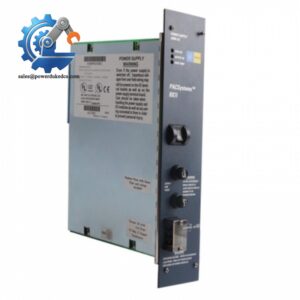
A Mark VIe cabinet can lose multiple field loops when a universal I/O module fails, even though the control processors and network remain online. The GE IS420PUAAH1A is the PUAA universal analog I/O module used in Mark VIe and Mark VIeS architectures. GE documentation identifies PUAAH1A as a supported universal analog I/O product and specifies its use with the IS41ySUAAH1A terminal-board accessory. The module is part of the Mark VIe distributed I/O architecture, where the I/O module interfaces with the control network and field termination hardware rather than acting as the main turbine controller.
The key procurement advantage is signal density and channel flexibility. Available technical references describe 16 configurable simplex analog channels, supporting combinations of voltage, current, thermocouple, RTD, pulse-accumulator, and related universal-input functions depending on the configured application. Some secondary listings also report a 5 ms normal scanning time and 10 ms frame rate, but these figures should be treated as application/configuration references rather than universal performance guarantees. GE’s current certification documentation specifically links PUAAH1A with the IS41ySUAAH1A terminal-board accessory, making terminal-board compatibility just as important as the I/O pack number during replacement.
Module 4: Compatibility & Installation Traps
Migration/Compatibility
- Replacement status: GE Mark VIe PUAA Universal Analog I/O Module
- Logic rewrite: Normally not required for a like-for-like replacement when the existing Mark VIe hardware configuration and ToolboxST project are retained.
- Firmware flash: Configuration dependent. Verify the installed I/O pack firmware and ToolboxST environment before downloading any update.
- Drop-in status: Potentially direct only when the replacement matches the existing Mark VIe I/O architecture, terminal board, configuration, and application.
- Terminal board: GE certification documentation identifies IS41ySUAAH1A as the associated terminal-board accessory for PUAAH1A.
- Application family: The PUAA universal analog I/O type is also explicitly listed among supported Mark VIeS general-market I/O types.
⚠️ Field Traps (Watch Out)
- Terminal-board mismatch: Do not assume a visually similar Mark VIe terminal board is interchangeable. Confirm the exact IS41ySUAAH1A relationship before moving field wiring.
- Channel-function mismatch: Universal I/O channels can be configured for different signal types. Copying wiring channel-for-channel without checking the ToolboxST configuration can produce incorrect scaling or signal interpretation.
- Field-power isolation: Even though the module is a control I/O device, field circuits connected through the terminal board may carry external power. Isolate the appropriate field sources before removing wiring.
- Configuration recovery: A replacement module can initialize normally while the associated control project still contains incorrect channel assignments, calibration parameters, or I/O configuration.
- I/O pack revision: GE documentation has replaced the older IS420PUAAH1A reference with a newer IS42yPUAAH1A family in later documentation. Verify the exact installed hardware generation before treating newer revisions as direct equivalents.
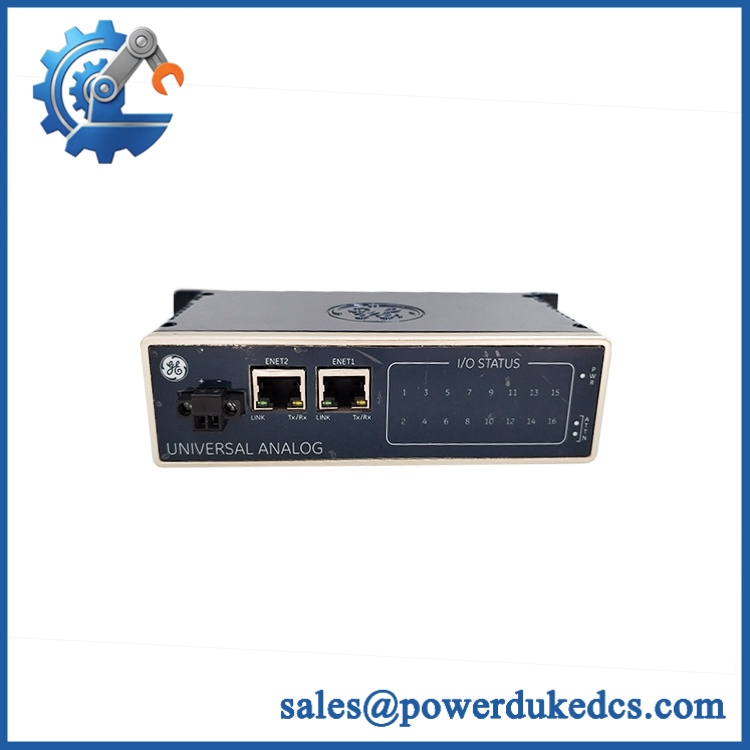
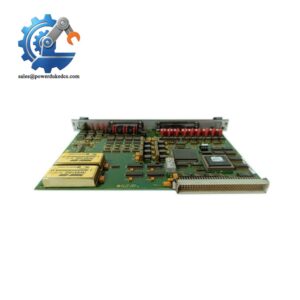
GE IS420PUAAH1A
Module 5: Quality Assurance SOP
Before shipment, the GE IS420PUAAH1A should undergo a universal-I/O-specific inspection:
- OEM anti-counterfeit visual inspection — verify GE markings, IS420PUAAH1A identification, PCB labeling, connectors, housing, and revision information.
- Part-number reconciliation — photograph the complete module label and verify the requested catalog number before release.
- Mechanical inspection — inspect the housing, board-to-terminal connections, mounting points, network interface, and visible PCB areas for damage, corrosion, contamination, or unauthorized rework.
- Terminal-board compatibility check — confirm the intended IS41ySUAAH1A terminal-board interface.
- Controlled power-up — install the module in an appropriate Mark VIe test environment and verify expected startup behavior.
- Power-on self-test (POST) — check module status, diagnostic indications, network initialization, and expected I/O-pack behavior.
- Network handshake verification — establish communication through the Mark VIe I/O network and confirm module identification.
- Analog-input verification — apply calibrated voltage/current signals to representative configured channels and compare measured values with the test source.
- RTD/thermocouple verification — where the test configuration supports the required sensor modes, use calibrated simulation equipment to verify representative temperature channels.
- Output verification — test configured analog-output functions with a suitable calibrated load where the application uses output-capable channels.
- Configuration verification — compare channel assignments and signal types against the customer’s documented ToolboxST configuration.
- Final QC record — document exact part number, hardware revision, terminal-board pairing, firmware identification where accessible, test results, photographs, and packaging condition.
A universal I/O module that simply powers up is not fully tested. Network identification, channel response, signal-type verification, and configuration consistency are the meaningful acceptance points.
Module 6: CRO-Driven Buyer FAQ
1. Is GE IS420PUAAH1A obsolete, and how do I verify an authentic replacement?
GE documentation identifies PUAAH1A as a Mark VIe Universal Analog I/O module, while newer GE documentation has moved to IS42yPUAAH1A nomenclature in some technical revisions. For procurement, verify the complete physical marking, hardware generation, revision, and associated terminal board rather than ordering from the generic “PUAA” family name.
2. Can I hot-swap the ?
Do not assume hot-swap capability. Mark VIe I/O architecture can support online maintenance in appropriately engineered configurations, but whether this specific installation permits energized replacement depends on the system design, terminal-board arrangement, application, and GE-approved maintenance procedure. Follow the site maintenance procedure and LOTO requirements rather than treating every PUAA module as universally hot-swappable.
3. Will replacing the require reprogramming the Mark VIe system?
Normally not a complete control-logic rewrite for a like-for-like replacement. However, the ToolboxST hardware configuration, I/O configuration, channel assignments, scaling, and module identification must be verified after replacement. A powered-up module is not proof that the field channels are configured correctly.
4. Which terminal board is used with ?
GE certification documentation specifically identifies IS41ySUAAH1A as the terminal-board accessory used with PUAAH1A. Verify the terminal-board suffix and cabinet wiring before moving the I/O pack into an existing installation.
5. What warranty and technical support are available?
Warranty duration should be stated according to the actual inventory condition, such as new surplus or tested refurbished. Technical support should cover exact I/O-pack identification, terminal-board compatibility, Mark VIe/Mark VIeS configuration review, channel-function verification, network testing, and documented pre-shipment results. Turbine-specific control configuration, field-loop commissioning, and protection changes should remain under qualified GE or site controls personnel.



 Start Chat