

Description
- Brand: GE Fanuc
- Full Model Number: KBGA2
- Lifecycle Status: Obsolete / Legacy
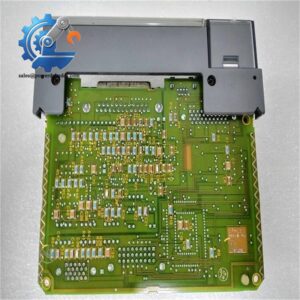
- Core Function: Output module; circuit board assembly
- Top 3 Technical Specs: Output Module | ASM No. 44A736423-G51 | Fab No. 44A736424-001/4
- Listed Unit Weight: 200 g
- Stock & Condition: Supplier stock confirmation required | New Surplus / Tested Refurbished subject to quotation
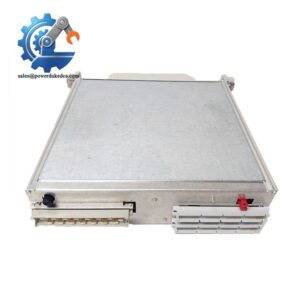
- Related Identification: 44A736424-001 terminal board interface reference
- Application Position: Legacy GE Fanuc industrial control systems
Public product records identify the KBGA2 as a GE Fanuc output module. One current record specifies assembly number 44A736423-G51, fabrication number 44A736424-001/4, and a listed weight of 200 g; a separate industrial automation catalog describes KBGA2 as a GE circuit board assembly.
Obsolescence & Supply Chain Deep Dive
A failed KBGA2 can create a disproportionate procurement problem because the part belongs to a mature GE Fanuc control platform, where exact legacy references may be easier to locate through specialist inventory than through normal new-production channels. Public records show KBGA2 still appearing as a replacement item, while associated GE Fanuc part 44A736424-001 is documented as discontinued by the manufacturer. For maintenance teams, the practical objective is to secure an exact part-number match before the failed module turns into a prolonged outage.
From a TCO perspective, replacing only the failed KBGA2 can avoid the engineering, panel work, software validation, commissioning, and production interruption associated with a larger controls migration. The economic case becomes stronger when the existing rack, wiring, and application logic remain serviceable. A like-for-like spare also reduces change-management exposure (especially when the installed system has limited documentation or a long history of field modifications). Exact assembly and fabrication references should be checked against the failed unit before the PO is released.
Compatibility & Replacement Matrix
| Replacement Path | Compatibility Position | Engineering Action | Estimated Switch Time | Cost Consideration |
|---|---|---|---|---|
| → exact-match unit | Drop-in Replacement | Match model, assembly/fab number, connector arrangement, and revision markings | 0.5–1.5 technician hours | No planned hardware redesign; normal LOTO, inspection, and functional checkout |
| → Related GE Fanuc assembly | Software/Hardware compatibility requires verification | Confirm electrical interface and system documentation before substitution | 1–4 hours engineering review | Engineering labor plus any configuration or commissioning work |
| → Different hardware family | Hardware Modification Required | New interface design, wiring changes, and application validation | Project-dependent | Potentially significant versus replacing the failed legacy board |
For an exact replacement, no firmware flash should be assumed solely because the part number is identical. The stronger control is to compare the failed unit and replacement at the model, assembly, fabrication, revision, connector, and terminal-interface levels before installation.
Field Traps to Watch Out For
Assembly number mismatch: is associated in current listings with 44A736423-G51, while 44A736424-001/4 appears as a fabrication reference and is also used as a GE Fanuc terminal-board interface identification. Do not approve a substitute from the model name alone.
Configuration and revision mismatch: Before energizing the replacement, compare connector layout, terminal arrangement, board markings, and revision information with the removed unit. A visually similar GE Fanuc board is not automatically an electrical equivalent.
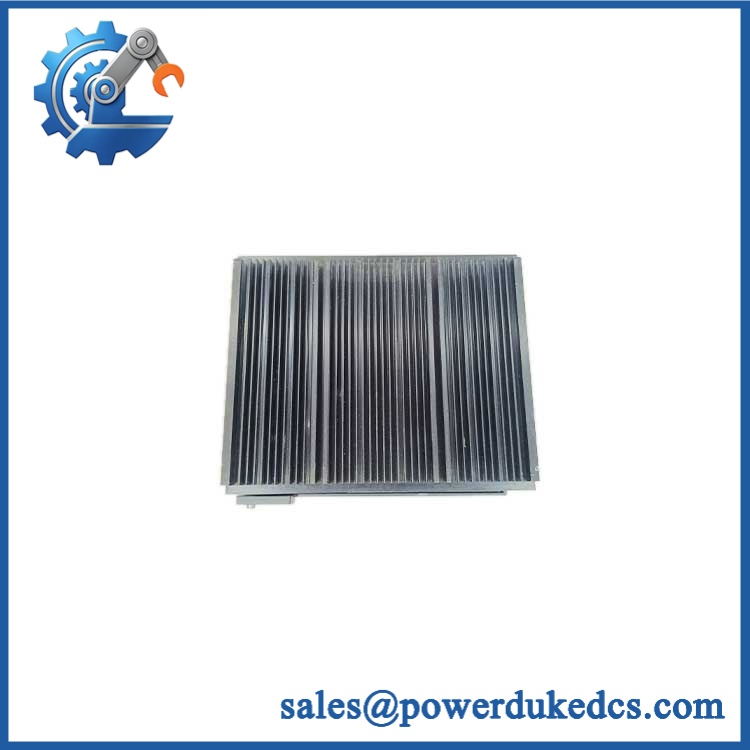
GE KBGA2
Quality Assurance & Testing SOP
Incoming identity control
- Record manufacturer marking, model , assembly number, fabrication number, and visible revision codes.
- Compare board layout, connectors, terminals, labels, and mounting features against approved reference images or the customer’s failed unit.
- Perform an OEM anti-counterfeit visual inspection for inconsistent fonts, altered labels, damaged date codes, reworked solder joints, non-original fasteners, and unexplained board modifications.
Electrical pre-check
- Inspect PCB surfaces under magnification for corrosion, lifted pads, cracked solder joints, burnt components, contamination, and connector damage.
- Verify continuity on accessible terminals where the circuit design permits safe testing.
- Check for abnormal resistance or evidence of short circuits before applying power.
Power-on verification
- Perform a controlled power-on self-test (POST) using the applicable GE Fanuc test setup.
- Check available ERR/RUN/status LEDs against the expected operating state where those indicators are fitted.
- Record abnormal LED states, startup behavior, and measured supply conditions.
Output and I/O verification
- Perform I/O load testing with an appropriate test fixture rather than relying only on an unloaded bench test.
- Verify commanded output response, terminal integrity, channel behavior, and repeatability under the applicable test load.
- Record test results by serial number or inventory identifier.
Final release
- Photograph the tested unit, labels, connectors, and serial markings.
- Confirm packaging protects the PCB against electrostatic discharge, impact, and moisture during transit.
- Release the unit only after the inspection and functional-test record is complete.
Procurement & Lifecycle FAQ
Is the GE genuinely available and what is the cutoff for emergency shipping?
Availability should be confirmed against the actual warehouse quantity before the PO is issued. For emergency requirements, request same-day stock confirmation, test status, packed dimensions, and the carrier cutoff at quotation stage. Current market records show units being offered from specialist industrial inventory, but third-party availability should not be treated as your reserved stock.
How is the condition and authenticity of an obsolete GE Fanuc controlled?
Request photographs of the exact unit, including GE Fanuc markings, model number, assembly number, fabrication number, connectors, and any revision identifiers. A controlled inspection should cover PCB condition, labeling consistency, solder workmanship, connector condition, and powered functional testing before shipment.
Are firmware compatibility issues likely before issuing the PO?
For an exact -to- replacement, do not assume a firmware change is required. The critical checks are part-number identity, revision matching, system interface, connector arrangement, and the configuration of the host equipment. Where the replacement is a different GE Fanuc assembly, obtain engineering confirmation before installation.
What warranty terms should be included with the purchase?
Use the warranty period stated on the quotation and PI for the actual supplied condition. The commercial document should define coverage period, failure-reporting procedure, required evidence, return authorization, and exclusions for installation damage, wiring errors, unauthorized modification, and site-related electrical faults.
Is buying a legacy spare more economical than upgrading the control system?
For a localized board failure, the comparison should include part cost + freight + technician labor + commissioning time + production downtime versus the much larger cost of a system migration. Keeping the existing architecture in service can avoid cabinet changes, application redevelopment, operator retraining, and extended commissioning, provided the existing platform remains technically supportable.


 Start Chat