

Description
- Brand: GE Fanuc Embedded Systems
- Full Model Number: VMIACC-0584
- System/Series Family: VMIC CompactPCI Embedded Computing
- Core Function: Rear transition module exposing CompactPCI processor-board I/O through rear-panel connectors
- Top 3 Hardcore Specs: 2 SATA interfaces; 2 USB 2.0 ports; 1 DB-9 COM2 serial interface
- Stock Status: New Surplus — exact unit condition and availability to be verified
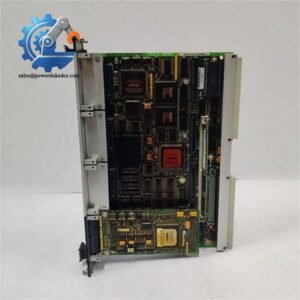
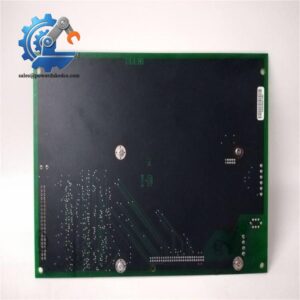
The VMIACC-0584 is a CompactPCI rear transition utility board, not a turbine control I/O module. GE Fanuc documentation specifies that it installs in the rear transition area of the CompactPCI backplane and provides access to IDE, floppy, COM2, USB, video, and keyboard/mouse functions.
Technical Product Introduction
When a CompactPCI single-board computer is installed in a chassis, the front processor card may operate normally while its rear-side peripheral interfaces remain inaccessible without the correct transition hardware. The GE VMIACC-0584 solves that cabinet-level I/O problem by routing rear-panel connections from compatible CompactPCI board connectors to standard peripheral interfaces. GE Fanuc’s documentation specifically associates the module with the VMICPCI-7806 family and identifies access to IDE, floppy, COM2, USB, video, and keyboard/mouse functions.
For current maintenance work, the connector set is the key specification. Technical records identify 2 SATA ports, 1 DB-9 COM2 serial port, 2 USB 2.0 ports, keyboard/mouse access, IDE, floppy, and analog/LVDS video interfaces, with the board designed for the rear transition area of the CompactPCI architecture. The module is therefore a signal-access accessory rather than an independent CPU or I/O controller. A replacement should be matched to the host board and backplane connector map before installation—especially on systems where rear I/O is part of the machine’s boot, storage, or service interface.
Application Scenarios & Field Realities
- VMICPCI-7806 embedded controllers: The VMIACC-0584 was specifically documented as the rear transition utility board for the VMICPCI-7806. In a deployed chassis, it can expose the processor board’s rear I/O without redesigning the rack wiring.
- Industrial embedded computing racks: Where a CompactPCI CPU must access storage, serial diagnostics, USB peripherals, or rear-panel video, the transition board becomes part of the physical I/O path. A missing or damaged module may look like a motherboard fault when the actual issue is loss of rear connector access.
- Legacy test and control equipment: Older embedded systems often depend on IDE or floppy interfaces for service images, configuration files, or diagnostics. Maintaining the original transition board can preserve established maintenance procedures without changing the host SBC architecture.
- Field service and cabinet diagnostics: COM2 and USB access can be especially useful during commissioning or fault analysis. A technician can work through rear-panel service connections while the main CPU remains installed in the CompactPCI chassis. —Connector access still depends on the exact chassis backplane and mechanical arrangement.
Migration, Compatibility & Installation Traps
Replacement Matrix
| Replacement Type | Assessment |
|---|---|
| Drop-in Replacement | Yes, for a compatible CompactPCI host/backplane using the same VMIACC-0584 arrangement |
| Software Compatible | Generally hardware-level; operating-system compatibility is determined by the host SBC and attached peripherals |
| Hardware Modification Required | Normally no for an exact VMIACC-0584 replacement |
The strongest compatibility reference is the host board. GE Fanuc’s published material lists as the transition module for the VMICPCI-7806, while current Abaco documentation continues to list as the transition module for the corresponding CompactPCI platform.
Field Traps — Watch Out
Rear connector mapping: Do not assume that every 6U CompactPCI rear transition board uses the same J3/J5 signal assignment. The routes specific host-board signals to specific peripheral connectors. Compare the original board and host SBC documentation before moving cables.
Storage interface assumptions: The official GE Fanuc description mentions IDE and floppy access, while later technical records also identify SATA interfaces. Treat these as configuration-specific interface paths rather than assuming every attached SBC exposes every storage function.
Mechanical alignment: Rear transition modules depend on precise backplane connector engagement. A partially seated board can leave USB, serial, or storage functions intermittent while the front SBC appears healthy.
Power isolation: Remove chassis power before inserting or removing the transition board unless the specific CompactPCI system documentation explicitly permits hot insertion of that position. Protect the connector field from ESD during service.
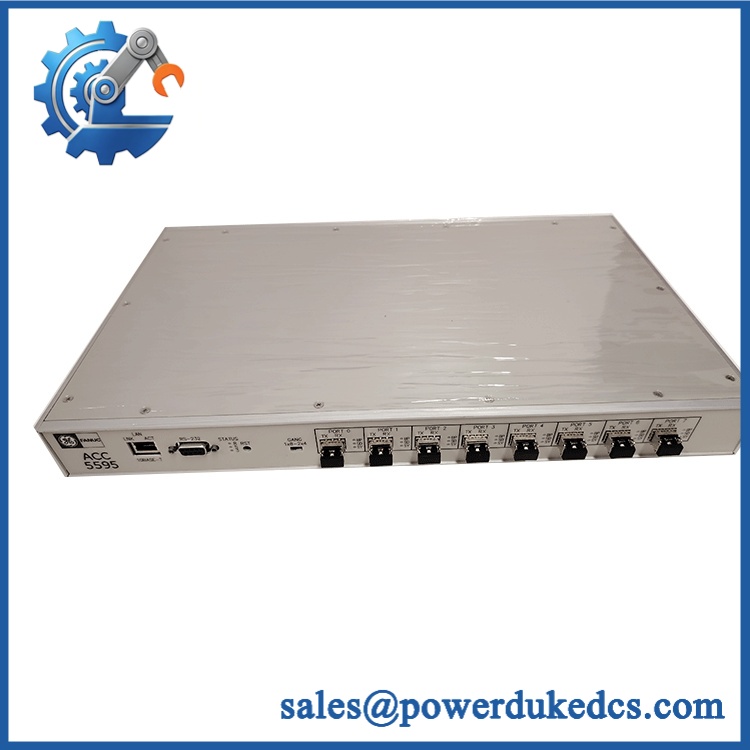
GE VMIACC-0584
Quality Assurance SOP
For surplus inventory, QA should verify the board as a rear transition assembly and test the interfaces that can be exercised safely with a compatible host system.
- OEM anti-counterfeit visual inspection: Verify GE Fanuc identification, model marking, PCB labels, connector types, board revision information, and overall construction against the expected transition-board configuration.
- Mechanical inspection: Check the PCB, connector housings, mounting hardware, guide features, soldered interfaces, and rear-panel connectors for cracks, deformation, corrosion, contamination, or evidence of unauthorized rework.
- Connector continuity verification: Check the documented signal paths between the CompactPCI rear connectors and the associated peripheral interfaces before system installation.
- Host-board recognition test: Install the with a compatible CompactPCI host such as the VMICPCI-7806 and verify that the connected rear interfaces operate correctly.
- Serial interface test: Verify COM2 communication through the DB-9 interface using a known-good serial test device and the host’s supported configuration.
- USB verification: Test both USB interfaces with known-good USB 2.0 peripherals and confirm stable enumeration and data transfer.
- Storage-interface verification: Where the host configuration supports the corresponding interfaces, test SATA/IDE and floppy connections according to the installed system’s documented hardware configuration.
- Video and input verification: Where applicable, verify rear video, keyboard, and mouse interfaces using compatible peripherals.
- Communication handshake verification: Confirm that the host operating environment correctly detects and communicates through the exposed rear I/O interfaces.
- Extended operating check: Operate the assembled CompactPCI system through the defined QC period and monitor for intermittent USB disconnects, serial errors, storage dropouts, or video instability.
- Final traceability check: Record model number, hardware revision, serial or identification information where available, interface-test results, test date, and shipment condition.
The documented identification is GE Fanuc CompactPCI Rear Transition Utility Board, associated directly with the VMICPCI-7806 CompactPCI single-board computer family. Its primary purpose is to bring rear-side computer interfaces—rather than control I/O channels—out to usable connectors on the chassis rear panel.



 Start Chat