

Description
- Brand: GE / VMIC
- Full Model Number: VMIVME-7698
- System/Series Family: VMEbus 6U Single Board Computer
- Core Function: Celeron-based VMEbus CPU for PC/AT-compatible control, data acquisition, and embedded VME systems
- Top 3 Hardcore Specs: Intel Celeron processor; up to 256 MB synchronous DRAM; VME64 MBLT 64-bit block-transfer support
- Stock Status: New Surplus / Fully Tested Refurbished subject to exact unit condition
Technical Product Introduction
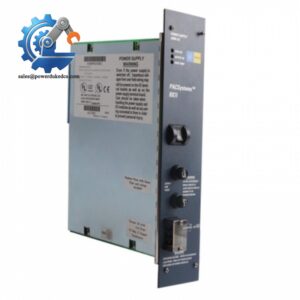
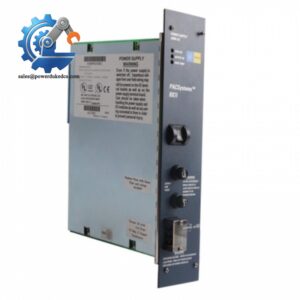
A failed legacy VME CPU can stop an entire chassis even when the I/O cards and field wiring remain serviceable. The GE VMIVME-7698 addresses that specific architecture: a 6U single-slot VMEbus CPU built around an Intel Celeron processor, with PC/AT-compatible functions, PCI-to-VMEbus interfacing, dual RS-232C serial ports, Ethernet, SVGA, Ultra IDE, and front-panel diagnostic indicators. The board also supports system-controller operation, programmable VMEbus arbitration, VME interrupts, slave access to local RAM and mailbox registers, and multiple protected-mode VME master windows.
For memory-intensive legacy applications, the documented configuration reaches 256 MB of synchronous DRAM, while 32 KB of battery-backed SRAM preserves application data across power removal. Three programmable 16-bit timers and a software-controlled watchdog are built into the board. Ethernet supports 10BaseT and 100BaseTx, and the SVGA controller provides 2 MB of SGRAM with resolutions up to 1,280 × 1,024 at 256 colors. Processor speed and SDRAM capacity were ordering options rather than field upgrades, so the exact assembly should be checked before a replacement is shipped.
Application Scenarios & Field Realities
- In VME-based data acquisition racks, the VMIVME-7698 can serve as the local x86 processor that controls acquisition software while communicating with VME cards through the Universe II PCI-to-VMEbus bridge. This architecture is documented in scientific and industrial data-acquisition installations using VMIVME-7698 CPUs.
- Where a VME chassis acts as the system controller, slot position matters. The board can operate as the VMEbus System Controller and provides programmable arbitration modes, but it must occupy the first VMEbus slot when configured for that role. A different system controller changes the acceptable slot arrangement.
- For legacy operator or service stations, the front panel provides SVGA, Ethernet, dual serial ports, keyboard/mouse access, reset, and status LEDs. That combination is useful when an old control application still depends on a PC/AT software environment rather than a modern PLC runtime.
- Inside densely populated VME cabinets, cooling is not optional. VMIC specifies forced-air cooling and recommends blanking exposed slots to maintain airflow; for a 20-slot configuration, the manual recommends three 100 CFM fans. Cabinet temperature and actual airflow should be checked before commissioning a replacement board.
Migration, Compatibility & Installation Traps
Replacement Matrix
| Replacement Scenario | Classification | Engineering Requirement |
|---|---|---|
| Existing VMIVME-7698 replaced by the same VMIVME-7698 assembly | Drop-in Replacement | Verify processor, SDRAM, flash-disk, and installed expansion options before shutdown |
| Different VME CPU running the same application environment | Software Compatible | Check BIOS behavior, CPU architecture, VME driver package, I/O mapping, and application dependencies |
| Replacing the board with a different mechanical or electrical backplane format | Hardware Modification Required | Backplane, connectors, slot allocation, cooling, and expansion-board arrangement must be reassessed |
The biggest migration trap is treating every as electrically identical. The manual states that processor speed and SDRAM size were specified at ordering time and were not intended as user upgrades. Flash-disk configuration was also an ordering option. Record the installed configuration before removing the failed CPU.
Field Trap — Backplane and Slot Assignment: The requires a dual P1/P2 VMEbus backplane. If the board is the system controller, it belongs in slot 1; otherwise, slot 1 must be occupied by the designated system controller. Do not treat slot placement as a cosmetic choice.
Field Trap — Power and Airflow: VMIC explicitly warns against installing or removing the board with power applied. Forced-air cooling is required, and insufficient cabinet airflow can turn a successful power-on test into an intermittent field failure after thermal soak.
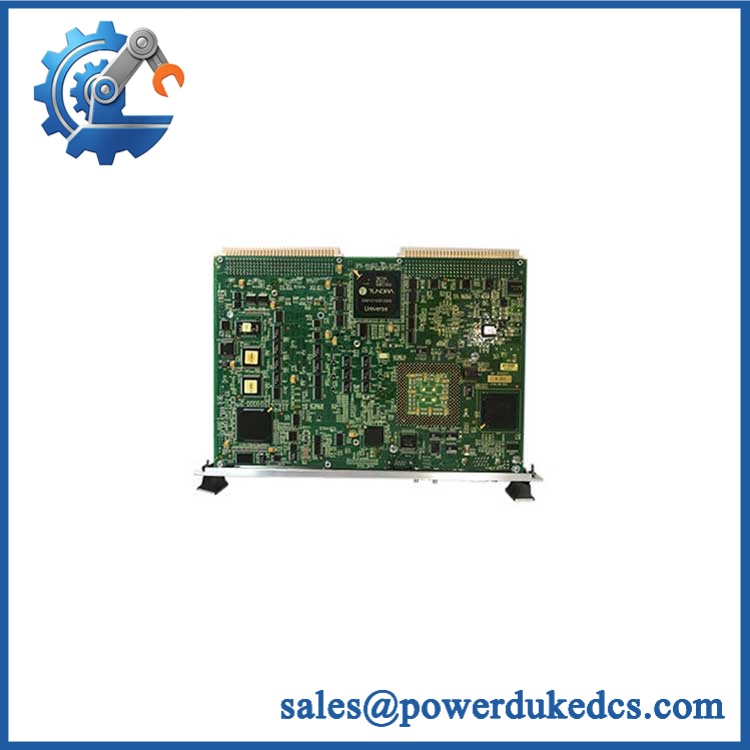
GE VMIVME-7698
Quality Assurance SOP
For surplus inventory, the test objective is not simply “board powers on.” Each available should be screened against its actual hardware configuration and intended VME application.
- OEM anti-counterfeit visual inspection: Compare board identification, PCB markings, connectors, component population, labels, and revision information against documented construction.
- Power-on self-test (POST): Apply controlled power and verify BIOS startup behavior, processor initialization, memory detection, and expected front-panel status indications.
- ERR/RUN and status LED verification: Check the power, hard-drive activity, SYSFAIL, and Ethernet indicators for expected behavior during boot and communications testing. The documented front-panel indicators include power, drive activity, VMEbus SYSFAIL, and Ethernet status.
- Memory verification: Confirm the installed SDRAM capacity against the unit’s ordering configuration rather than assuming every contains the maximum 256 MB.
- Communication handshake verification: Test Ethernet link activity and both 16550-compatible serial interfaces where the applicable configuration and test fixture permit.
- VMEbus functional check: Verify board recognition, VME address-space access, interrupt behavior, and master/slave transactions with a compatible VME test environment.
- Watchdog and timer check: Exercise the programmable watchdog and available timer functions where the test setup supports them.
- Final visual reinspection: Check connectors, mounting hardware, edge contacts, labels, cooling path, and signs of corrosion, rework, or mechanical damage before packing.
- Shipment record: Retain tested configuration details, serial/identification data, test results, and pre-shipment photographs for traceability.



 Start Chat