

Description
- Brand: GE General Electric
- Full Model Number: WES5120 2340-21006
- System/Series Family: GE WES5120 Field Controller Platform / WESDAC Substation Automation
- One-Sentence Core Function: Field controller master unit used for remote control, monitoring, and data exchange within utility automation systems
- Top 3 Hardcore Specs: Field-controller master architecture; remote I/O and control application; site-dependent communication and I/O configuration
- Stock Status: New Surplus / Fully Tested Refurbished — exact part number and hardware condition verified before shipment
Module 3: Commercial-Technical Deep Dive
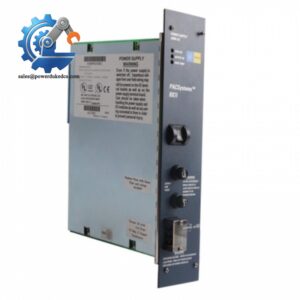
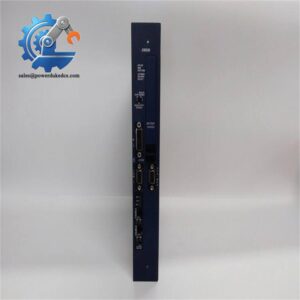
A failed field-controller master can take an entire remote automation point offline even when the connected I/O and field devices remain healthy. The GE WES5120 2340-21006 is identified in current spare-parts references as a Field Controller Master Unit, and the WES5120 family appears alongside GE WESDAC D20 and related utility automation equipment. In practical terms, this places the unit in the remote-control layer between field signals and the supervisory or substation control environment. That architecture makes exact hardware identification important: WES5120 variants exist under different numeric suffixes, including 2340-21004, 2340-21006, 5120-1106, and 5120-1506.
The available public technical record for 2340-21006 is thinner than for later WES5120 documentation, so unsupported electrical ratings should not be inserted into a procurement specification. Some current listings describe the unit as a controller coordinating remote I/O and information exchange, while another current source categorizes the same part number as a field-controller master unit. For a replacement project, the hard ROI comes from preserving an established field-control architecture without changing remote I/O addressing, communications mapping, or cabinet wiring. Record the installed hardware revision, communication interfaces, I/O arrangement, firmware where accessible, and configuration files before removal. That evidence is more valuable than relying on a generic family description.
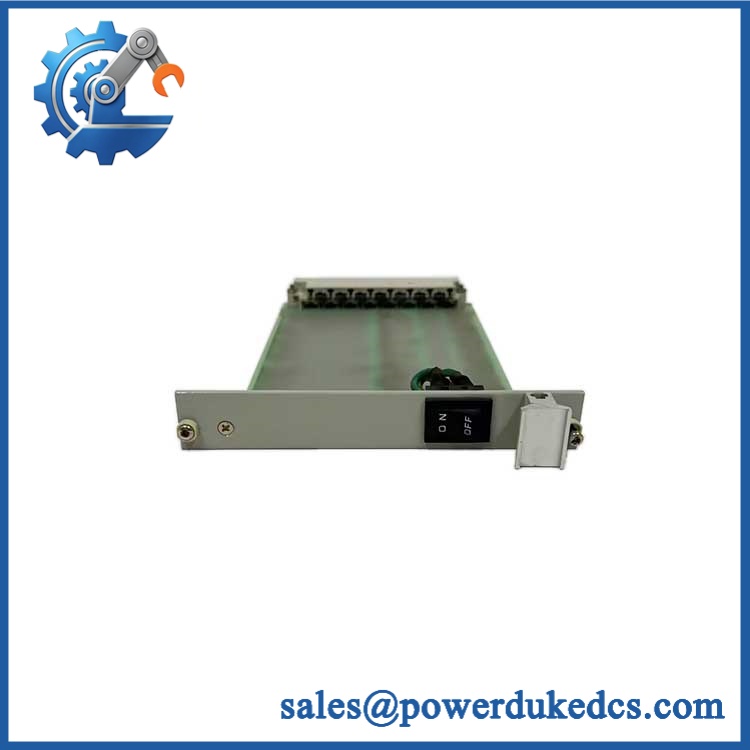
GE WES5120 2340-21006
Module 4: Compatibility & Installation Traps
Migration/Compatibility
- Replacement status: Configuration-specific replacement. Match the complete identification rather than ordering by alone.
- Hardware variant: Do not assume 2340-21006 is interchangeable with 2340-21004 or 5120-1506. These are separately cataloged part numbers within the family.
- Firmware/configuration: A like-for-like hardware replacement should not be treated as a configuration-free swap. Preserve the existing field-controller configuration, communications parameters, remote-I/O mapping, and application settings before removal.
- Logic rewrite: No logic rewrite should be assumed until the replacement hardware revision and installed application configuration have been compared.
⚠️ Field Traps (Watch Out)
- Part-number ambiguity: Public listings are inconsistent about the exact application and electrical details of the 2340-21006. One source describes it as a field-controller master unit, while another labels it a remote-I/O control module. Use the physical nameplate and cabinet documentation as the final identification authority.
- Communication mapping: A replacement controller can power up normally while the upstream host still fails to exchange data because node addresses, serial/Ethernet parameters, protocol selection, or remote-I/O mapping do not match the original configuration.
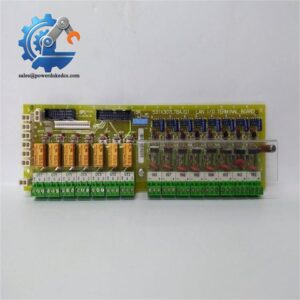
- Connector and terminal verification: Photograph every field connection before removal. A visually similar -family unit should not be installed until connector position, terminal assignment, and companion modules have been checked.
- ESD handling: Treat the controller electronics as ESD-sensitive equipment. Use grounded handling and antistatic packaging throughout removal, inspection, and shipment.
Module 5: Quality Assurance SOP
Our pre-shipment inspection for a GE 2340-21006 focuses on identity, hardware integrity, and controller-level operation:
- OEM anti-counterfeit visual inspection — verify GE identification, marking, full 2340-21006 number, revision labels, serial information where present, connector construction, PCB condition, and mechanical assembly.
- Complete part-number capture — photograph all visible labels and secondary identification markings before packaging.
- Variant verification — confirm the unit is 2340-21006, not 2340-21004, 5120-1506, or another -family variant.
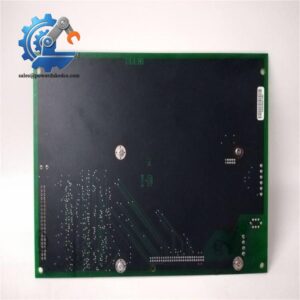
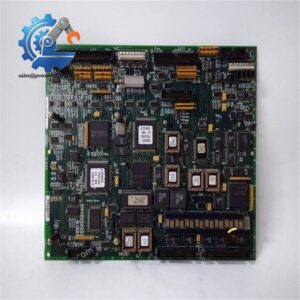
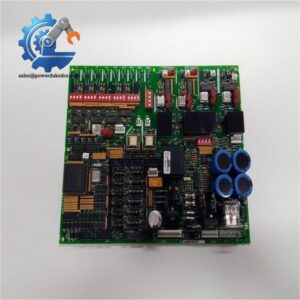
- PCB inspection — check for corrosion, cracked solder joints, damaged connectors, lifted components, contamination, and evidence of overheating.
- Power-input inspection — verify the installed power-input arrangement from the physical unit and applicable documentation before controlled energization.
- Power-on self-test (POST) — apply the documented test supply and monitor startup behavior, status indicators, processor initialization, and abnormal diagnostic conditions.
- Controller function test — where a compatible /WESDAC test environment is available, verify processor startup, local diagnostic behavior, and expected controller status.
- Communication handshake verification — establish communication through the supported interface available on the actual hardware and verify stable data exchange.
- Remote-I/O verification — where a compatible test rack is available, verify representative input/output data paths and confirm that changes are correctly recognized by the controller.
- Configuration record — record firmware information where accessible, hardware revision, serial number, communication parameters, and observed diagnostics.
- Final QC review — compare all recorded identifiers against the customer order before shipment.
- ESD packaging — place the controller in antistatic protection with mechanical cushioning, connector protection, and moisture control.
Because publicly available references do not expose a complete authoritative electrical specification for this exact suffix, the QA process should not fabricate voltage, channel count, or communication-port ratings. Those values should be confirmed from the physical unit, GE documentation, and the customer’s installed cabinet before being placed on an engineering drawing.
Module 6: CRO-Driven Buyer FAQ
1. Is the GE 2340-21006 obsolete?
The is a legacy GE field-controller family and is now primarily encountered through installed-base maintenance and replacement markets. The exact lifecycle status of the 2340-21006 configuration should be established from the unit identification and the applicable GE documentation rather than inferred from another suffix.
2. Is 2340-21006 a direct replacement for 2340-21004?
Do not assume that. Both are -family part numbers, but they are separately identified hardware variants. The complete order code, physical configuration, installed interfaces, and site application should be matched before approving a replacement.
3. Can the be hot-swapped?
Do not treat the unit as a generic hot-swappable I/O module. Unless the site-specific GE documentation explicitly authorizes live withdrawal, isolate the associated control system under the plant’s approved LOTO procedure before removing the controller. Preserve the original configuration before power-down.
4. What systems is the used with?
Current references identify the as a Field Controller Master Unit and place it among GE WESDAC and utility automation equipment. Its practical role is associated with field control, monitoring, remote I/O, and data exchange. Exact interfaces depend on the particular hardware variant and installed system.
5. What warranty and technical support should I expect?
Warranty duration should be stated on the quotation for the exact physical unit supplied. Technical support should cover part-number verification, hardware-revision matching, configuration review, communication checks, installation guidance, and documented pre-shipment test results. It should not be represented as a substitute for utility protection engineering, SCADA configuration authority, or site commissioning.


 Start Chat