

Description
- Brand: GE General Electric
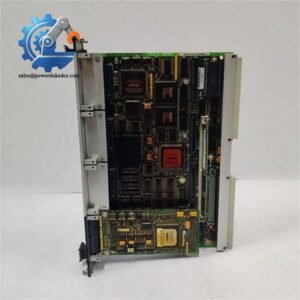
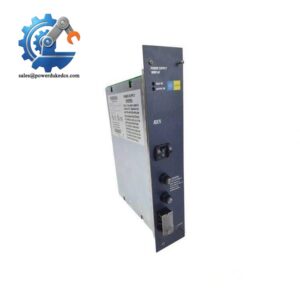
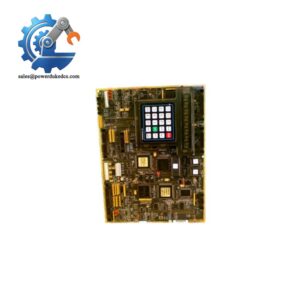
- Full Model Number: WESDAC D20 PS
- System/Series Family: GE D20/D200 RTU
- Core Function: Chassis-mounted switch-mode power conversion for D20 processor, VME cards, modems, and I/O peripherals
- Top 3 Hardcore Specs: 20–60 VDC or 100–300 VDC / 85–264 VAC input variants; 24 VDC or 48 VDC isolated output variants; +5 V 7 A, +12 V 2 A, -12 V 1 A chassis rails
- Stock Status: New Surplus — current availability and exact electrical variant to be verified
Technical Product Introduction
A D20 RTU can have every processor and I/O card available and still remain offline when its chassis power supply is missing or mismatched. GE documents the D20 power supply as a switch-mode converter that supplies the D20 main processor, VME cards, modems, and D20 peripheral I/O as required. The power supplies mount vertically in the D20/D200 chassis, so the replacement must match both the electrical configuration and the installed chassis arrangement.
The designation “WESDAC D20 PS” does not identify one single electrical variant. GE lists four common chassis-mounted versions: legacy 580-2004 and 580-2005 accept 20–60 VDC, while 580-2006 and 580-2007 accept 100–300 VDC or 85–264 VAC. The 24 V versions provide +5 V at 7 A, +12 V at 2 A, -12 V at 1 A, plus 24 VDC at 3 A; the 48 V versions provide the same logic rails plus 48 VDC at 1.5 A.
Application Scenarios & Field Realities
- When a D20 substation RTU loses its chassis supply, replacing the power module restores the electrical rails used by the processor, VME hardware, and associated communication equipment. The input source must be checked first; installing a DC-input version on an AC-fed cabinet is not a configuration error that software can correct.
- For remote utility installations operating from station batteries, the 20–60 VDC versions are relevant where the D20 architecture is designed around that DC supply range. Battery-system voltage should be checked under both normal and charging conditions before selecting the replacement.
- On AC/DC mixed substation power systems, GE provides D20 power-supply variants accepting 100–300 VDC or 85–264 VAC. Confirm the actual cabinet source and fuse arrangement rather than selecting a unit from the output voltage alone.
- During an emergency spare replacement, the most useful warehouse record is the complete GE legacy item number, not simply “D20 PS.” For example, 580-2004 and 580-2006 both provide 24 VDC output but have different input architectures.
Migration, Compatibility & Installation Traps
Replacement Matrix
| Replacement Type | Assessment |
|---|---|
| Drop-in Replacement | Yes, only when the exact GE electrical variant and legacy part number match the installed unit |
| Software Compatible | Not applicable to the power supply itself |
| Hardware Modification Required | Normally no for an exact part-number replacement; required electrical or wiring changes may apply when changing variants |
Field Traps — Watch Out
Input-voltage mismatch: The 580-2004/580-2005 family is specified for 20–60 VDC, while 580-2006/580-2007 accept 100–300 VDC or 85–264 VAC. These are not interchangeable merely because their output voltage may both be 24 VDC or 48 VDC.
Variant identification: “D20 PS” is a family description. Before installation, compare the complete nameplate or legacy GE item number with the existing unit. GE’s documentation identifies 580-2004, 580-2005, 580-2006, and 580-2007 as separate standard D20 chassis power supplies.
Field note: Isolated 24 V and 48 V outputs serve different downstream requirements. Do not change the output variant during an outage without checking the D20 wiring drawings and connected peripheral load.
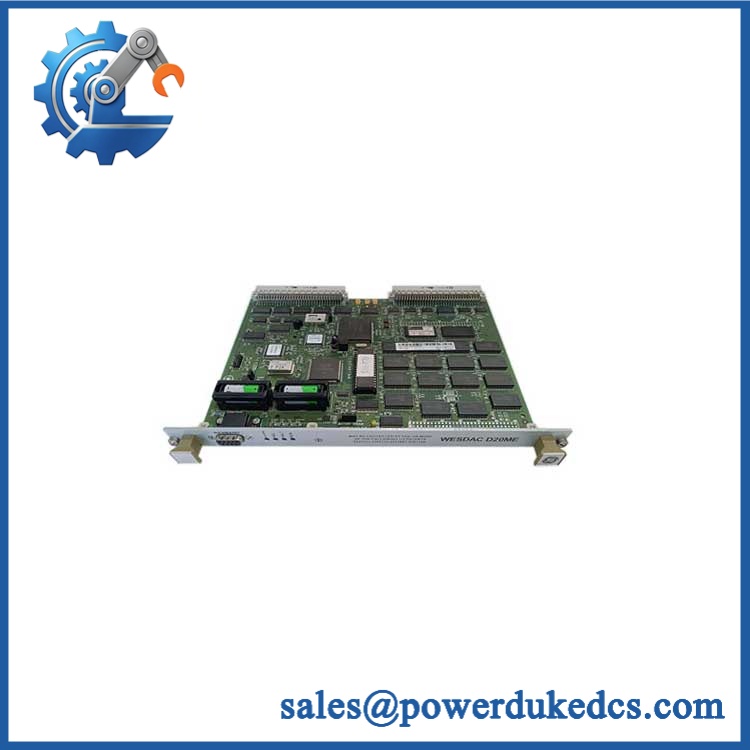
GE WESDAC D20
Quality Assurance SOP
For surplus WESDAC D20 PS inventory, testing should focus on electrical identity, output stability, and protection against installation of the wrong variant.
- OEM anti-counterfeit visual inspection: Verify GE markings, WESDAC/D20 identification, legacy part number where present, labels, connector construction, enclosure, and visible board markings.
- Configuration verification: Match the supplied unit against the quoted GE item number and record the input/output variant before energization.
- Power-on self-test (POST): Apply the correct controlled input source and check available status indicators, including expected power and fault indications.
- Output rail verification: Measure the applicable +5 V, +12 V, -12 V, and 24 VDC or 48 VDC outputs against the documented configuration.
- Load test: Apply a controlled representative load to verify voltage stability and detect abnormal heating or output collapse.
- Communication/system support check: Where suitable D20 test hardware is available, verify that the powered chassis can support processor or peripheral initialization without power-related alarms.
- Thermal observation: Monitor the supply during sustained operation for abnormal temperature rise, noise, cycling, or protective shutdown.
- Final traceability: Record exact part number, visible serial information where available, test date, measured outputs, inspection result, and packing condition.
Procurement note: The most reliable ordering reference is the complete GE legacy part number such as 580-2004, 580-2005, 580-2006, or 580-2007. “WESDAC D20 PS” alone is insufficient to establish the input and output configuration.



 Start Chat