

Description
Unboxing & Physical Snapshot
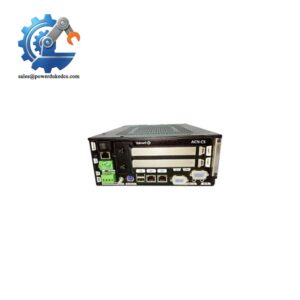
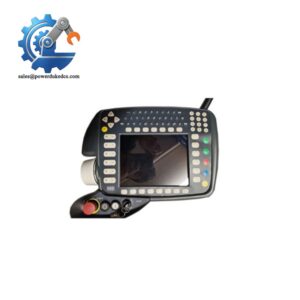
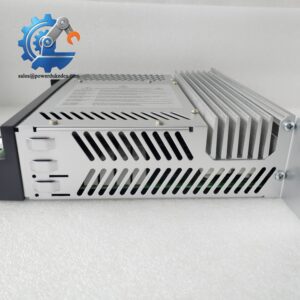
- Model & Brand: KEBA KEMRO K2-400 CP 450/C — industrial control hardware associated with KEBA’s KEMRO automation platform.
- Physical Dimensions: Exact dimensions should be verified against the nameplate-specific KEBA mechanical documentation. Do not use dimensions from a visually similar K2-series controller for cabinet planning.
- Estimated Shipping Weight: Approximately 1–2 kg gross as a provisional freight allowance; physically weigh the packaged unit before issuing a freight quotation.
- What’s in the Box: K2-400 CP 450/C controller, protective packaging, and manufacturer documentation when supplied as an OEM spare. Field wiring connectors, memory media, and application-specific accessories should not be assumed included unless listed on the PO.
- Housing: Industrial electronic enclosure intended for integration into a control cabinet or KEBA automation system.
- Receiving Inspection: Capture the complete type designation, serial number, hardware revision, MAC/network label where present, and connector condition before booking the asset into controlled inventory.
Product Introduction
Architecture Hook
The KEMRO K2-400 CP 450/C is system hardware rather than a general-purpose PLC that can be evaluated independently of its application environment. Its value as a spare depends on compatibility with the surrounding KEMRO controller architecture, I/O hardware, communication interfaces, application software, and stored machine configuration.
Treat the /C suffix as part of the material identity. A substitution based only on the K2-400 family designation can create a commissioning problem when hardware revision, communication interfaces, memory configuration, or installed application firmware differs (particularly on legacy machine-control systems where the original application image is not readily recreated).
Core Technical Specifications
| Parameter | Value |
|---|---|
| Manufacturer | KEBA |
| Product Family | KEMRO K2 |
| Model | K2-400 CP 450/C |
| Hardware Type | Industrial machine-control / CPU hardware |
| Controller Platform | KEMRO K2 |
| Application | Machine automation and control |
| Installation | Control cabinet / KEMRO automation system |
| Power Supply | Verify exact K2-400 CP 450/C documentation and nameplate |
| Communications | Configuration-dependent; verify installed interfaces |
| Memory | Revision/configuration-dependent; verify exact hardware documentation |
| Programming Environment | KEBA KEMRO software environment; verify project version |
| Cooling | Cabinet environment; maintain manufacturer-specified airflow |
| Mounting | Verify exact mechanical version; do not assume DIN-rail compatibility |
| Dimensions | Verify OEM mechanical drawing |
| Weight | Verify actual unit and packaging |
| Firmware | Hardware/application-version dependent |
| Environmental Ratings | Verify exact KEBA specification before field deployment |
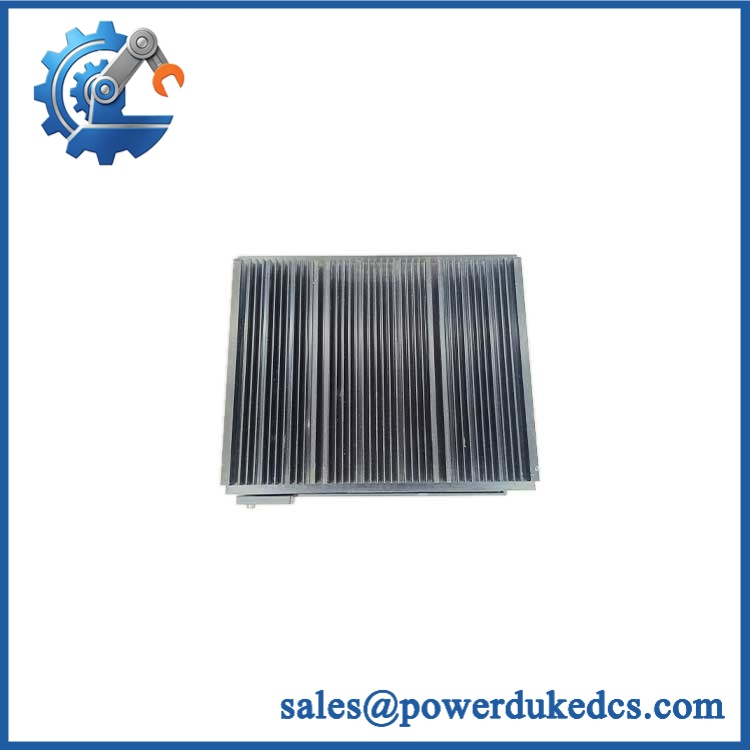
KEBA K2-400 CP 450/C
Configuration warning: The exact electrical and communication specification should be confirmed from the physical nameplate and KEBA documentation for the K2-400 CP 450/C variant. Publicly available information on legacy KEMRO equipment is not sufficient justification for entering guessed voltage, memory, or interface values into an audited ERP record.
For a replacement controller, firmware and application-project compatibility can be more consequential than the physical interchangeability of the enclosure.
? Global Compliance & Industry Certifications
- CE Mark: KEBA industrial automation equipment is commonly supplied for European industrial applications with applicable CE conformity. Confirm the exact declaration and hardware revision for this controller.
- UL/cUL: Do not enter UL/cUL certification into the asset master without documentation covering the exact K2-400 CP 450/C assembly.
- ATEX/IECEx: Do not assume hazardous-area approval. A standard machine controller must be installed outside the classified zone or inside an appropriately certified enclosure/system unless an exact certificate states otherwise.
- Marine Approval: DNV or other marine certification must be established from an applicable KEBA certificate for the exact hardware and intended installation.
- EMC: Verify the applicable EMC declaration and installation requirements, including cabinet grounding, cable routing, and shielding.
- Safety Relevance: Controller conformity does not automatically establish machine functional-safety compliance. Emergency-stop, guard monitoring, STO, and other safety functions must be implemented through the machine’s approved safety architecture.
- Audit Record: Retain the nameplate photograph, serial number, hardware revision, declaration of conformity, and any applicable certification documents.
Verify specific lot certifications with OEM.
? Long-Term Storage & Asset Preservation Guide
- Keep the controller in its original ESD shielding packaging. Legacy controller boards can remain electrically serviceable for many years, but exposed connector contacts and PCB surfaces are vulnerable to ESD, dust, and humidity.
- Control warehouse humidity. Maintain a clean, dry storage area, preferably below approximately 60% RH, while avoiding temperature swings that can create condensation inside the enclosure. Do not place the controller directly against an exterior warehouse wall.
- Preserve the application identity separately from the hardware. Record the firmware revision, hardware revision, serial number, and machine/application association. A replacement CPU without the correct application image may have little practical value even when the hardware passes a power-on test.
- Inspect electrolytic components before energization after prolonged storage. If the controller has been dormant for many years, inspect for capacitor leakage, corrosion, swelling, or residue before applying power. Follow the OEM service procedure rather than improvising a reforming process.
Physical Installation Prerequisites
- Mounting: Confirm the exact K2-400 CP 450/C mechanical drawing before drilling cabinet mounting points or ordering replacement hardware.
- Cabinet Clearance: Preserve sufficient space around the controller for cable routing, connector removal, heat dissipation, and service access. Do not bury the unit behind tightly packed wiring ducts.
- Cooling: Maintain the cabinet’s designed convection or forced-air path. Adjacent heat-generating power supplies, drives, and contactors should not discharge hot air directly across the controller.
- Grounding: Bond the controller and cabinet to the plant protective-earth system in accordance with the KEBA installation instructions and applicable machine standards.
- EMC: Keep motor, contactor, and high-current switching cables separated from low-level communication and signal wiring. Use shield termination exactly as specified by the machine design.
- Power: Verify the controller supply voltage and polarity from the exact documentation before energization. Legacy KEMRO hardware should never be powered based solely on a visually similar replacement.
- ESD: Use a grounded ESD wrist strap and ESD-safe work surface during replacement.
- Commissioning: Before releasing the machine to production, verify firmware, application project, I/O mapping, communication parameters, retained data, and safety-system interaction.
Buyer’s FAQ
Q1. What HS tariff code should be used for the K2-400 CP 450/C?
There is no reliable universal HS code that can be assigned from the model number alone. The correct classification depends on the controller’s exact function and the importing country’s tariff schedule.
For an international shipment, have the customs broker confirm the classification before the commercial invoice is finalized. Describe the item by its actual function—industrial machine controller/CPU—rather than using a vague description such as “electronic parts.”
Q2. Does Country of Origin affect this spare’s customs treatment?
Yes. COO can affect customs duty, preferential tariff eligibility, origin declarations, and trade-compliance screening.
Record the country of manufacture, not merely the supplier’s shipping location. If preferential treatment is claimed, retain the applicable Certificate of Origin or other origin evidence with the commercial documentation.
Q3. Should shipping insurance be purchased?
For a legacy machine controller, insurance is generally worth considering when the replacement value or production downtime exposure is significant. Weight is not the primary risk factor; damage to the PCB, connectors, or enclosure can make a scarce spare unusable.
Photograph the serial number and condition before packing. Use an ESD bag, moisture protection where appropriate, and sufficient cushioning to prevent impact loads during international transport.
Q4. Does the K2-400 CP 450/C arrive with the latest firmware pre-loaded?
Do not assume it does. Legacy KEMRO controllers can be tightly coupled to the machine’s application project, firmware revision, I/O configuration, and communication settings.
Before accepting a replacement into critical-spare inventory, record the installed firmware/hardware revision where accessible and compare it against the failed unit. The application program and controller configuration should be treated as separate controlled assets.
Asset-control note: The complete designation KEMRO K2-400 CP 450/C should remain intact in the ERP material master. Do not collapse it to “K2-400” because the omitted suffix may represent a materially different hardware configuration.


 Start Chat