

Description
- Model: FFLC6-3483-B
- Brand: TPC — Thomson Passive Components
- Part Type: Power Film Capacitor
- Series: FFLC6
- Technology: Film capacitor for high-power electronics
- Market Status: Legacy / specialized component; verify electrical parameters before substitution
Technical Introduction
The TPC FFLC6-3483-B is a specialized FFLC6-series film capacitor intended for high-power electronic equipment and DC-link applications.
The FFLC6 family is associated with Thomson Passive Components (TPC) and the AVX/KYOCERA AVX capacitor portfolio. Current component databases identify FFLC6-3483–B as an AVX component, while technical literature from AVX documents the FFLC6 family in high-current capacitor characterization. The exact electrical rating for the -3483-B variant is not sufficiently documented in the available public sources, so capacitance, DC voltage, RMS current, dimensions, and ESR should be verified from the capacitor nameplate or OEM documentation rather than inferred from another FFLC6 variant.
Best Suited For
- High-power converter and DC-link maintenance
- Replacement of an identified -3483-B capacitor
- Legacy power-electronics spare inventory
Public component listings identify FFLC6-3483–B within the AVX component inventory, and current distributor databases classify products as film capacitors. A separate technical source confirms the family was characterized for high-current applications, but it does not establish the exact ratings of -3483-B.
Do not use the specifications of another part number as a subst for -B. The family contains multiple configurations and ratings.
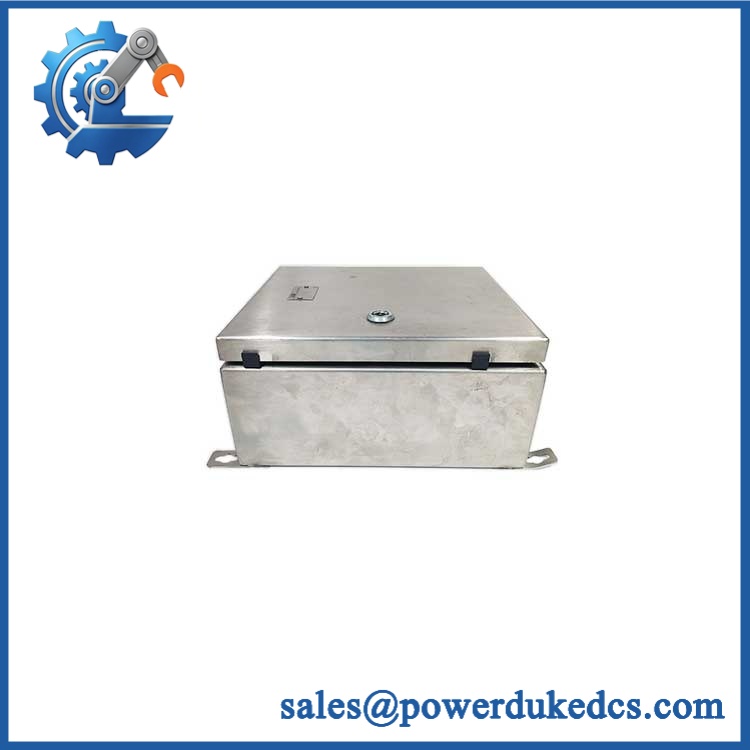
TPC FFLC6-3483-B
Field Engineer’s Tech Notes
1. Capacitance and voltage must match the original power stage.
A DC-link capacitor is part of the converter’s electrical design, not simply an energy-storage component. Verify capacitance tolerance, rated DC voltage, ripple-current capability, discharge requirements, and physical connection arrangement before replacement.
2. Inspect the complete DC bus circuit after capacitor failure.
Bulging, leakage, open terminals, discoloration, or abnormal heating can indicate excessive ripple current, switching abnormalities, cooling problems, or an overvoltage event. Check bus voltage, pre-charge circuitry, bus bars, adjacent capacitors, and cooling conditions before installing the replacement.
Adaptive QA & Testing Protocol
Incoming inspection should verify the complete marking, manufacturer identification, terminal condition, case integrity, mounting hardware, and evidence of swelling, cracking, leakage, corrosion, or storage damage.
For a power film capacitor, testing should be performed with equipment appropriate to the capacitor’s verified rating. Capacitance and dissipation/ESR checks can be performed where suitable, followed by insulation or leakage testing within the manufacturer’s specified limits. The capacitor should never be subjected to an arbitrary hipot voltage simply because a high-voltage test is available.
For a converter application, the replacement should also be checked for correct polarity where applicable, bus-bar geometry, terminal torque, insulation clearance, discharge circuitry, and thermal environment before energization.
Inspection photographs, test reports, and available test videos can be provided upon request.
Buyer’s FAQ
What type of compone TPC -B?
It is identified as an -series film capacitor associated with TPC/AVX component families. Public component sources list xact -B number, while AVX technical literature documents the family for high-current power-electronics applications.
Can another capacitor be used as a direct replacement?
Not automatically. The replacement must match the original capacitance, DC voltage rating, ripple current, ESR/ESL characteristics, dimensions, terminals, and cooling requirements. Different variants should not be treated as interchangeable solely because they share the series name.
Is this part available as New Surplus or refurbished?
Availability depends on current inventory. For a legacy capacitor, request confirmation of New Surplus (NSFP) or other condition, along with date code, storage history where available, inspection results, and warranty terms.
What information should I provide for a quotation?
Provide , required quantity, destination, and a clear photograph of the capacitor label. The complete marking is particularly useful because the public documentation does not provide a sufficiently verified electrical specification for this exact variant.


 Start Chat