

Description
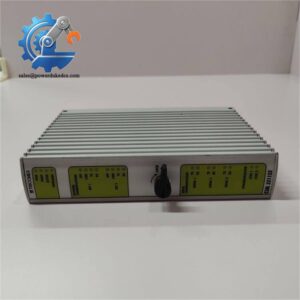
- Model & Brand: TRICONEX 8111
- Equipment type: Tricon High-Density Expansion Chassis.
- System: Tricon TMR Safety Instrumented System.
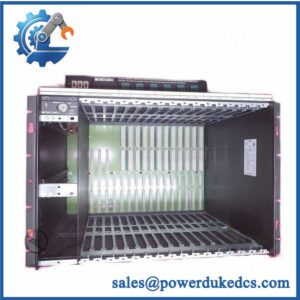
- Chassis function: Adds I/O and communication capacity to a Tricon system. The 8111 contains two power-module positions and eight logical module slots.
- Communication-module restriction: Communication modules can be installed only in Expansion Chassis 2 within the documented architecture.
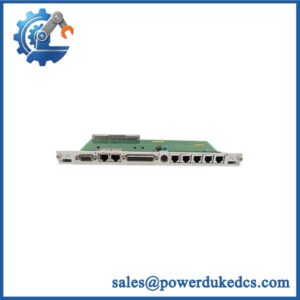
- I/O expansion bus: Six RS-485 expansion-bus ports are provided at the top-left of the backplane, supporting triplicated A/B/C communication paths.
- Expansion distance: The total I/O-bus cable distance from the Main Chassis to the last Expansion Chassis must not exceed 30 m (100 ft).
- Physical dimensions: Verify the exact chassis mechanical drawing before cabinet planning. A supplier listing reports approximately 48.3 × 57.8 × 45.1 cm, but this should be treated as a shipping/reference figure rather than an OEM-certified dimensional value.
- Estimated shipping weight: Approximately 24.5 kg has been reported for a complete chassis assembly; weigh the actual packed unit before issuing freight documents.
- What’s in the box: 8111 chassis/backplane assembly; power modules, I/O modules, communication modules, cables, and mounting accessories only if specifically included in the inventory lot.
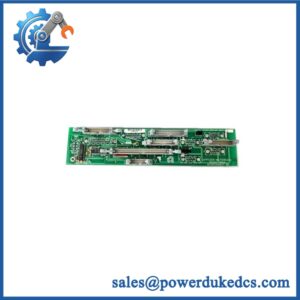
- Receiving inspection: Photograph the chassis label, serial/date code, power-module positions, backplane connectors, expansion-bus connectors, slot keying, and certification markings.
Product Introduction
Architecture hook: The TRICONEX 8111 is the high-density expansion chassis used to extend the Tricon TMR architecture beyond the main chassis. It provides eight logical slots for I/O and communication modules while incorporating two power-module positions, allowing additional safety-system hardware to be physically integrated into the Tricon architecture.
Do not treat the 8111 as a generic 19-inch PLC rack. Its backplane, triplicated expansion-bus connections, module keying, power arrangement, and chassis position are specific to the Tricon platform. The distinction is important during replacement work because an incorrect chassis configuration can compromise the approved system architecture even when individual I/O modules appear compatible.
Core Technical Specifications
| Parameter | Value |
|---|---|
| Manufacturer | TRICONEX |
| Product Family | Tricon |
| Model | 8111 |
| Product Type | High-Density Expansion Chassis |
| System Architecture | Tricon TMR SIS |
| Logical Module Slots | 8 |
| Power Module Positions | 2 |
| Expansion Bus | Triplicated RS-485 A/B/C architecture |
| Expansion Bus Ports | 6 |
| I/O Bus Cable Model | 9000 |
| Maximum Main-to-Last-Chassis Cable Distance | 30 m / 100 ft |
| I/O Bus Data Rate | 375 kbps |
| Communication Bus Data Rate | 2 Mbps |
| Communication Modules | Supported in designated Expansion Chassis 2 |
| Typical Power Arrangement | Redundant power modules |
| Approx. Reported Dimensions | 48.3 × 57.8 × 45.1 cm |
| Approx. Reported Weight | 24.5 kg |
| Cooling | Verify cabinet/system configuration |
| Firmware | Not applicable to passive chassis backplane |
| Mounting | Tricon chassis installation |
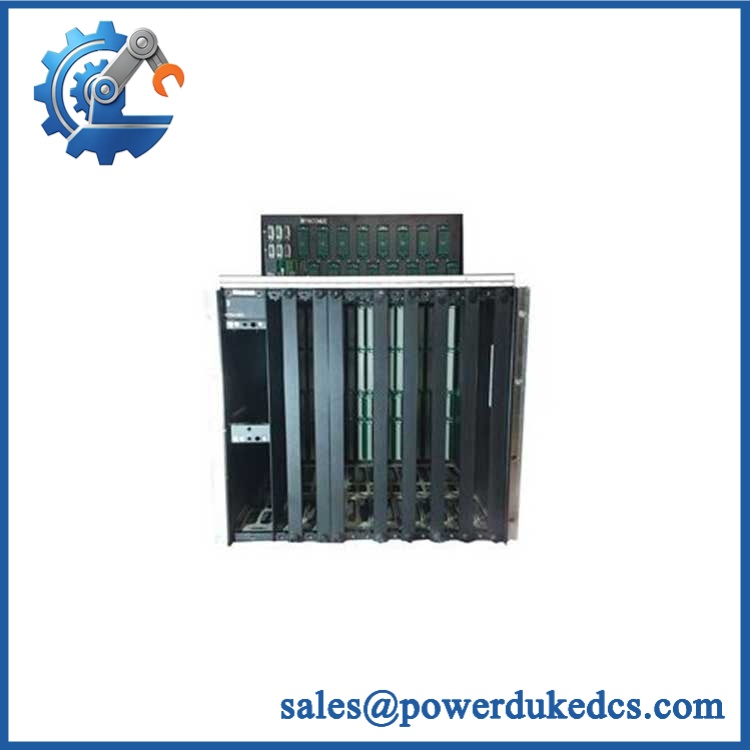
TRICONEX 8111
The 8111 is a passive chassis/backplane assembly, so firmware is not the primary configuration variable. The installed power modules, I/O modules, communication modules, chassis position, and system configuration are the important asset-control records.
? Global Compliance & Industry Certifications
For a Tricon safety-system chassis, compliance should be established against the complete approved system configuration, not simply the chassis model.
- CE Mark: Verify the applicable Triconex/Schneider Electric declaration for the exact chassis and system revision.
- UL/cUL: Verify the applicable North American certification and installation conditions.
- IEC 61508 / SIL: The Tricon platform is designed for functional-safety applications, but do not describe the 8111 chassis alone as an independent SIL-certified safety function.
- ATEX / IECEx: Verify the complete certified Tricon installation before using the system in a hazardous area.
- Marine approvals: DNV or equivalent classification must be confirmed for the exact hardware and application.
- EMC: Verify system-level EMC requirements, including cabinet grounding, power wiring, communication-bus cabling, and chassis installation.
The expansion bus is safety-relevant because the 8111 forms part of the communication path between the main chassis and additional Tricon hardware. The documented triplicated A/B/C bus arrangement should therefore be preserved during replacement.
Verify specific lot certifications with OEM.
? Long-Term Storage & Asset Preservation Guide
- Protect the backplane. Keep the chassis sealed against dust and moisture, with particular attention to the module connectors and RS-485 expansion-bus interfaces. Conductive contamination on the backplane can produce difficult-to-diagnose communication faults.
- Control humidity. Store the chassis in a clean, dry environment, preferably below 60% RH, with no condensation. Large metal chassis assemblies can experience temperature gradients that promote moisture accumulation around connectors.
- Protect mechanical interfaces. Do not place heavy equipment on the chassis or allow the backplane to rest directly against abrasive surfaces. Retain protective covers for empty module slots and connector openings where provided.
Because the 8111 is a passive chassis, connector condition and mechanical integrity are more important than firmware preservation. Inspect the backplane contacts, mounting structure, power-module interfaces, and bus connectors before installation.
Physical Installation Prerequisites
- Install the 8111 only as part of the Tricon expansion-chassis architecture specified by the system design.
- Verify the chassis mechanical mounting arrangement and cabinet structural capacity before installation; a complete assembly can weigh approximately 24.5 kg.
- Provide sufficient cabinet clearance for module insertion/removal, power-module access, cable routing, and ventilation. Do not replace the OEM mechanical requirements with an arbitrary 50 mm clearance.
- Install the required two power modules according to the approved system configuration.
- Use the specified Model 9000 I/O-bus cable and maintain the documented maximum 30 m distance from the Main Chassis to the final Expansion Chassis.
- Preserve the A/B/C triplicated bus arrangement and verify each communication path independently.
- Inspect all backplane connectors and module-slot keying before inserting hardware.
- Confirm cabinet grounding and bonding before energization.
- Verify chassis position and module allocation against the approved SIS configuration before returning the system to service.
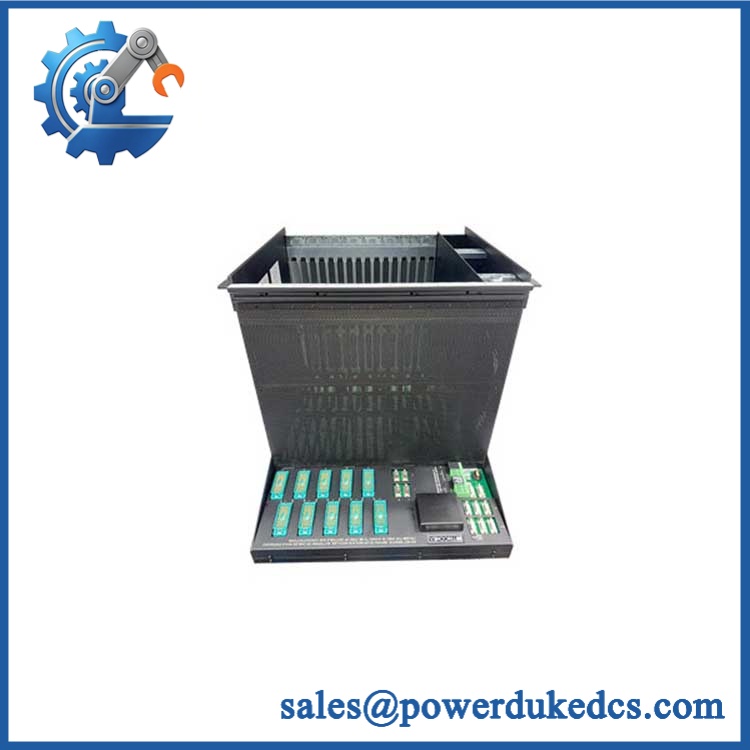
TRICONEX 8111
Buyer’s FAQ
Q: What HS Tariff Code should be used for TRICONEX 8111?
A: The classification should reflect the 8111’s actual function as an industrial safety-system expansion chassis/backplane, rather than treating it as a processor or generic PLC rack. Confirm the final HS classification against the destination country’s tariff schedule and retain the technical description used for the determination.
Q: What should be used as the Country of Origin?
A: COO must be supported by the actual manufacturing evidence for the specific chassis. Use the nameplate, OEM documentation, or supplier declaration; do not infer origin from the seller’s warehouse or shipping location.
Q: Is shipping insurance advisable for an 8111?
A: Yes. This is a large, heavy, legacy SIS component, so both replacement value and transport damage exposure can be significant. Use rigid packaging, immobilize the chassis, protect the backplane and connectors, and photograph the assembly before dispatch.
Q: Does the 8111 contain the latest firmware?
A: No firmware should be expected in the passive chassis itself. The 8111 provides the physical expansion/backplane infrastructure. Firmware and configuration reside in the installed processors, communication modules, and I/O modules. Record those module revisions separately when maintaining the SIS asset register.



 Start Chat