

Description
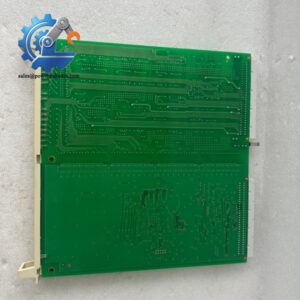
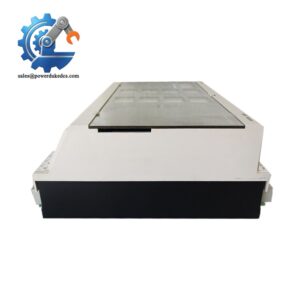
Unboxing & Physical Snapshot
- Manufacturer: Yokogawa Electric Corporation
- Complete model: AFV10D-S41101
- Product type: Duplexed Field Control Unit (FCU) for Yokogawa Vnet/IP and FIO systems.
- Architecture: Dual-redundant Vnet/IP and dual-redundant power supply.
- Mounting: 19-inch rack mount; the OEM specification calls for 8 × M5 screws and insulation bushes.
- Approximate dimensions: The published mechanical data should be used for final rack planning; third-party listings give approximately 203 × 51 × 146 mm, but this conflicts with the approximately 8 kg complete FCU weight and rack-mount architecture. Treat the third-party dimensions as unverified.
- Estimated shipping weight: Approximately 8 kg for the AFV10D FCU itself according to Yokogawa’s published general specification; allow additional carton, ESD protection, and shock-absorbing material for freight.
- What’s in the box: AFV10D-S41101 FCU; rack mounting hardware/insulation bushes only if included in the supplied configuration; manuals and software documentation should be verified against the purchase order.
- Asset identity: Record the full AFV10D-S41101 suffix string, serial number, hardware revision, and installed processor/memory configuration.
Product Introduction
The AFV10D-S41101 is the duplexed Field Control Unit at the control-station level, mounting into a 19-inch rack rather than functioning as an individual field I/O module. It forms part of Yokogawa’s Vnet/IP/FIO architecture, with dual-redundant Vnet/IP communication and redundant power specified by the “-S41101” configuration.
The suffix is important here. “-S” identifies the standard type, “4” specifies dual-redundant Vnet/IP and power, the first “1” is fixed, the second “1” specifies 100–120 VAC, “0” identifies the basic type, and the final “1” specifies the LFS1500 control function.
Core Technical Specifications
| Parameter | Value |
|---|---|
| Manufacturer | Yokogawa Electric Corporation |
| Complete Model | AFV10D-S41101 |
| Base Model | |
| Product Type | Duplexed Field Control Unit |
| Application | Field Control Station / DCS |
| System Architecture | Vnet/IP and FIO |
| Vnet/IP | Dual-redundant |
| Power Supply Architecture | Dual-redundant |
| Input Power | 100–120 VAC |
| Frequency | 50/60 Hz |
| Power Consumption | 200 VA |
| Processor | VR5432 |
| Processor Frequency | 133 MHz |
| Main Memory | 32 MB |
| Memory Protection | Battery-backed |
| Battery Backup | Maximum 72 hours |
| Battery Recharge Time | Minimum 48 hours |
| Status Contact | 2 terminals, NC/C |
| Status Contact Rating | 30 VDC, 0.3 A maximum |
| Network Interface | Dual-redundant Vnet/IP |
| Network Speed | 1 Gbps full duplex |
| Network Cabling | CAT5e or better UTP |
| Network Connector | RJ45 |
| Mounting | 19-inch rack |
| Rack Fasteners | 8 × M5 screws |
| Ground Connection | M4 screw terminal |
| Power Connection | M4 screw terminal |
| Approx. FCU Weight | 8 kg |
| Environmental Humidity | 5–95%, non-condensing |
| LFS Function | LFS1500 Control Function |
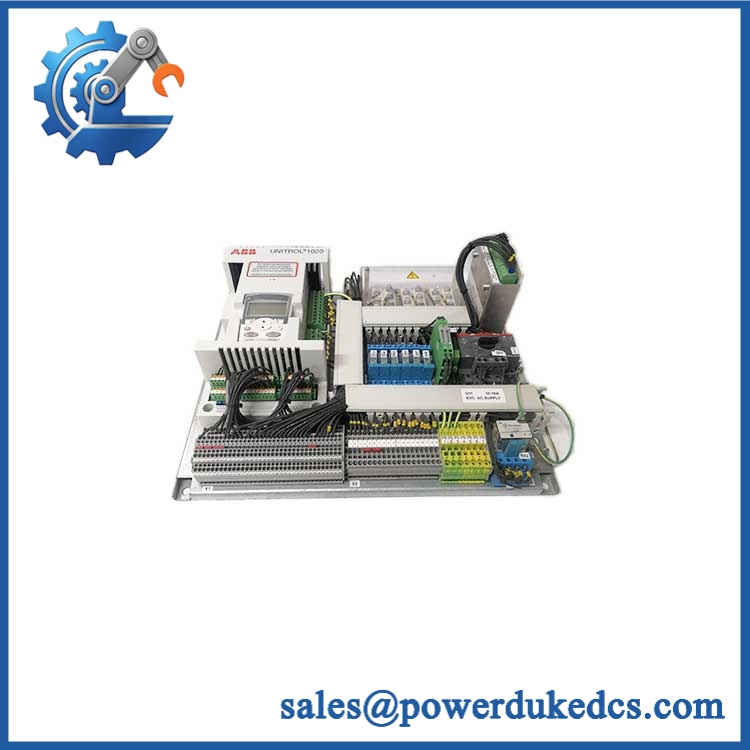
Yokogawa AFV10D-S41101
Yokogawa’s general specification identifies 32 MB main memory, a VR5432 133 MHz processor, battery-backed memory protection, and 200 VA consumption for the 100–120 VAC version.
The battery deserves special inventory attention. The published specification gives a maximum memory backup period of 72 hours and a minimum recharge time of 48 hours; therefore, a long-stored FCU should not be treated as immediately deployment-ready without checking its battery condition and system startup requirements.
? Global Compliance & Industry Certifications
The is a standard-type configuration, and its suffix code should not be confused with Yokogawa’s separately designated explosion-protected variants.
- CE Mark: Verify the applicable Yokogawa Declaration of Conformity for the exact hardware revision.
- UL/cUL: Verify product-specific listing information rather than assuming North American approval from the Yokogawa brand.
- ATEX: The family includes separately coded explosion-protection configurations. The “-S41101” standard configuration should not be represented as ATEX-certified without an applicable certificate. Yokogawa documentation identifies separate suffixes E/F for explosion-protection configurations and
/ATDOCfor the explosion-protection manual. - IECEx: Verify the exact nameplate and certificate before making an IECEx claim.
- Marine approvals: DNV GL or equivalent marine certification should be confirmed separately for the exact configuration.
- EMC: Final compliance depends on the FCU, rack, power system, grounding, Vnet/IP network installation, and cabinet construction.
This distinction matters in hazardous-area audits. A standard FCU installed in a certified cabinet does not automatically become an ATEX-certified assembly; the complete installation must satisfy the applicable protection concept and documentation requirements.
Verify specific lot certifications with OEM.
? Long-Term Storage & Asset Preservation Guide
Protect the memory-backup battery. This FCU uses a battery for memory protection, so a spare that has spent years on the shelf deserves a battery-condition check before installation. Record the battery status and replacement history rather than assuming the original battery remains serviceable.
Keep the FCU in ESD-protective packaging and control humidity. For long-term storage, maintaining warehouse RH below 60% where practical reduces connector oxidation and condensation risk. Never store the unit where temperature swings can produce moisture on the PCB or rack connectors.
Do not energize an aged spare without a controlled inspection. Check the power terminals, grounding terminal, network connectors, rack mounting points, and visible PCB surfaces first. The 100–120 VAC supply and 200 VA consumption should be verified against the cabinet power design before commissioning.
Keep the complete model suffix, serial number, hardware revision, battery information, and original documentation with the asset (especially important because the family contains multiple power and protection configurations).
Physical Installation Prerequisites
- Install in the specified 19-inch rack-mount architecture.
- Use the specified 8 × M5 mounting screws and insulation bushes.
- Provide a secure protective-earth connection through the designated M4 grounding terminal.
- Connect the 100–120 VAC supply through the specified M4 screw-terminal arrangement.
- Maintain adequate rack clearance around ventilation openings and adjacent equipment; do not block cabinet airflow.
- As a preliminary cabinet practice, allow approximately 50 mm of free space around ventilation paths, unless the Yokogawa cabinet/rack drawing specifies a different clearance.
- Use the specified CAT5e-or-better UTP network cabling and connect the Vnet/IP interface to the appropriate Layer 2 switch architecture.
- Preserve the physical separation and routing required for redundant communication paths.
- Verify both redundant power feeds before placing the FCU into service.
- Confirm the battery condition before relying on memory protection.
- If ESB Bus Node Units are connected, verify the EC401 ESB Bus Coupler Module arrangement; Yokogawa specifies EC401 installation in slots 7 and 8 for dual-redundant processor configurations.
- Complete the required CENTUM/DCS configuration and redundancy checks before returning the control station to operation.
Buyer’s FAQ
What HS tariff code should be used for -S41101?
Do not assign a tariff code from the “PLC module” description alone. The – is a DCS Field Control Unit, so the classification should reflect its principal control/processing function and the destination country’s tariff schedule. Have the customs broker validate the final HS classification before shipment.
What should I declare as the Country of Origin?
Use the actual COO supported by the unit and manufacturer documentation. Some commercial listings identify Japan, while other listings identify Singapore, so a seller’s website is not sufficient evidence for a customs declaration.
Is shipping insurance recommended?
Yes. This is a relatively high-value, legacy DCS control asset, and the complete is specified at approximately 8 kg. Use ESD packaging, internal shock protection, moisture protection, and a rigid outer carton or case; photograph the serial-number label and packaging before dispatch.
Does – include the latest firmware?
Do not assume it does. The unit contains a VR5432 processor and 32 MB main memory, but system compatibility depends on the installed CENTUM/DCS software environment, hardware revision, and control-station configuration.
Before issuing the spare, record the processor/hardware revision, software compatibility, battery condition, serial number, and exact suffix. One especially important point: this model is now listed by some sources as obsolete or superseded, so verify the intended replacement model with Yokogawa before changing the installed configuration.


 Start Chat