

Description
- Brand: ABB
- Full Model Number: HAC782AE
- ABB Part Number: 3BHB006840R0001
- Lifecycle Status: Legacy/industrial spare; current catalog status requires application-specific verification
- Core Function in System: AC contactor assembly for controlled electrical switching in ABB drive equipment
- Top 3 Hardcore Specs: AC contactor; 3BHB006840R0001; reported 120 × 100 × 80 mm form factor
- Typical Application: ABB medium-voltage drive equipment
- Reported Compatibility: ACS 6000 / ACS 8000 drive systems in secondary supplier documentation
- Condition & Lead Time: New replacement inventory subject to physical inspection; emergency dispatch based on confirmed stock
- Configuration Check: Verify coil rating, contact arrangement, mechanical interface, and host-drive configuration before installation
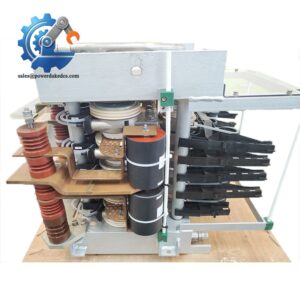
The exact part/model pairing is consistently identified in available industrial-parts records as ABB HAC782AE, part number 3BHB006840R0001, with the component described as a contactor assembly. Several supplier records associate it with ABB drive equipment, including ACS 6000/ACS 8000 applications.
Module 3: Technical Intro & Downtime Impact
A failed contactor can prevent a drive system from completing its required switching sequence even when the controller, power stack, and field wiring remain operational. The ABB HAC782AE, 3BHB006840R0001 is identified as an AC contactor assembly intended for industrial drive applications. In a medium-voltage cabinet, that makes the replacement decision highly configuration-sensitive: coil characteristics, contact arrangement, mechanical fit, and the host drive revision all need to agree before energization. Available technical listings specifically associate this part with ABB drive equipment.
For MTTR reduction, the useful starting point is exact identification rather than generic electrical ratings. Secondary records report a compact 120 × 100 × 80 mm physical size, while other listings report differing weights and electrical characteristics; those discrepancies are a clear reason not to use unverified marketplace specifications as the commissioning basis. The exact coil voltage, AC utilization category, contact current, insulation parameters, and permissible operating temperature should be taken from the applicable ABB drive documentation or the nameplate on the installed HAC782AE assembly.
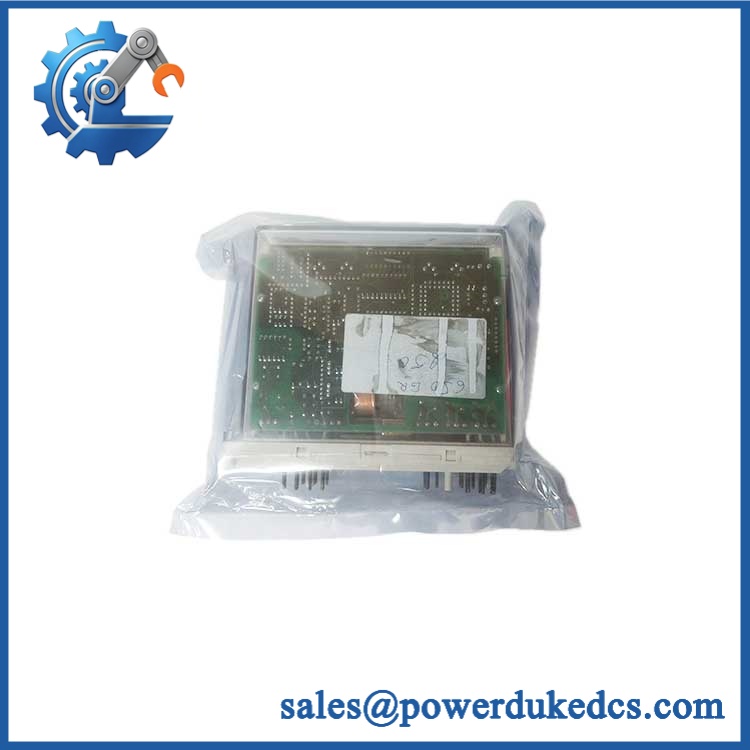
ABB HAC782AE 3BHB006840R0001
Module 4: Dynamic Emergency Swap & Configuration Guide
1. Pre-Swap Prep — Isolate the drive cabinet
- Place the ABB drive in the approved shutdown state.
- Open the required upstream disconnects and apply site lockout/tagout.
- Verify the cabinet is de-energized and address any stored energy specified by the drive service procedure.
- Photograph the existing HAC782AE before disturbing the wiring.
- Record the coil/control wiring, line/load terminals, auxiliary contacts, and mounting orientation.
- Verify the replacement marking 3BHB006840R0001 against the failed unit.
2. Removal — Release the contactor assembly
- Confirm zero voltage using an appropriately rated test instrument.
- Label every conductor before disconnecting it.
- Disconnect coil/control conductors and main power conductors in the sequence required by the cabinet design.
- Release the contactor’s retaining hardware or mounting clips.
- Remove the unit without stressing adjacent busbars, terminals, or auxiliary wiring.
- Inspect the mounting surface and conductors for discoloration, arcing, loose hardware, or heat damage.
3. Installation & Configuration — Match the existing electrical build
- Verify HAC782AE / 3BHB006840R0001 before installation.
- Confirm the replacement’s coil/control rating from the nameplate and drive schematic.
- Install in the original orientation and secure all mechanical fasteners.
- Reconnect line, load, coil, and auxiliary terminals according to the cabinet drawing.
- Check terminal torque against the applicable ABB installation specification.
- Confirm that normally-open/normally-closed auxiliary contacts match the original circuit.
- Do not assume a visually identical contactor has the same coil voltage or contact arrangement.
4. Power-On Self-Test (POST) — Prove the switching sequence
- Restore power under the approved commissioning procedure.
- Initiate the drive’s normal control sequence without immediately applying full process load.
- Verify the contactor actuates only when commanded.
- Listen for abnormal chatter, delayed pull-in, repeated cycling, or excessive mechanical noise.
- Confirm auxiliary feedback reaches the drive control circuit.
- Check drive diagnostics for contactor, precharge, interlock, or switching faults.
- Perform a controlled operational test before returning the drive to production.
Because the available product records do not provide an authoritative standalone LED POST sequence for , commissioning should rely on the host drive’s electrical schematic and diagnostics rather than a generic contactor test.
Module 5: Quality Assurance & Testing SOP
This part requires a component-level inspection followed by a host-system compatibility check. A visual resemblance is not enough for a high-energy switching device.
1. OEM identity verification
- Verify ABB
- Verify
- Verify 3BHB006840R0001
- Compare nameplate, terminal layout, mechanical geometry, and auxiliary-contact arrangement
- Perform OEM anti-counterfeit visual inspection
- Photograph all identifying markings
2. Mechanical inspection
- Inspect housing for cracks, impact marks, carbon tracking, and heat discoloration
- Inspect main terminals and auxiliary contacts
- Check mounting hardware and mechanical actuation
- Inspect moving contacts for signs of excessive wear where accessible
- Verify contactor dimensions against the required cabinet envelope
3. Electrical screening
- Verify coil continuity against the documented coil specification
- Inspect for abnormal resistance or open-circuit conditions
- Check main contact continuity in the de-energized state
- Verify contact separation where the design permits inspection
- Perform insulation testing only according to the applicable ABB/device procedure and with all sensitive connected circuitry isolated
- Do not apply arbitrary hipot levels to an installed assembly
4. Functional testing
- Energize the coil using a controlled test fixture with the correct rated voltage
- Confirm positive mechanical pull-in
- Confirm positive dropout after coil de-energization
- Verify auxiliary contact state changes
- Check for contact bounce, chatter, sticking, or delayed operation
- Where applicable, verify switching behavior in a compatible ABB drive test setup
- Record coil voltage, measured current, actuation behavior, and test result
5. Final QC release
- Independent QC sign-off
- ESD and mechanical protection appropriate to the assembly
- Protect terminals against impact and contamination during transit
- Final cross-check of / 3BHB006840R0001
- Retain inspection photographs and electrical test records
Available technical records identify the exact model/part-number combination as a contactor assembly, but the published secondary specifications are not consistent on weight, origin, and electrical ratings. Those values should therefore be treated as verification items rather than fixed purchasing specifications.
Module 6: Maintenance & Reliability FAQ
Q1. Is ABB 3BHB006840R0001 a direct drop-in replacement, or does it require a firmware flash?
A contactor does not normally involve application firmware in the same way as a PLC or drive controller. The critical checks are mechanical compatibility, coil/control voltage, main contact configuration, auxiliary-contact arrangement, and the host drive’s electrical schematic. Confirm the exact / 3BHB006840R0001 identification before installation.
Q2. Is it safe to hot-swap this contactor while the system is running?
No. Do not remove or install this type of power-switching component on an energized drive unless the exact equipment design explicitly provides an engineered live-maintenance procedure. Standard maintenance practice requires isolation, verification of absence of voltage, and control of stored electrical energy.
Q3. Will replacing the cause my current program or configuration to be lost?
The contactor itself does not normally contain the drive application program. The replacement can, however, affect the drive’s startup interlock or feedback circuit if the auxiliary contacts or coil wiring do not match the original assembly. Before removal, photograph and document every connection; after installation, verify the expected contactor feedback at the drive controller.
Q4. What electrical specification should I verify before ordering?
At minimum, verify the coil voltage, main-contact configuration, auxiliary-contact arrangement, mounting geometry, terminal arrangement, and the exact host-drive application. Do not rely on conflicting third-party listings for these values. The available records agree on the and 3BHB006840R0001 identification but differ on several secondary specifications.
Q5. What are the warranty terms if the replacement fails post-installation?
Warranty coverage should be established in the supplier’s written terms before purchase. Keep the nameplate photographs, incoming inspection record, coil test results, installation photographs, terminal-torque record, and drive alarm history. For a failed contactor, those records help separate a defective component from incorrect coil voltage, excessive cycling, contact wear, wiring faults, or a drive-side interlock problem.


 Start Chat