

Description
- Emerson 1C31192G01 | Original Turbine Control Component
Unboxing & Physical Snapshot
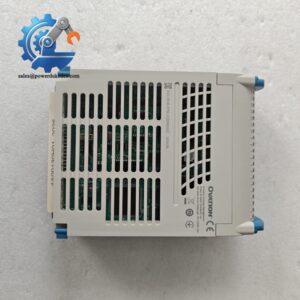
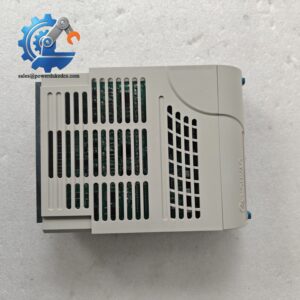
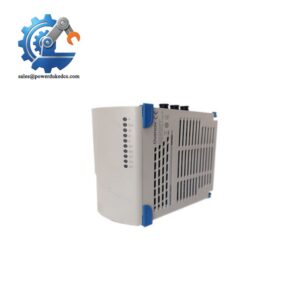
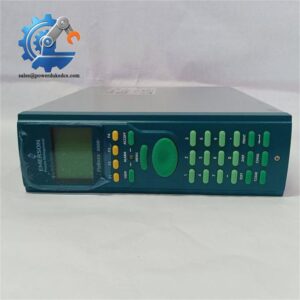
- Model & Brand: Emerson 1C31192G01 Ovation Speed Detector Module. This module is used within the Emerson Ovation distributed control system for rotational speed measurement applications.
- Product Type: Speed Detector / Personality Module for Ovation control architecture.
- Physical Dimensions (Approximate W × H × D): Approximately 100 × 100 × 45 mm (3.94 × 3.94 × 1.77 in.).
- Estimated Shipping Weight: Approximately 0.17–0.25 kg (0.38–0.55 lb) for the module, depending on protective packaging.
- What’s in the Box:
- Emerson Ovation 1C31192G01 Speed Detector Module
- Front identification label
- Backplane connector interface
- Anti-static (ESD) shielding bag
- Protective foam packaging
- Documentation when supplied
Product Introduction
The Emerson 1C31192G01 installs into the Ovation I/O subsystem and provides the interface between speed sensing devices and the control system. Proper slot assignment and module identification must be confirmed before installation. The backplane connector, terminal interface, and retaining hardware require careful inspection because speed feedback signals are often tied to critical turbine control and protection functions (which makes signal integrity a maintenance priority).
This module processes rotational speed inputs from devices such as magnetic pickups or tachometer sensors and converts those signals into usable control data. It does not function as a standalone controller; configuration remains managed through the Ovation system database and engineering tools. Check the hardware revision before replacement. Legacy Ovation installations often contain mixed-generation modules, and an incorrect revision match can create commissioning issues.
Core Technical Specifications
| Parameter | Value |
|---|---|
| Manufacturer | Emerson |
| Model Number | 1C31192G01 |
| Product Type | Ovation Speed Detector Module |
| System Platform | Emerson Ovation DCS |
| Input Type | Magnetic pickup / optical pickup compatible |
| Input Frequency Range | Approximately 0.1 Hz to 50 kHz |
| Measurement Accuracy | Approximately ±0.1% |
| Power Supply | 24 VDC from Ovation system |
| Number of Channels | 8 frequency measurement channels (configuration dependent) |
| Output Types | Frequency, analog outputs, speed data outputs (configuration dependent) |
| Signal Isolation | Channel isolation design |
| Update Rate | Millisecond-level processing depending on output function |
| Operating Temperature | 0°C to 60°C typical |
| Storage Temperature | -40°C to 85°C typical |
| Humidity | 0–95% RH, non-condensing |
| Firmware | System configuration dependent |
| Memory | Internal module memory only; no user application storage |
| Dimensions | Approx. 100 × 100 × 45 mm |
| Weight | Approx. 0.17–0.25 kg |
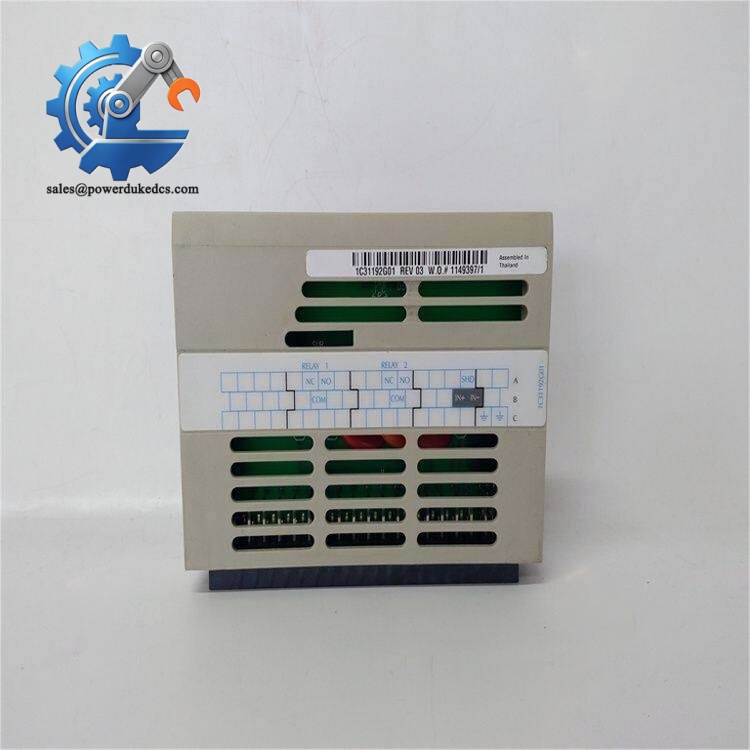
Emerson 1C31192G01
Global Compliance & Industry Certifications
Expected compliance considerations for the Emerson 1C31192G01 include:
- CE Mark — applicable when installed as part of a compliant Emerson Ovation control system.
- UL/cUL Listed — generally applies to the complete industrial control assembly.
- IEC 61010 industrial control equipment safety considerations — relevant for control system installation environments.
- ATEX/IECEx — applicable only when installed within an approved hazardous-area system design.
- Marine approvals such as DNV GL — applicable only for certified marine automation packages.
For turbine and power-generation applications, speed detection accuracy is directly related to equipment protection logic. A properly certified and traceable replacement module reduces the risk of incorrect speed feedback during operation.
Verify specific lot certifications with OEM.
Long-Term Storage & Asset Preservation Guide
Keep the 1C31192G01 sealed in its original anti-static (ESD) packaging until installation. Protect the backplane connector contacts from dust and oxidation.
Maintain warehouse humidity below 60% RH. Avoid condensation cycles, especially when moving spare modules between storage and climate-controlled control rooms.
Inspect the module before installation. Check the PCB coating, connector pins, retaining clips, and identification label (serial and revision records are essential for regulated power-generation assets).
Store away from vibration sources and strong magnetic fields. Mechanical shock can damage connector alignment even when the enclosure appears unaffected.
Physical Installation Prerequisites
- Install only in compatible Emerson Ovation I/O racks.
- Verify module slot assignment before insertion.
- Remove system power before replacing the module.
- Confirm backplane connectors are clean and undamaged.
- Ensure cabinet grounding meets plant electrical requirements.
- Maintain adequate airflow around the I/O rack.
- Leave at least 50 mm clearance above and below rack ventilation areas where practical.
- Route speed sensor wiring separately from high-current conductors.
- Verify sensor scaling and configuration after replacement.
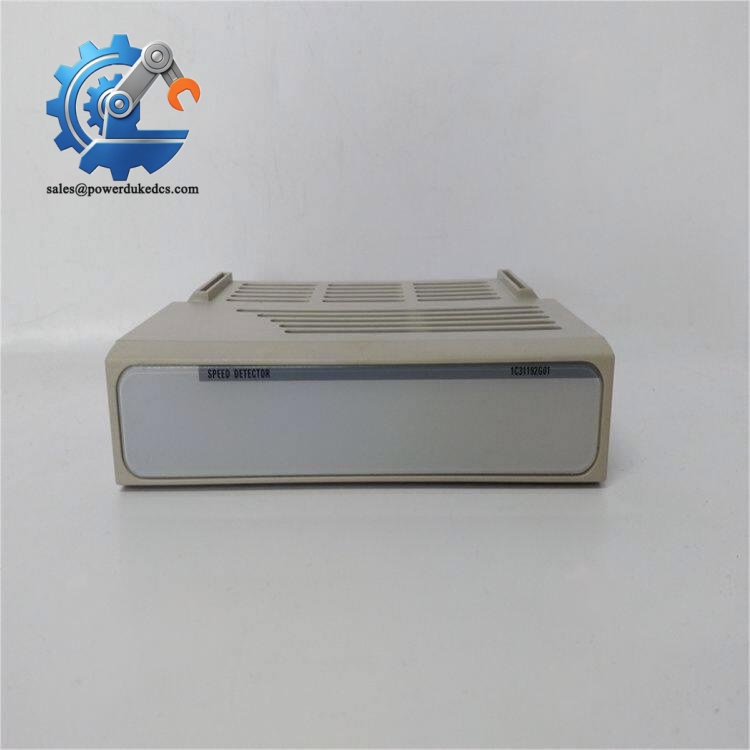
Emerson 1C31192G01
Buyer’s FAQ (Logistics & Compliance Focus)
Q: What HS Tariff Code is commonly used for the Emerson 1C31192G01?
A: Industrial control modules are commonly reviewed under HS 8537 classifications for electrical control equipment. The final tariff classification depends on the destination country’s customs interpretation and declared function.
Q: Does Country of Origin (COO) affect importing this Ovation module?
A: Yes. COO affects customs processing, duty calculations, supplier qualification, and asset traceability. Confirm that the COO shown on the commercial invoice matches the product documentation and shipment records.
Q: Should shipping insurance be purchased for the 1C31192G01?
A: Recommended. The module is compact but contains precision electronic measurement circuits. Shock, moisture exposure, or ESD damage during transportation may not be visible during receiving inspection.
Q: Does the Emerson 1C31192G01 include the latest firmware pre-loaded?
A: Firmware and configuration depend on the Ovation system revision and installed engineering database. The module should be verified against the existing control system baseline before commissioning.



 Start Chat