

Description
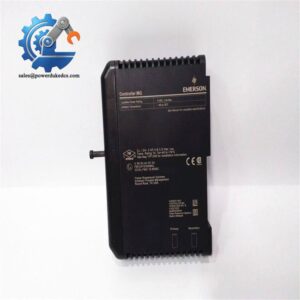
- Brand: Emerson EPRO
- Full Model Number: PMC-IO-PROZESSOR
- Associated EPRO Model: MMS 3110
- System / Series Family: MMS 3000 Machine Monitoring System
- Core Function: Dual-channel relative shaft vibration measurement and transmission
- Top 3 Hardcore Specs: 2 eddy-current sensor inputs; 0/4 to 20 mA outputs; redundant 24 VDC supply
- Sensor Compatibility: PR 6422 / PR 6423 / PR 6424 / PR 6425 series
- Current Output Burden: Up to 500 Ohm
- Operating Temperature: -20 to +80 °C
- Stock Status: Availability and exact inventory condition to be confirmed by lot
Public product cross-reference data maps PMC-IO-PROZESSOR to MMS3110. The EPRO documentation identifies MMS 3110 as a dual-channel shaft-vibration transmitter within the MMS 3000 transmitter system.
Commercial-Technical Deep Dive
Unexpected shaft-vibration alarms create a difficult replacement problem when the installed monitoring system is several generations old. The Emerson EPRO MMS 3110 is designed for this measurement layer, rather than general PLC sequence control. It accepts two independent eddy-current sensor channels and processes relative shaft-vibration signals for rotating equipment. Typical applications include turbines, compressors, fans, gearboxes, pumps, and other rotating machinery. EPRO documentation lists compatibility with PR 6422, PR 6423, PR 6424, and PR 6425 sensor families.
The electrical interface is useful when maintaining existing field instrumentation. The MMS 3110 provides two redundant 24 VDC supply inputs and two 0/4 to 20 mA measurement outputs, with an output burden up to 500 Ohm. Depending on the ordered hardware option, function outputs and additional test outputs can also be available. The documented operating range is -20 to +80 °C, with IP65 protection for the packaged transmitter design. (Exact output and connector configuration depends on the specific MMS 3110 variant.)
Compatibility & Installation Traps
Migration / Compatibility
PMC-IO-PROZESSOR should be verified against the physical assembly before ordering. Public cross-reference sources associate this commercial description with EPRO MMS 3110, but the source material does not establish that every unit carrying this description has identical hardware options.
For an existing MMS 3110 installation, a same-configuration replacement is generally a hardware replacement rather than a PLC logic migration. The sensor family, measurement range, current-output arrangement, function outputs, communication option, and enclosure configuration still need to match the installed version.
The MMS 3110 supports selectable measurement modes. These include single-channel and dual-channel operation, plus combined-channel calculations such as Max(Spp1/Spp2) according to API 670 and Smax according to DIN 45670 on supported configurations.
⚠️ Field Traps (Watch Out)
Trap 1 — Sensor family mismatch:
Do not assume every eddy-current probe can be connected because the connector appears similar. The MMS 3110 documentation specifies EPRO PR 6422 through PR 6425 sensor families. Verify the exact probe, converter arrangement, and configured measuring range.
Trap 2 — Output configuration mismatch:
MMS 3110 hardware was available with different output configurations. Current outputs, function outputs, display options, communication arrangements, and internal or external converter configurations can vary. A visually similar spare can therefore have the wrong electrical option set.
Power isolation:
This is machine-monitoring hardware associated with rotating equipment protection. Follow the plant’s approved shutdown, isolation, and protection-bypass procedure before removing the transmitter. Do not assume the module is suitable for live replacement.
Cable routing:
Sensor signals are low-level measurement circuits. Keep probe wiring separated from high-current switching conductors and preserve the original shielding and grounding arrangement. Small wiring changes can affect vibration readings even when the transmitter itself is healthy.
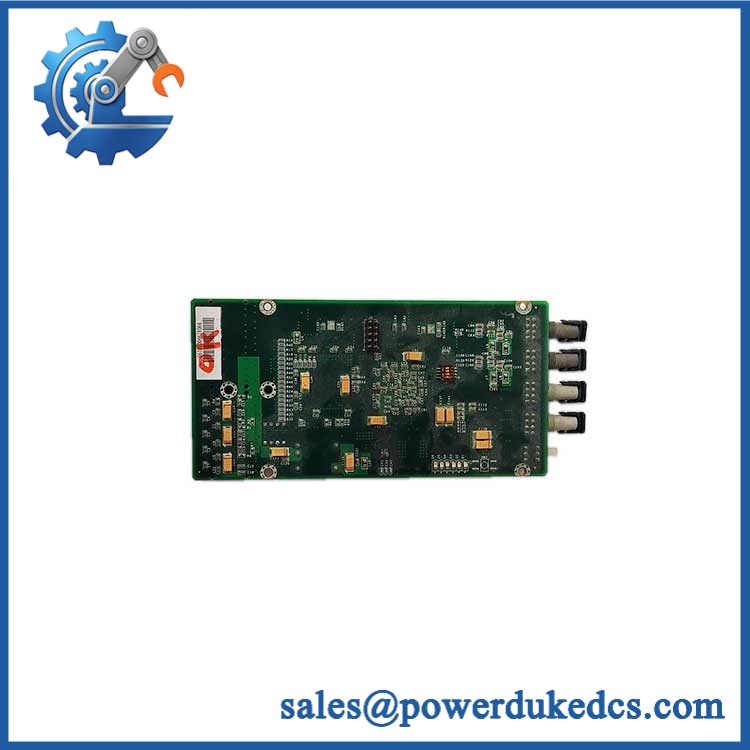
Emerson PMC-IO-PROZESSOR
Quality Assurance SOP
Our pre-shipment inspection for Emerson PMC-IO-PROZESSOR / EPRO MMS 3110 follows a hardware-focused QA sequence:
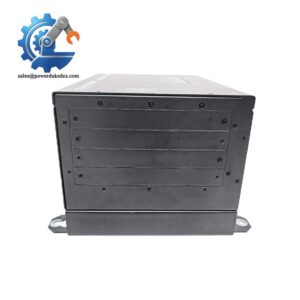
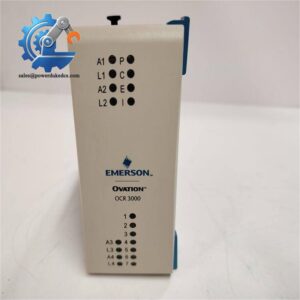
- OEM anti-counterfeit visual inspection: inspect Emerson/EPRO markings, model designation, serial identification, connector construction, housing finish, PCB condition, and evidence of unauthorized rework.
- Nameplate verification: confirm the physical identification against PMC-IO-PROZESSOR and any MMS 3110 or variant designation present on the unit.
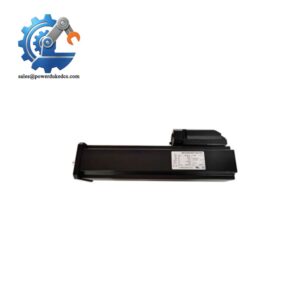
- Mechanical inspection: check connectors, mounting points, cable entries, terminal interfaces, enclosure condition, and signs of impact or corrosion.
- Power-on self-test: where the available test setup permits, apply the specified DC supply and check startup behavior and abnormal alarm indications.
- Sensor input verification: verify the two measurement channels using an appropriate simulated or known-good eddy-current signal source.
- Analog output verification: check the 0/4 to 20 mA channels against representative simulated measurement values.
- Communication handshake verification: verify RS-232 or other fitted communication interfaces when supported by the exact hardware variant.
- Function-output verification: test fitted relay, optocoupler, or PhotoMOS outputs when present.
- Final configuration review: compare hardware options with the requested replacement specification before shipment.
- ESD-controlled packaging: use ESD-safe handling and protective packaging for electronic assemblies.
The MMS 3110 documentation specifically describes integrated signal conversion, two redundant 24 VDC inputs, sensor supervision, self-test functions, and 0/4 to 20 mA outputs.
CRO-Driven Buyer FAQ
Is Emerson PMC-IO-PROZESSOR actually an I/O processor?
Not in the conventional PLC sense. Public cross-reference records associate this designation with the EPRO MMS 3110 dual-channel shaft-vibration transmitter. Because the commercial description is ambiguous, verify the physical nameplate and existing cabinet documentation before purchasing.
What equipment does the associated MMS 3110 monitor?
It is intended for relative shaft-vibration measurement on rotating machinery. Documented applications include turbo machinery, compressors, fans, gearboxes, pumps, and similar machines.
Can I replace an MMS 3110 without changing the control logic?
A same-configuration monitor normally does not require PLC logic rewriting. The critical checks are the sensor type, measuring range, output configuration, function outputs, communications, and hardware options. Confirm these items against the installed transmitter before replacement.
Does the MMS 3110 support two vibration channels?
Yes. The documented architecture provides two independent eddy-current sensor inputs. The channels can operate independently or support combined measurement calculations on applicable configurations.
What warranty and technical support are provided?
Warranty duration should be stated on the quotation for the actual inventory lot and condition. Technical support covers part identification, datasheet comparison, hardware-option checking, wiring review, and replacement guidance. Plant shutdown approval, machinery protection bypass authorization, trip-setting validation, and final commissioning remain the customer’s responsibility.



 Start Chat