

Description
- Brand: GE / GE Digital Energy
- Full Model Number: 9L10KAC113
- System/Series Family: GE 9L10K Series OEM High Energy Surge Protectors
- Core Function: AC surge suppression for single-phase 3-wire 120/240V power systems
- Nominal System: 120/240V, 1-phase, 3-wire
- Maximum Continuous Operating Voltage: 138V L-N; 276V L-L
- 1-Second Temporary Overvoltage: 183V L-N; 367V L-L
- Energy Rating: 960 J per phase
- Connection: Series or parallel T-connection
- Series Connection Limit: 100 A continuous per phase
- Parallel T-Connection: No continuous-current limitation stated by GE
- Housing Height: 2.50 in / 63.5 mm
- Element Technology: Zinc oxide varistor-based surge protection
- Replacement Family: Direct replacement for superseded 9L10M series
- Stock Status: New Surplus / Fully Tested — verify exact markings, lead configuration, and condition before shipment
GE’s BuyLog identifies 9L10KAC113 as an OEM high-energy surge protector for 120/240 V, single-phase, three-wire systems. The listed maximum continuous operating voltage is 138 V line-to-neutral and 276 V line-to-line, with a 960 J-per-phase energy rating. GE also states that the 9L10K family directly replaces the superseded 9L10M series.
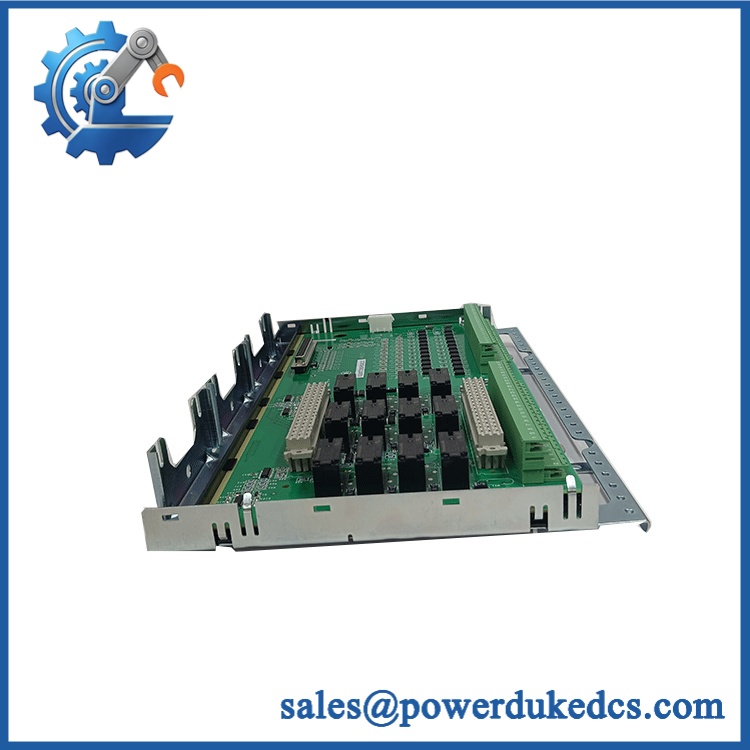
GE 9L10KAC113
Module 3: Commercial-Technical Deep Dive
A surge protector has one job during an abnormal transient: keep the downstream equipment’s insulation and electronics within a survivable voltage range. The GE 9L10KAC113 is an OEM high-energy surge protector designed specifically for 120/240 V single-phase, three-wire systems. GE specifies a 138 V L-N and 276 V L-L maximum continuous operating voltage, with a 183 V L-N and 367 V L-L one-second temporary overvoltage rating. The unit carries a 960 J-per-phase energy rating, making it substantially different from a small plug-in suppressor used around ordinary office equipment.
The hard ROI is equipment protection at the feeder level. GE designed the 9L10K series for OEM equipment or installation inside an existing enclosure, and the catalog allows either series connection for circuits up to 100 A continuous per phase or a parallel T-connection with no stated continuous-load limitation. The protective element uses a zinc-oxide voltage-dependent characteristic, allowing the arrester to clamp transient overvoltage while remaining in service during normal line conditions. —Connection geometry matters: the best protective result depends on the installation method and short lead lengths, not merely on having the correct catalog number.
Module 4: Compatibility & Installation Traps
Migration/Compatibility
For an existing power-distribution installation specified for 9L10KAC113, the correct approach is an exact 9L10KAC113 replacement or a documented GE-approved successor.
No firmware, PLC logic, or software configuration applies to this passive surge-protection device. Compatibility is electrical and mechanical: 120/240 V single-phase three-wire service, correct connection topology, conductor arrangement, enclosure space, and grounding system must all match the installation.
GE’s catalog states that the 9L10K series is a direct replacement for the older 9L10M series, but that does not mean every 9L10K variant is interchangeable. The system voltage and wiring configuration encoded by the model number must remain correct.
⚠️ Field Traps (Watch Out)
- Do not substitute by voltage alone: 9L10K products are available for multiple system configurations from 120 V through 600 V. The 9L10KAC113 specifically belongs to the 120/240 V single-phase, three-wire configuration. A similar-looking 240/480 V model is not an acceptable substitute.
- Series versus T-connection: GE documents different continuous-current limits for the two connection methods: 100 A per phase for series connection, versus no stated continuous-current limitation for the parallel T-connection. The installation drawing must determine which configuration applies.
- Lead length: GE notes that the series connection provides lower protective levels by minimizing inductive voltage associated with lead length. Excessively long conductors can therefore reduce the effectiveness of an otherwise correct surge protector.
- Common-mode protection: GE provides an optional common-mode protection configuration within the 9L10K family. Do not assume that an AC113 unit has the same L-G/N-G protection arrangement as a modified catalog variant. Match the complete ordering code and connection diagram.
- Residual energy: A surge protector installed on energized distribution equipment must be treated as power-distribution hardware. Apply the required isolation, lockout/tagout, and absence-of-voltage verification procedure before replacement.
Module 5: Quality Assurance SOP
- OEM anti-counterfeit visual inspection — verify GE markings, complete 9L10KAC113 identifier, enclosure geometry, terminal arrangement, labels, and evidence of unauthorized modification.
- Part-number reconciliation — photograph the full product number and all visible secondary markings before installation or testing.
- Mechanical inspection — verify the documented 2.50 in / 63.5 mm H dimension, terminal condition, housing integrity, mounting points, and protective surfaces.
- Electrical configuration check — confirm that the unit is designated for 120/240 V, 1-phase, 3-wire service and that the customer’s system matches this configuration.
- Insulation/continuity inspection — perform the applicable manufacturer-approved checks using the prescribed test procedure. Do not apply an arbitrary high-voltage test to an MOV-based surge protector.
- Leakage/current assessment — where the authorized test procedure supports it, verify device leakage behavior against the applicable acceptance limits.
- Connection-topology verification — verify whether the customer installation uses the cataloged series or T-connection method and document the intended conductor routing.
- Visual element inspection — inspect the surge-protection elements for cracking, discoloration, swelling, thermal damage, contamination, or evidence of previous high-energy operation.
- Enclosure and grounding check — verify mounting, bonding, conductor routing, and ground path against the approved installation drawing.
- Final QC release — retain product photographs, electrical inspection results, configuration verification, and packaging inspection records.
For a surge-protection device, a simple ohmmeter check is not enough. The acceptance decision should be based on exact catalog identification, physical condition, correct system configuration, and the manufacturer’s approved electrical test method.
Module 6: CRO-Driven Buyer FAQ
1. What is GE 9L10KAC113?
It is a GE 9L10K Series OEM High Energy Surge Protector for 120/240 V single-phase, three-wire systems. GE rates the unit at 960 J per phase, with maximum continuous operating voltages of 138 V L-N and 276 V L-L.
2. Is 9L10KAC113 a circuit breaker or fuse?
No. It is a surge protector, not an overcurrent protective device. It is intended to limit transient overvoltage; it does not replace the branch or feeder breaker/fuse required for overcurrent protection.
3. Is 9L10KAC113 interchangeable with other 9L10K models?
No. The 9L10K family covers multiple voltage and wiring configurations. 9L10KAC113 is specifically assigned to 120/240 V, single-phase, three-wire service. Match the complete catalog number before substitution.
4. Is 9L10KAC113 a direct replacement for the 9L10M series?
GE states that the 9L10K series is a direct replacement for the superseded 9L10M series. The replacement still needs to match the installed voltage, connection configuration, and enclosure arrangement.
5. Can the 9L10KAC113 be hot-swapped?
No. Do not remove or install this surge protector on an energized distribution circuit unless a formally engineered procedure explicitly authorizes such work. Apply electrical isolation and absence-of-voltage verification before handling the device.
6. What warranty and technical support should I expect?
The quotation should identify whether the unit is new surplus, unused, or tested and specify the warranty period. Technical support should cover exact catalog-number verification, voltage and connection compatibility, physical inspection, and available electrical test documentation. System-level surge coordination, grounding design, and field commissioning should remain separate electrical-engineering activities.


 Start Chat