

Description
- Brand: GE / GE Energy / GE Grid Solutions
- Full Model Number: D20ME 526-2005-216943
- System/Series Family: GE D20/D200 Substation Automation Platform
- Core Function: Main processor and data concentrator for D20/D200 RTU systems
- Board Variant: D20ME VME
- Legacy Part Number: 526-2005
- Serial Interfaces: 7 × RS-232
- Chassis Type: VME
- Application: D20/D200 systems requiring multiple processors and/or Ethernet support
- Base Software: D20 Base firmware or CCU Base firmware
- Peripheral Architecture: Master controller for D20 I/O slave modules
- Lifecycle: Legacy / End-of-Manufacturing
- Stock Status: New Surplus / Fully Tested Refurbished — verify exact hardware revision and firmware before shipment
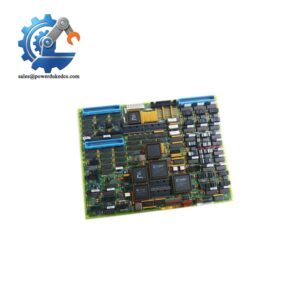
GE documentation identifies 526-2005 as the D20ME VME processor, intended for VME-based D20 and D200 applications requiring multiple processors and/or Ethernet support. The D20ME serves as the main module, data concentrator, and central processor for field data, while peripheral I/O modules operate as slaves.
Module 3: Commercial-Technical Deep Dive
When a substation RTU loses its main processor, the failure propagates well beyond a single communication channel. The GE D20ME 526-2005-216943 is part of the D20ME VME processor family that functions as the central processor and data concentrator for D20/D200 systems. GE documentation identifies the 526-2005 variant specifically for VME D20 and D200 applications requiring multiple processors and/or Ethernet support. The architecture is intentionally distributed: peripheral I/O modules perform primary local processing while the coordinates the overall RTU data path.
The hard ROI comes from restoring an established substation RTU architecture rather than replacing the entire automation platform. The documented 526-2005 processor provides 7 RS-232 ports, while its VME form factor gives the system access to shared VME resources and peripherals such as Ethernet cards. The important limitation is the suffix: public GE documentation reliably establishes 526-2005 as the VME processor, but it does not provide a trustworthy public decoding table for every character in 216943. —Treat the complete label as the procurement identifier and do not assume that two units marked 526-2005 are fully interchangeable without checking firmware, BootROM, hardware revision, and installed I/O architecture.
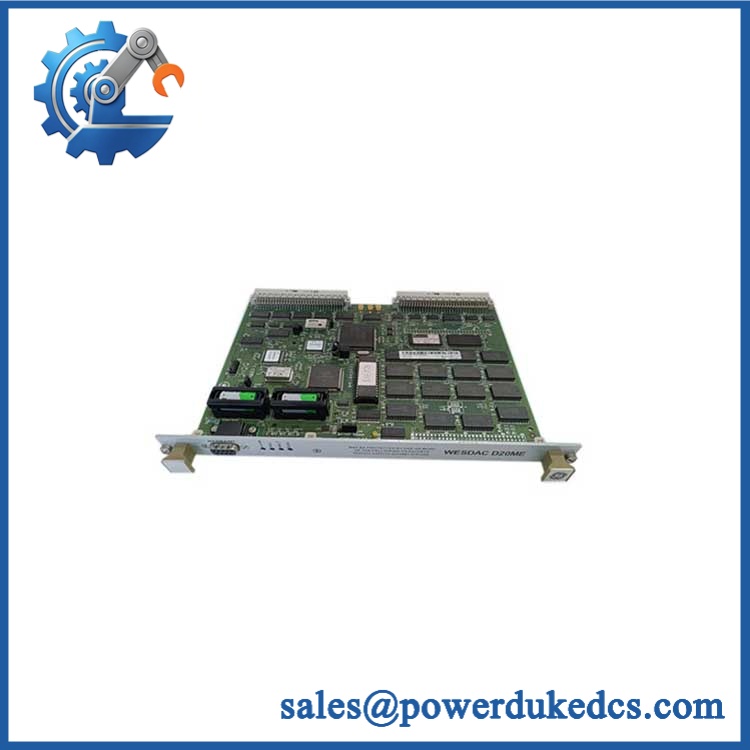
GE D20ME 526-2005-216943
Module 4: Compatibility & Installation Traps
Migration/Compatibility
For an installed D20/ system specified for 526-2005-216943, the preferred strategy is a like-for-like VME processor replacement. GE identifies 526-2005 as the VME processor for systems using multiple processors and/or Ethernet support.
A PLC-style logic rewrite is not the normal replacement task. The relies on its D20 Base or CCU Base software, and the correct firmware/BootROM choice must be selected in Config Pro. The replacement therefore needs to match the existing system software architecture, configuration database, communications setup, and VME hardware environment.
⚠️ Field Traps (Watch Out)
- VME versus non-VME confusion: GE identifies 526-2004 as the non-VME and 526-2005 as the VME version. Do not substitute these based on the name alone.
- versus II: The later II family adds per-channel RS-232/RS-485 selection. The original 526-2005 is documented as the 7 × RS-232 VME processor. A II unit should not be assumed to have identical configuration behavior.
- Firmware/base-system selection: GE states that all variants can use either D20 Base firmware or CCU Base firmware, but the base system must be selected when configuring the module in Config Pro. A hardware replacement with the wrong software environment can boot yet fail at system integration.
- VME backplane handling: Confirm the correct VME slot, backplane configuration, shared-memory arrangement, and associated Ethernet hardware before installation. Do not treat the board as a standalone serial RTU.
- Port mapping: The legacy 526-2005 architecture uses 7 RS-232 ports. Photograph every connection before removal; port reassignment can create multiple downstream communication failures simultaneously.
Module 5: Quality Assurance SOP
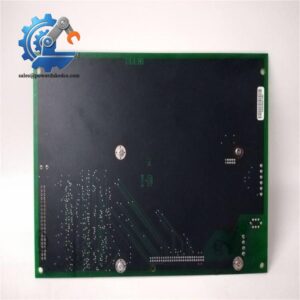
- OEM anti-counterfeit visual inspection — verify GE identification, designation, complete 526-2005-216943 marking, VME configuration, connector arrangement, labels, and evidence of unauthorized modification.
- Part-number reconciliation — photograph the complete label, serial information, hardware revision, BootROM identification, and all secondary markings.
- Mechanical inspection — inspect the VME backplane connector, board guides, mounting hardware, RS-232 interfaces, memory devices, and PCB surface for corrosion, contamination, cracked components, or rework.
- Power-on self-test (POST) — install the processor in an approved D20/ test chassis and verify expected startup sequence, LEDs, and processor diagnostics.
- Firmware/BootROM verification — record the installed firmware and BootROM versions and confirm compatibility with the customer’s D20 Base or CCU Base configuration.
- RS-232 interface verification — test all seven documented RS-232 ports with an approved serial test fixture and verify transmit/receive operation.
- VME backplane verification — confirm correct processor recognition and communication through the representative VME backplane.
- Memory and data-path verification — verify processor memory access and correct exchange of representative RTU data with supported peripheral modules.
- D20 peripheral handshake verification — connect representative I/O slave modules and verify the operates as the master processor.
- Ethernet-path verification — where the system includes VME-based Ethernet hardware, confirm communication through the installed Ethernet architecture rather than assuming Ethernet is integrated directly onto the processor.
- Config Pro compatibility test — load an approved representative configuration and verify module identification, base-system selection, and normal startup.
- Stability observation — operate the processor with representative I/O and serial traffic while monitoring for resets, communications dropouts, memory faults, or abnormal heating.
- Final QC release — retain identification photographs, firmware information, serial-port test records, VME test results, configuration data, and packaging inspection documentation.
For this legacy RTU processor, the meaningful QA result is not simply a successful boot. The unit should establish correct VME operation, communicate through its seven serial interfaces, recognize representative I/O slaves, and run the intended D20 software environment.
Module 6: CRO-Driven Buyer FAQ
1. What is GE 526-2005-216943?
It is a GE VME main processor used within D20/ substation RTU systems. GE documentation identifies 526-2005 as the VME processor with 7 RS-232 ports, intended for VME D20/ installations requiring multiple processors and/or Ethernet support.
2. Is 526-2005 the same as 526-2004?
No. 526-2004 is the non-VME processor, while 526-2005 is the VME version. The two belong to different chassis architectures.
3. Is 526-2005 interchangeable with II?
Not automatically. II provides additional RS-485/RS-232 selection capability that the original architecture does not provide in the same way. Match the exact hardware family, communications requirements, firmware, and configuration before substitution.
4. Can the be hot-swapped?
Do not assume hot-swap capability. This is the central processor of a substation RTU and is connected to the VME backplane, serial communications, and potentially Ethernet peripherals. Follow the approved D20/ shutdown, isolation, and module-removal procedure before replacement.
5. Does replacing the require firmware or configuration loading?
Yes, configuration compatibility must be checked. GE documents both D20 Base and CCU Base software environments and requires the applicable base-system selection in Config Pro. Preserve the existing firmware, BootROM, configuration database, communications parameters, and I/O topology before replacing the processor.
6. Is the still supported as a current platform?
The is a legacy platform. GE issued an end-of-manufacturing notice covering the and identified migration alternatives including newer platforms. For existing substations, however, exact inventory remains relevant where the installed RTU architecture has not yet been migrated.
7. What warranty and technical support should I expect?
The quotation should clearly state whether the unit is new surplus, unused, or tested refurbished and specify the warranty period. Technical support should cover exact part-number verification, VME compatibility, firmware/BootROM identification, RS-232 testing, configuration review, and documented QC results. Substation RTU migration, SCADA database changes, protection-system integration, and field commissioning should remain separate engineering activities.


 Start Chat