

Description
- Brand: GE Fanuc
- Full Model Number: HE693STP104AX
- Lifecycle Status: Obsolete / HE693STP104 base model listed as discontinued by manufacturer
- Core Function: One-axis programmable stepper positioning and motion control
- Top 3 Technical Specs: 245,730 steps/s maximum; 500 mA at 5 VDC; 20-contact removable terminal block
- Stock & Condition: Lot-specific; New Surplus or Tested Refurbished subject to quotation
The documented HE693STP104 family is a one-axis stepper positioning module for GE Fanuc Series 90-30 systems. Current lifecycle records list the HE693STP104 base model as discontinued, while current surplus availability is handled through independent inventory channels.
Obsolescence & Supply Chain Deep Dive
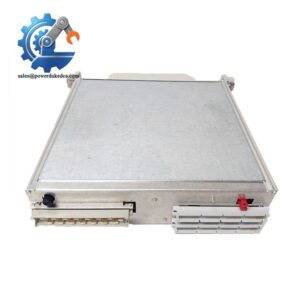
Sourcing a legacy Series 90-30 motion module is often a downtime problem rather than a simple purchasing exercise. The HE693STP104 family is documented as a one-axis stepper positioning module, and current lifecycle records list the HE693STP104 base model as discontinued by the manufacturer. For maintenance teams, the immediate objective is usually to secure a verified replacement before a failed motion axis becomes a production stop. The documented module can occupy an I/O slot in specified Series 90-30 systems and uses a 20-contact removable terminal block. For the exact HE693STP104AX suffix, match the physical nameplate and revision to the installed unit before the PO.
Keeping a serviceable Series 90-30 motion axis in operation can avoid the engineering scope of a full PLC and motion-system migration. The module provides programmable position, velocity and acceleration control, home and overtravel inputs, emergency-stop input, and a maximum step rate of 245,730 steps per second. Those functions can reduce migration work when the surrounding drive, wiring and control program remain serviceable. From a TCO standpoint, the comparison should include PLC replacement, panel rewiring, software conversion, validation and commissioning, not only the replacement-module price. A replacement purchase makes economic sense when it preserves an otherwise serviceable control architecture and closes an immediate spare-parts gap.
Compatibility & Replacement Matrix
| Scenario | Replacement Class | Engineering Action | Budgetary Time Estimate | Budgetary Cost Estimate |
|---|---|---|---|---|
| HE693STP104AX failed and the same exact part is available | Drop-in Replacement | Power down, remove old module, install matched unit, verify wiring and configuration, then perform motion checks | 1–3 labor hours | 150–450 internal labor |
| HE693STP104 base model versus HE693STP104AX | Conditional — Verify Part Marking | Confirm suffix, revision, terminal arrangement and application history before substitution | 1–2 hours review | 75–300 engineering review |
| Different HE693STP family model | Not a drop-in assumption | Recheck I/O allocation, input behavior, encoder functions and control configuration | 2–6+ labor hours | 150–900+ |
| Migration to a newer PLC and motion platform | Hardware Modification | New CPU/I/O architecture, software conversion, wiring changes and commissioning | Multi-day project | Site-specific |
Field Traps (Watch Out)
Normally Closed Limit Inputs: The uses active-high end-limit inputs for compatibility with normally closed switches. A polarity error can produce a false limit condition or incorrect machine-state logic.
Proximity Sensor Type: The manual specifies NPN proximity switches for the optically isolated switch inputs. External sensor power is required where applicable, and the switch-input common is isolated from the step and direction output common.
Series 90-30 Configuration: The module is configured as a foreign module, and the manual specifies Logicmaster 90 version 2.01 or later for Series 90-30 configuration. Verify the host CPU, slot assignment and I/O references before replacement.
No Firmware Flash Assumption: The available manual defines configuration parameters and module revision requirements but does not prescribe a firmware flash as part of routine replacement. Verify the installed hardware revision instead of assuming that a firmware update is required.
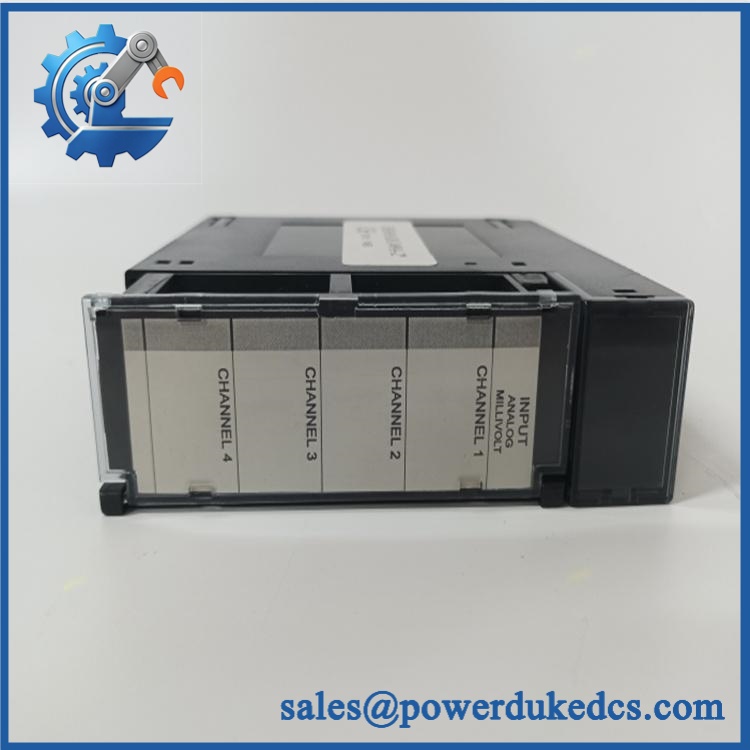
GE HE693STP104AX
Quality Assurance & Testing SOP
Incoming identity control
- Record the visible part number, revision marking, serial number or date code when present
- Match the HE693STP104AX nameplate against the purchase record and the documented family
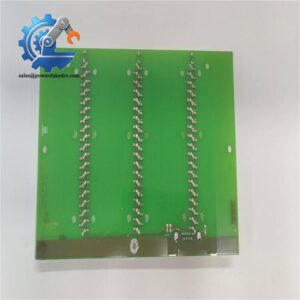
- Inspect the PCB, terminal block, connectors, mounting hardware and housing for alteration, rework or erased identification
OEM anti-counterfeit visual inspection
- Check label quality, board markings, connector geometry and component population against reference documentation or approved comparison units
- Reject units showing ground-off markings, inconsistent labels, damaged connector bodies or unexplained board substitutions
Power-on self-test (POST)
- Install the module in a controlled Series 90-30 test setup with power removed during insertion
- Restore system power and verify normal module initialization
- Check the documented STOP, RAMP and CNST indicators during stopped, accelerating/decelerating and constant-velocity states
- Do not apply an ERR/RUN LED acceptance criterion to this model; the manual documents STOP, RAMP and CNST indicators instead
I/O load testing
- Exercise step and direction outputs into a controlled test load
- Simulate home, high-limit, low-limit and emergency-stop inputs
- Verify active-high end-limit behavior with normally closed switch logic
- Check terminal-block signal integrity for intermittent transitions or connector faults
- Where the test fixture permits, execute programmed relative and absolute moves at multiple commanded speeds
Configuration verification
- Configure the unit as a foreign module in the Series 90-30 test environment
- Verify I/O references and required configuration parameters
- Record test results, visible revision data and final inspection status before packing
Procurement & Lifecycle FAQ
Is the HE693STP104AX genuinely in stock, and what is the cutoff for emergency shipping?
Stock is lot-specific and should be confirmed against the actual physical unit before the PO is released. For emergency orders, request a written shipping cutoff on the quotation. Same-day dispatch depends on physical availability, QC completion and commercial release before that cutoff.
How do you verify the condition and authenticity of an obsolete or surplus ?
The unit should be sold with a clearly stated condition such as New Surplus or Tested Refurbished, supported by part-number verification, nameplate inspection, visual examination and functional test records. Because the available technical documentation covers rather than the AX suffix specifically, the exact nameplate and visible revision should be photographed and retained in the procurement record before shipment.
Are there firmware compatibility issues my engineers should check before the PO?
The available manual does not identify a mandatory firmware flash for routine replacement. The critical checks are host platform, slot configuration, I/O references, hardware revision and programmed configuration parameters. For Series 90-30 configuration, the manual specifies Logicmaster 90 version 2.01 or later.
What warranty terms and return policy apply?
For obsolete inventory, the quotation should state the exact warranty period, DOA coverage, failure-reporting window and return authorization procedure. Do not assume a current OEM warranty. The historical Horner manual contains its own warranty language, while a present-day independent-supplier warranty is a separate commercial term.
Is a full PLC upgrade justified instead of buying a replacement ?
That decision depends on the condition of the remaining Series 90-30 hardware, spare availability, application criticality and planned capital cycle. Compare the replacement-module cost with CPU and I/O replacement, control-panel work, software conversion, validation and production downtime before approving a platform migration.


 Start Chat