

Description
- Brand: GE General Electric
- Full Model Number: IC3645LXCD1
- System/Series Family: EV100LX / EV200LX Electric Vehicle Controller
- One-Sentence Core Function: EV100LX cardbox assembly forming the control electronics section of a GE LX-series traction controller
- Top 3 Hardcore Specs: EV100LX cardbox assembly; LX-series control architecture; integrated traction-control electronics for EV100/EV200 systems
- Stock Status: New Surplus / Fully Tested Refurbished — exact IC3645LXCD1 assembly identity and hardware condition verified before shipment
Module 3: Commercial-Technical Deep Dive
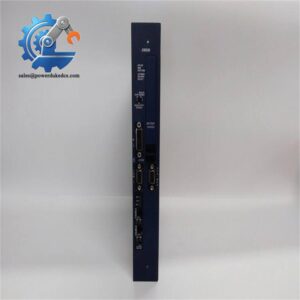
A failed cardbox assembly can stop an electric vehicle or industrial traction system even when the rectifier, motor, and power semiconductors remain serviceable. GE’s EV200LX supplement explicitly identifies IC3645LXCD1 as the EV100LX Cardbox Assembly, installed as one of the major assemblies in the controller. The same GE documentation places the cardbox alongside the rectifier, heatsink, snubber, capacitor, shunt, transformer, and flex-bus components, confirming that this part belongs to the complete traction-controller architecture rather than functioning as a standalone PLC CPU.
The control assembly is responsible for the low-level electronics that manage EV100LX operation, while the surrounding power stage carries the motor current. GE’s EV100LX documentation shows programmable functions for stored fault codes, creep speed, plugging-distance/current control, and other traction parameters; the manual also distinguishes EV100 and EV200 operating ranges, with EV200 using a higher current capability and a larger mechanical footprint. Because the exact IC3645LXCD1 suffix identifies an assembly rather than a generic controller family, replacement should be based on the complete cardbox number, controller model, software/parameter configuration, and associated power-stage hardware.
Module 4: Compatibility & Installation Traps
Migration/Compatibility
- Replacement status: Configuration-specific cardbox assembly.
- Official identification: GE documentation identifies IC3645LXCD1 as the .
- System family: GE traction-control architecture; the EV200LX supplement states that operating information applies to EV200LX with higher current capacity and different physical components.
- Firmware/parameter requirement: The assembly contains application-specific control electronics. Preserve the existing parameter set, fault configuration, and controller revision before replacement.
- Logic rewrite: A verified like-for-like cardbox replacement normally should not require rewriting the vehicle-control logic, but programmable operating parameters must be restored and validated.
- Power-stage matching: Do not assume an cardbox is interchangeable with an EV200LX assembly. GE documents differences in current rating, footprint, and component selection between the two controller types.
⚠️ Field Traps (Watch Out)
- Cardbox versus power stage: IC3645LXCD1 is the cardbox assembly, not the complete power converter. The surrounding rectifiers, heatsinks, snubbers, capacitors, shunts, and bus hardware remain separate components.
- EV100 versus EV200 configuration: The EV200 has a higher current rating and different component arrangement. Using an control assembly in an EV200 power stage without documented compatibility can create a serious commissioning problem.
- Stored fault and traction parameters: The controller stores fault information and programmable operating values such as creep-speed and plugging-current settings. Record the original configuration before removal.
- Power-stage isolation: The cardbox interfaces with high-current traction hardware. Isolate the battery/DC supply and wait for all capacitive energy to dissipate before removing the assembly.
- Thermal interface: The complete controller includes multiple heatsinks and thermal-conductive materials. Poor cooling or incorrect mechanical reassembly can cause repeat failures even when the replacement cardbox itself tests correctly.
- ESD handling: Use grounded ESD protection around the controller electronics and keep exposed connectors protected during service.
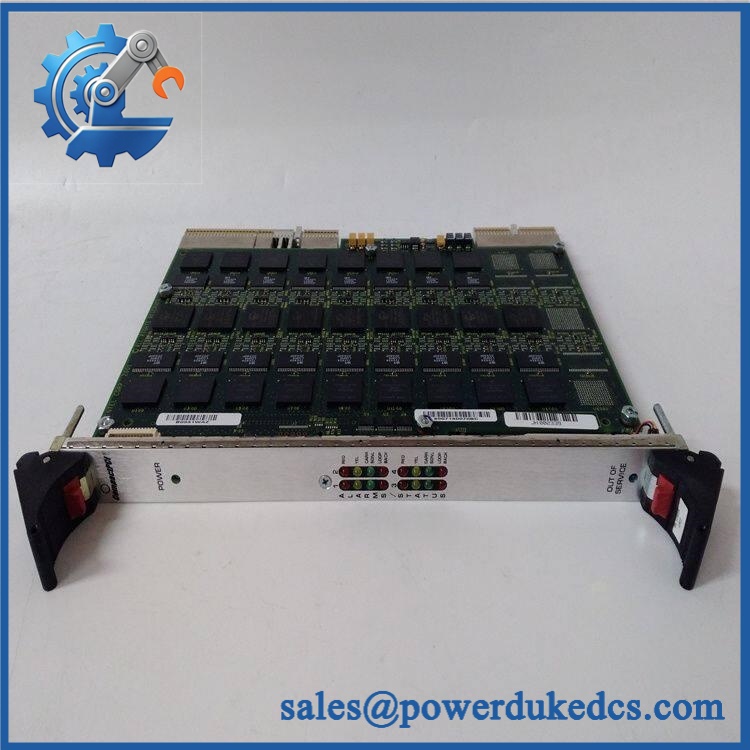
GE IC3645LXCD1
Module 5: Quality Assurance SOP
Our pre-shipment inspection for a focuses on exact cardbox identity, controller electronics, parameter integrity, and system-level operation:
- OEM anti-counterfeit visual inspection — verify GE identification, full marking, board and assembly labels, revision information, connectors, PCB construction, and manufacturing markings.
- Assembly identity capture — photograph the cardbox from multiple angles, including all labels and connector locations.
- configuration verification — confirm the unit is the cardbox assembly rather than an -specific assembly or another LX-series variant.
- PCB inspection — check control boards, connectors, solder joints, capacitors, power components, contamination, corrosion, and signs of thermal damage.
- Connector and bus inspection — inspect flex-bus connections and associated control interfaces for oxidation, mechanical damage, or loose contacts.
- Power-on self-test (POST) — energize the cardbox in an appropriate GE test fixture and verify startup behavior, status indications, and abnormal current draw.
- Controller-function test — load an approved test configuration and verify processor execution, control-state transitions, and diagnostic behavior.
- Stored-fault function test — verify controlled fault logging and reset behavior using the approved diagnostic procedure; GE documentation identifies stored fault-code functionality in the controller.
- Creep-speed function test — where the test environment permits, verify the corresponding input and control response under simulated vehicle conditions.
- Plugging-current test — verify programmable plugging-current behavior with a controlled test load and confirm that the configured range corresponds to the EV100 application.
- Accelerator-input verification — verify the expected accelerator signal path and response using a calibrated test source appropriate to the installed controller configuration.
- Power-stage interface test — confirm correct control interaction with the associated rectifier, shunt, snubber, and related power-stage interfaces using an approved laboratory setup.
- Thermal observation — operate the control assembly for an extended period while monitoring electronics temperature, current draw, and intermittent behavior.
- Configuration record — document assembly number, revision, controller type, parameter set used for testing, diagnostic results, and photographs.
- Final QC review — cross-check every recorded identifier against the customer’s exact replacement requirement.
- ESD and mechanical packaging — protect the assembly, connectors, and control electronics against ESD, impact, dust, and moisture before shipment.
GE’s own documentation is particularly useful here because it identifies directly as the cardbox assembly and distinguishes the from EV200LX through current capability, footprint, and component differences.
Module 6: CRO-Driven Buyer FAQ
1. Is GE obsolete, and how do I verify authenticity?
belongs to the legacy electric-vehicle and traction-control family. GE documentation directly identifies the part number as the Cardbox Assembly. Verify the complete part number, assembly markings, controller revision, connector layout, and physical board construction before accepting a replacement.
2. What exactly is the ?
It is the cardbox assembly, meaning the controller-electronics assembly used within the larger traction-control system. The surrounding system contains separate rectifiers, heatsinks, snubber components, capacitors, shunts, transformers, and bus components.
3. Is compatible with ?
Do not assume that it is a direct substitute. GE’s documentation states that the has a higher current rating, larger mounting footprint, and different component parts from the . Match the cardbox against the actual controller model and complete power-stage configuration.
4. Does the controller retain fault and operating parameters?
Yes. GE documentation describes stored fault-code functionality and configurable operating functions such as creep speed and plugging-distance/current control. Preserve the original parameter values before replacement and validate them after installation.
5. Can be hot-swapped?
Do not treat the cardbox as a hot-swappable control module. It belongs to an electric-vehicle traction controller connected to high-current power circuitry. Isolate the battery/DC source, discharge stored energy, verify safe voltage, and follow the applicable GE service procedure before removal.
6. What warranty and technical support should I expect?
Warranty duration should be stated on the quotation for the exact physical assembly supplied. Technical support should cover part-number verification, versus matching, connector identification, parameter restoration, controller-function testing, and documented pre-shipment QA results. It should not substitute for traction-system engineering, battery isolation procedures, or final vehicle commissioning.


 Start Chat