

Description
- Model & Brand: GE IC610CHS130A, associated with the GE Series Six / Series Six Plus PLC product family.
- Physical Form: Chassis/rack assembly designed to accept compatible Series Six Plus control and I/O hardware; this is a rack infrastructure component, not an individual CPU or I/O module.
- Physical Dimensions: Exact OEM dimensional data for the IC610CHS130A was not sufficiently verified from the public technical references reviewed. Do not use dimensions from visually similar IC610 chassis variants for freight documentation.
- Estimated Shipping Weight: Exact OEM net weight was not reliably established. For freight quotation, weigh the actual chassis and separately record the packed gross weight.
- What’s in the Box: Normally the IC610CHS130A chassis assembly only. Do not assume CPU modules, I/O modules, power-supply hardware, terminal assemblies, cables, rack hardware, or manuals are included unless specifically listed.
- Asset Identity: Record the complete catalog number, suffix A, visible labels, serial/date information, rack hardware condition, backplane condition, and any installed accessories.
- Receiving Inspection: Pay particular attention to the backplane connector surfaces, mounting points, card guides, retaining hardware, and chassis grounding points.
Product Introduction
The IC610CHS130A forms part of the physical rack architecture used by GE’s legacy Series Six / Series Six Plus PLC systems. Unlike a processor or discrete/analog I/O card, its job is mechanical and electrical infrastructure: it provides the chassis environment in which compatible control modules are mounted and interconnected.
For lifecycle control, chassis identity is often neglected because the enclosure itself contains little active electronics. That is a mistake on a legacy platform. A replacement chassis has to match the installed Series Six architecture, physical module arrangement, backplane wiring, power-distribution scheme, and cabinet layout (which becomes particularly important when original documentation is incomplete). Avoid assuming compatibility from connector appearance alone.
Core Technical Specifications
| Parameter | Specification |
|---|---|
| Manufacturer | General Electric (GE) |
| Catalog Number | IC610CHS130A |
| Product Family | GE Series Six / Series Six Plus |
| Component Type | PLC I/O Chassis / Rack Assembly |
| Primary Function | Houses and interconnects compatible Series Six Plus control/I/O modules |
| Hardware Revision | A |
| Installation Type | Rack/chassis-mounted PLC architecture |
| Processor Included | No, chassis only unless separately supplied |
| I/O Modules Included | No, unless explicitly specified |
| Application | Legacy GE PLC control cabinets |
| Backplane Function | Provides module interconnection and rack-level electrical distribution |
| Firmware | None in the chassis assembly itself |
| Memory | None attributable to the chassis alone |
| Power Output | Dependent on the separately installed Series Six power architecture |
| Cooling Method | Cabinet/rack convection and system-level ventilation |
| Exact OEM Dimensions | To be verified from the applicable GE mechanical drawing |
| Exact OEM Net Weight | To be verified from the physical asset |
A critical purchasing distinction should be maintained: IC610CHS130A is a chassis, not a programmable controller. Firmware, application memory, scan time, and CPU execution specifications therefore belong to the processor installed in the rack, not to the chassis itself.
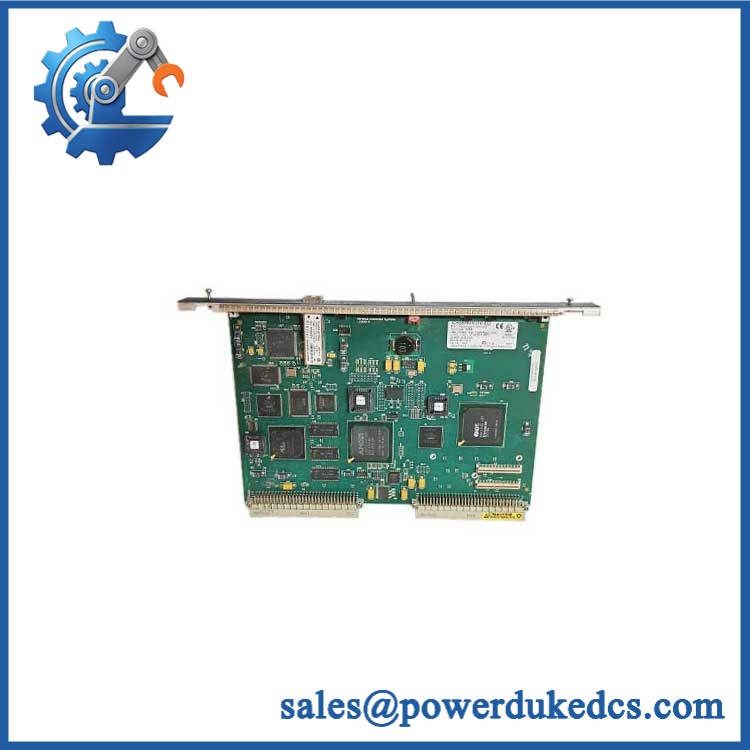
GE IC610CHS130A
🚨 Global Compliance & Industry Certifications
The is a legacy GE PLC rack component, and current public records do not provide sufficient evidence to assign modern certification labels to this exact catalog/revision with confidence.
Do not automatically describe the part as CE, UL/cUL, ATEX, IECEx, or DNV approved merely because a Series Six system or a visually similar GE chassis carried an approval.
For an audit-controlled replacement, retain:
- The certification or agency markings physically present on the chassis.
- The applicable GE Series Six system manual.
- The cabinet-level approval documentation.
- The exact chassis revision and any associated power-supply configuration.
- Evidence showing whether the chassis was originally part of a certified assembly.
Where hazardous-area equipment is involved, the chassis cannot be evaluated in isolation. The enclosure, power supply, field wiring, I/O modules, installation method, and area classification all affect the final compliance determination.
Verify specific lot certifications with OEM.
🚨 Long-Term Storage & Asset Preservation Guide
Protect the backplane first. On a legacy chassis, the most important physical interfaces are the card guides and electrical connector surfaces. Store the assembly so that the backplane is not bearing carton pressure or contacting exposed metal shelving.
Control humidity and contamination. Keep the chassis in a clean, dry warehouse environment and protect the backplane against dust, oil mist, salt atmosphere, and condensation. Corrosion on a card-edge or backplane interface can create intermittent faults that are difficult to distinguish from a defective PLC module.
Preserve the mechanical hardware. Retaining clips, card guides, mounting screws, grounding points, and chassis brackets are small items but can become difficult to source decades after the original product family reaches obsolescence. Keep these components with the chassis rather than treating them as expendable packaging hardware.
For long-term inventory, photograph the backplane, card-guide condition, mounting holes, labels, and grounding hardware before storage.
Physical Installation Prerequisites
The should be installed only within the appropriate GE Series Six / Series Six Plus rack architecture. Because this is a legacy platform, the original system drawing should control the installation rather than a generic PLC rack procedure.
- Chassis compatibility: Confirm the exact Series Six chassis family and rack configuration before installation.
- Module fit: Inspect card guides and backplane connectors before inserting modules. Bent guides or damaged connectors should be corrected before power is applied.
- Rack mounting: Secure the chassis to the cabinet structure using the approved mounting points. Do not allow I/O wiring to support the chassis mechanically.
- Grounding: Verify the cabinet protective-ground connection and the chassis grounding arrangement specified for the original GE installation.
- Power architecture: Do not infer supply capacity from the chassis catalog number alone. The installed Series Six power supply and module population determine the actual electrical load.
- Cooling: Preserve the original cabinet airflow path. Do not place cable ducting directly over module ventilation openings.
- Clearance: Use the original GE mechanical drawing for service and module-removal space. A generic 50 mm clearance value should not be substituted for the approved cabinet layout.
- ESD: Ground the technician and work surface before handling the backplane connector area or installing cards.
- Pre-energization check: Confirm that all modules are correctly seated and that no metallic debris, loose screws, or damaged connector pins are present inside the chassis.
Buyer’s FAQ
What HS tariff code should be used for ?
A universal tariff code cannot be assigned from the model number alone. Because is a PLC chassis/rack assembly, classification may depend on whether the importing jurisdiction treats it as a part of programmable control equipment or under another applicable electrical-equipment heading.
For customs filing, have the broker confirm the destination country’s complete tariff code and retain the product description used to support that classification.
Does Country of Origin matter for this legacy GE chassis?
Yes. The commercial invoice and packing list should identify the actual COO supported by the supplier’s records or manufacturer documentation. Do not infer origin from the current ownership of the GE automation business or from the location of the seller.
For preferential-duty treatment, use a properly supported Certificate of Origin or origin declaration where required.
Should shipping insurance be added?
For a legacy chassis, insurance can be worthwhile because replacement sourcing may be difficult even when the physical item is relatively inexpensive. Protect the backplane and card guides with cushioning, prevent the chassis from shifting inside the carton, and photograph the asset before carrier handoff.
Does contain firmware or the latest software?
No. The chassis itself is passive rack infrastructure and does not carry the PLC application firmware associated with a Series Six processor. Software revision control belongs to the CPU/processor and installed system configuration.
When purchasing a replacement chassis, the important checks are mechanical compatibility, backplane condition, rack configuration, and accessory completeness—not a firmware version.
Asset-Control Summary
GE should be managed as a legacy Series Six / Series Six Plus PLC chassis asset. It provides the physical rack environment and backplane interconnection for compatible control and I/O modules; it should not be cataloged as a CPU, I/O card, or firmware-bearing device.
Because reliable public documentation for the exact dimensional and weight data is limited, those values should be verified against the physical chassis or original GE mechanical documentation before freight booking. The same rule applies to certification claims. Do not copy dimensions, weight, or agency markings from a visually similar IC610 chassis revision.
For controlled inventory, retain the complete part number, revision A marking, backplane condition record, mechanical-accessory record, COO evidence, certification evidence where applicable, and pre-shipment photographs. On a legacy Series Six system, preserving the chassis as a complete physical asset can be just as important as preserving the individual processor and I/O cards.


 Start Chat