

Description
- Brand: GE Fanuc
- Full Model Number: IC660BBD022
- System/Series Family: Genius I/O / GE Series Six
- One-Sentence Core Function: Distributed 16-circuit 24 VDC source-type I/O block with configurable input/output points and Genius Bus communications
- Top 3 Hardcore Specs: 24 VDC nominal; 16 configurable circuits; 2 A maximum load current per circuit
- Stock Status: New Surplus / Fully Tested Refurbished — exact electronics and terminal-base assembly verified before shipment
Module 3: Commercial-Technical Deep Dive
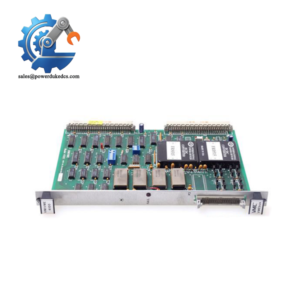
A failed Genius I/O block can remove an entire group of field points while the central PLC continues running normally. The GE Fanuc IC660BBD022 is a 16-circuit source-type Genius I/O block designed for distributed discrete control. GE’s original Genius documentation identifies the part as a 24 VDC 16-circuit source I/O block, with the block catalog number covering both the electronics assembly and terminal assembly. The IC660BBD022 communicates over the Genius serial bus and can be installed remotely from the bus controller, making it suitable for distributed field wiring rather than a conventional rack-mounted I/O card.
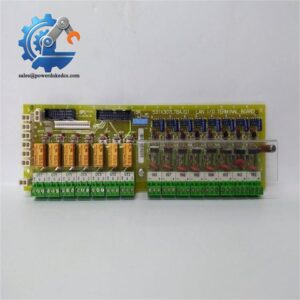
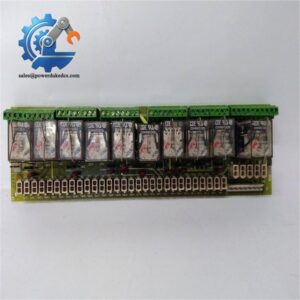
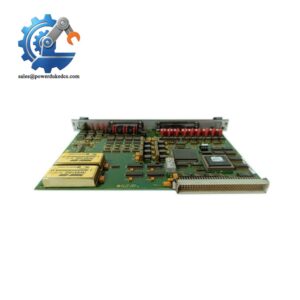
The electrical limits are important during replacement. Published GE specifications identify 24 VDC nominal, an 18–30 VDC operating/input range, 16 I/O circuits, and a 2 A load-current rating per circuit. Each point can be configured for input or output operation within the block’s supported source-wiring architecture. The block uses a 22-terminal field interface, with the Genius serial bus and DC supply on dedicated terminals. GE documentation also shows that the electronics assembly and terminal assembly can be ordered separately, so receiving a visually similar electronics-only unit is not necessarily equivalent to receiving the complete IC660BBD022 block.
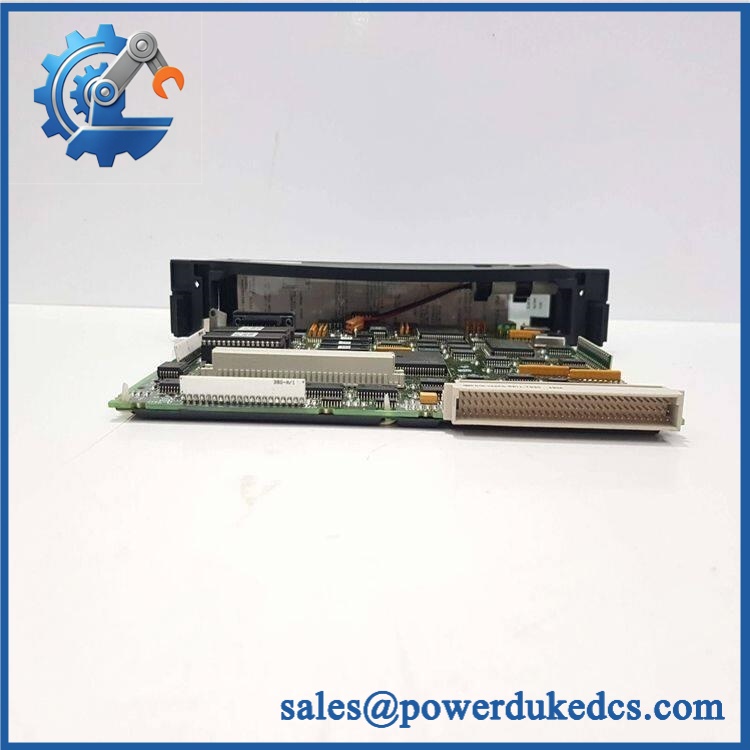
GE IC660BBD022
Module 4: Compatibility & Installation Traps
Migration/Compatibility
- Replacement status: Configuration-specific Genius distributed I/O block.
- Official identification: IC660BBD022, 24 VDC, 16-circuit source I/O block.
- System family: GE Genius I/O; commonly used with GE Series Six and compatible Genius Bus controllers. The RX3i Genius communications gateway documentation also lists IC660BBD022 among supported Genius devices.
- Assembly structure: Complete block consists of an electronics assembly and terminal-base assembly; the documented pairing is IC660EBD020 electronics + IC660TBD022 terminal base.
- Firmware requirement: No independent firmware update should be assumed for the I/O block. Preserve the Genius Bus configuration and block parameters before replacement.
- Logic rewrite: Normally unnecessary for a same-part-number replacement, but point assignments, input/output configuration, Genius Bus address, diagnostics, and host-controller mapping must be validated.
- Network compatibility: The module is a Genius Bus device, not a native Ethernet I/O node.
⚠️ Field Traps (Watch Out)
- Source-versus-sink mismatch: is the source-type 24 VDC block. Do not substitute the visually similar IC660BBD023, which is a sink-type block. GE’s catalog separately identifies these device types.
- Point configuration: The 16 circuits are configurable, so the replacement must reproduce the original channel assignment. A point configured as an input cannot simply be treated as an output without checking the application.
- Genius Bus address: Preserve the original block’s Genius Bus address and configuration. A replacement can power up perfectly while remaining invisible to the controller if its network identity is wrong.
- Terminal-base mismatch: The complete block includes the terminal assembly. Verify IC660TBD022 and the field wiring before accepting an electronics-only replacement.
- Field-current limit: The documented 2 A per circuit rating is not a blanket recommendation for every connected load. Check the actual load type, inrush current, commoning, and protective devices before reconnecting outputs.
- Genius Bus wiring: Maintain correct bus polarity, shielding, grounding, and termination. The block is designed for distributed installation, so communication quality matters as much as point wiring.
- ESD and electrical isolation: Disconnect the 24 VDC supply and follow the site’s LOTO process before replacing the electronics assembly.
Module 5: Quality Assurance SOP
Our pre-shipment inspection for a focuses on point-level I/O performance, Genius Bus communication, and complete block identity:
- OEM anti-counterfeit visual inspection — verify GE Fanuc markings, complete identifier, revision information, terminal labeling, electronics assembly, and terminal-base construction.
- Assembly verification — confirm whether the supplied inventory includes the complete block or the separate IC660EBD020 + IC660TBD022 assembly.
- Part-number capture — photograph the electronics label, terminal-base label, terminal numbering, Genius Bus terminals, and all secondary identification markings.
- Mechanical inspection — inspect the terminal base, screw terminals, connector surfaces, enclosure mounting points, and signs of contamination, corrosion, or impact.
- 24 VDC input verification — apply a controlled supply within the documented 18–30 VDC operating range and monitor startup current.
- Power-on self-test (POST) — confirm normal startup behavior and inspect available diagnostic/status indications.
- Genius Bus communication handshake verification — connect the block to a compatible Genius Bus controller or test master and verify successful network initialization.
- Address verification — confirm the block’s Genius Bus address and ensure the test environment has no duplicate node address.
- Digital-input testing — individually stimulate representative input channels and verify correct state recognition.
- Digital-output testing — command representative output channels with an approved controlled load and verify switching behavior.
- Point-configuration testing — confirm that configured input/output assignments correspond to the customer’s intended channel map.
- Load-current check — test representative outputs under controlled load without exceeding the published 2 A per circuit limit.
- Bus-fault observation — introduce a controlled communication interruption where the test fixture permits and verify the expected diagnostic response.
- Extended operation test — monitor I/O state stability, communication integrity, output temperature, and intermittent faults during continuous operation.
- Configuration record — document part number, electronics revision, terminal-base identification, Genius Bus address, point mapping, test voltage, I/O results, and photographs.
- Final QC review — compare every recorded identifier against the customer’s exact requirement.
- ESD packaging — protect the electronics, terminal assembly, and field terminals against ESD, moisture, dust, and mechanical damage before shipment.
GE’s original catalog is especially useful for this part because it explicitly distinguishes the from other 24 VDC source/sink blocks and identifies its electronics and terminal assemblies separately.
Module 6: CRO-Driven Buyer FAQ
1. Is GE obsolete, and how do I verify authenticity?
The belongs to the legacy GE Genius I/O family. The strongest identification method is the complete catalog number, electronics revision, terminal-base identification, circuit count, and physical GE markings. GE’s own Genius manual identifies as a 24 VDC 16-circuit source I/O block.
2. Is a source or sink I/O block?
It is a source-type 24 VDC I/O block. The closely related IC660BBD023 is the sink-type version. They should not be treated as interchangeable simply because both are 16-circuit Genius I/O blocks.
3. What voltage and current does support?
The published specifications identify 24 VDC nominal, an 18–30 VDC operating range, and 2 A maximum load current per circuit. The actual plant load should still be checked for inrush and application-specific protection requirements.
4. Does communicate over Ethernet?
No. The is a Genius Bus distributed I/O device. It can be used with compatible Genius Bus controllers and gateways, including supported GE controller platforms, but the block itself is not a native Ethernet I/O module.
5. Is a complete I/O block or only an electronics card?
The catalog number represents a complete block assembly consisting of an electronics assembly and terminal assembly. GE documentation identifies the corresponding electronics and terminal components separately, so confirm whether the customer’s requirement is for the complete block or only one subassembly.
6. Can be hot-swapped?
Do not assume live replacement is permitted. The block carries external 24 VDC field wiring and communicates with an active Genius Bus. Disconnect field/control power, follow the GE maintenance procedure, and apply the site’s LOTO requirements before removing the block.
7. What warranty and technical support should I expect?
Warranty duration should be stated on the quotation for the exact physical block supplied. Technical support should cover part-number verification, source/sink identification, electronics/base matching, Genius Bus addressing, point configuration, I/O testing, and documented pre-shipment QA results. It should not substitute for PLC engineering, field-wiring validation, or site commissioning.


 Start Chat