

Description
- Brand: GE / GE Fanuc
- Full Model Number: IC660BBD023
- System/Series Family: GE Genius I/O
- Core Function: 16-point configurable discrete sink I/O block for distributed industrial control
- I/O Points: 16 discrete circuits
- Nominal Supply: 24 VDC
- Operating Input Range: 18–30 VDC
- Signal Type: Sink I/O block
- Circuit Configuration: Input, tristate input, or output
- Output Current: 2 A per circuit
- Maximum Inrush: 10 A for up to 10 ms
- Input Filter: Selectable 5–100 ms
- Isolation: 1500 V block-to-block
- Operating Temperature: 0°C to +60°C
- Network: Genius Bus
- Stock Status: New Surplus / Fully Tested Refurbished — verify exact revision and Genius configuration before shipment
GE’s Genius I/O documentation identifies IC660BBD023 as the 24 VDC Sink 16-Circuit I/O Block. Each of its 16 circuits can be configured as an input, tristate input, or output, with output capability of 2 A per circuit. The module operates from 18–30 VDC and uses the Genius Bus for distributed I/O communications.
Module 3: Commercial-Technical Deep Dive
A failed Genius I/O block can remove a group of field signals at once, yet the PLC CPU and communications network may remain completely operational. The GE IC660BBD023 is a 16-point discrete I/O block designed for 24 VDC applications, with every circuit configurable as an input, tristate input, or output. GE’s manual specifically classifies the BBD023 as a 24 VDC sink block, suitable for two-wire and three-wire solid-state sensors as well as electromechanical sensors. That flexible circuit architecture makes the module useful in legacy distributed-control panels where signal roles vary by installation.
The hard ROI is concentrated field connectivity without replacing the existing Genius I/O network. Each output circuit is rated at 2 A steady state, with a documented 10 A maximum inrush for up to 10 ms, while the typical input processing time is approximately 1.7 ms plus the configured filter delay. GE also documents selectable input filtering from 5 to 100 ms, short-circuit and overload protection, failed-switch diagnostics, and 1500 V block-to-block isolation. —The 2 A rating applies per output circuit; it should not be interpreted as a 32 A continuous rating for the complete block.
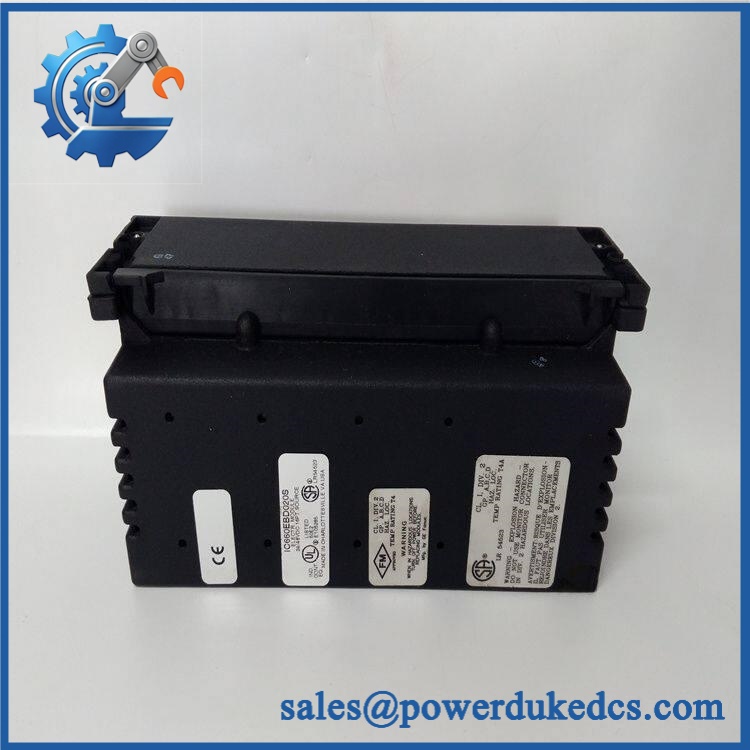
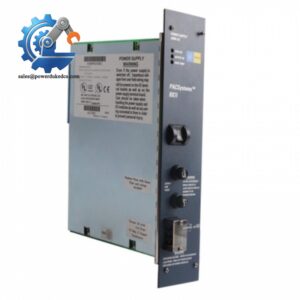
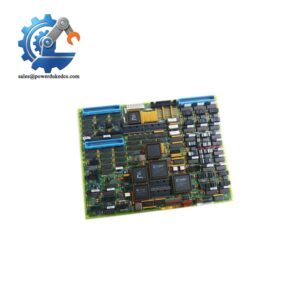
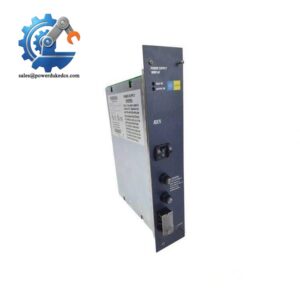
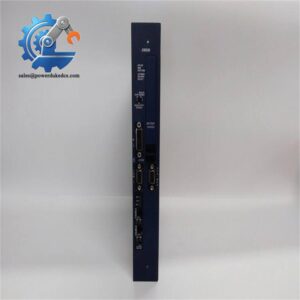
GE IC660BBD023
Module 4: Compatibility & Installation Traps
Migration/Compatibility
For an existing GE Genius I/O installation specified for IC660BBD023, the appropriate approach is a like-for-like Genius I/O block replacement.
No PLC application rewrite is normally required solely because the physical I/O block is replaced. The important commissioning requirements are the Genius bus configuration, device address, I/O circuit assignments, power wiring, input filtering, and output default/hold settings. GE documentation also notes that proper configuration requires the appropriate Genius configuration tools and system support.
⚠️ Field Traps (Watch Out)
- Sink versus source confusion: IC660BBD023 is the 24 VDC sink version. GE’s family includes source blocks such as IC660BBD022, and these are not automatically interchangeable. Match the electrical topology, not just the 16-point count.
- Circuit role configuration: Each channel can operate as an input, tristate input, or output. The replacement must reproduce the original circuit configuration; otherwise a physically healthy block can produce incorrect field behavior.
- Output current interpretation: Each configured output can handle 2 A steady state, but thermal dissipation becomes significant at high channel loading. GE documents 68.8 W heat dissipation with 16 outputs operating at 2 A, so cabinet temperature and loading matter.
- Genius bus addressing: Record the original bus address and configuration before removal. A replacement with the wrong network identity can remain electrically healthy while the controller does not recognize it.
- Power-source identification: Confirm the actual field supply and polarity. The BBD023 is intended for 18–30 VDC, not the 24/48 VDC range used by other members of the BBD02x family.
Module 5: Quality Assurance SOP
- OEM anti-counterfeit visual inspection — verify GE/GE Fanuc markings, complete IC660BBD023 designation, terminal layout, Genius identification, LED arrangement, and evidence of unauthorized modification.
- Part-number reconciliation — photograph the complete catalog number, serial/revision information, and all secondary labels.
- Mechanical inspection — examine terminals, housing, mounting hardware, bus interface, status LEDs, and enclosure surfaces for cracks, corrosion, contamination, or rework.
- Power-on self-test (POST) — energize the block with a controlled 18–30 VDC supply and verify normal power and diagnostic status.
- Genius Bus handshake verification — connect the block to a representative Genius controller/test network and verify correct node recognition and communication.
- Address verification — record and verify the configured Genius bus device address against the customer’s configuration.
- Digital input verification — stimulate representative 24 VDC input circuits and verify correct state recognition.
- Output verification — command representative output channels into a controlled load and verify correct switching behavior.
- Current-load test — test representative outputs under controlled load and confirm stable operation within the 2 A per-circuit specification.
- Input-filter test — verify configurable filter behavior using representative input transitions and document the selected filter value.
- Diagnostic verification — simulate appropriate open-wire, overload, short-circuit, and failed-switch conditions where the test fixture permits, confirming the expected diagnostic response.
- Thermal stability observation — operate representative channel groups under load and monitor temperature rise, output stability, and fault behavior.
- Final QC release — retain identification photographs, Genius address/configuration records, input/output test results, diagnostic observations, and packaging inspection documentation.
For a distributed Genius I/O block, a successful power-up is only the first acceptance gate. The meaningful test covers network recognition, channel behavior, output loading, diagnostics, and stable operation.
Module 6: CRO-Driven Buyer FAQ
1. What is GE ?
It is a GE Fanuc Genius 24 VDC Sink I/O Block with 16 discrete circuits. Each circuit can be configured as an input, tristate input, or output, making the block suitable for mixed discrete field applications.
2. Is a source or sink module?
It is the 24 VDC sink version. GE separately identifies IC660BBD022 as the 24 VDC source version, so the two should not be treated as interchangeable without checking the field wiring topology.
3. What is the output current rating?
The documented steady-state output rating is 2 A per circuit, with a maximum inrush current of 10 A for up to 10 ms. The actual total load is also constrained by thermal conditions and the installed cabinet environment.
4. Does require Genius Bus configuration?
Yes. It is a distributed Genius I/O block rather than a standalone local I/O card. The node address and circuit configuration must match the installed controller and Genius network configuration.
5. Can be hot-swapped?
Do not assume hot-swap capability. The block carries external 24 VDC field power and is connected to an active Genius communications network. Follow the GE Genius I/O maintenance and site electrical-isolation procedure before removal or installation.
6. What warranty and technical support should I expect?
The quotation should clearly state whether the block is new surplus, unused, or tested refurbished and specify the warranty period. Technical support should cover exact-part verification, source/sink compatibility, Genius address configuration, channel testing, and documented QC results. PLC program changes, field-loop modifications, and site commissioning should remain separate engineering activities.



 Start Chat