

Description
- Brand: GE Fanuc / GE
- Full Model Number: IC660BBD101
- System/Series Family: GE Genius I/O
- One-Sentence Core Function: Intelligent 8-circuit 115 VAC low-leakage Genius I/O block with configurable input, tristate-input, and output channels
- Top 3 Hardcore Specs: 8 circuits; 93–132 VAC operating range; 2 A maximum per output
- Frequency: 47–63 Hz
- Resolution/Behavior: Discrete AC I/O with selectable 10–100 ms input filtering
- Communication: Genius Bus
- Block-to-Block Isolation: 1500 VAC
- Stock Status: New Surplus / Fully Tested Refurbished subject to actual inventory inspection
Module 3: Commercial-Technical Deep Dive
A legacy Genius I/O block can take an entire group of AC field devices offline when one electronics assembly fails. The GE IC660BBD101 is the 115 VAC low-leakage 8-circuit Genius I/O block, with each of its eight circuits configurable as an input, tristate input, or output. GE’s original documentation specifies a nominal 115 VAC operating level, while current technical references give an operating range of 93–132 VAC at 47–63 Hz. The block derives its control power from the field I/O wiring, so no separate block power supply is required.
The useful specification is the combination of configurable circuits and built-in diagnostics. Each output can handle up to 2 A, while the block provides selectable input filtering from 10 to 100 ms, output feedback, output pulse testing, configurable power-up behavior, and electronic circuit protection. GE documentation describes electronic fusing that disconnects a circuit rapidly under excessive output current, with diagnostics covering overtemperature, failed switch, open wire for tristate inputs, overload shutdown, and no-load detection. The block also provides 1500 VAC block-to-block isolation.
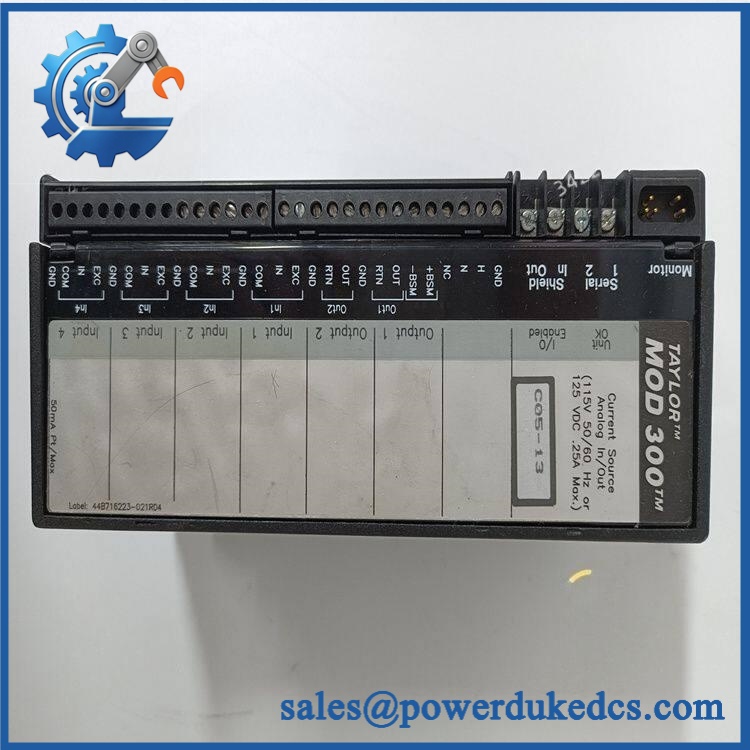
GE IC660BBD101
Module 4: Compatibility & Installation Traps
Migration/Compatibility
- Replacement status: GE Genius 115 VAC Low-Leakage 8-Circuit I/O Block
- Logic rewrite: Normally not required for a like-for-like replacement when the Genius block address and circuit configuration are preserved.
- Firmware flash: Not normally required.
- Drop-in status: Generally direct when replacing the same IC660BBD101 configuration with the correct terminal assembly.
- Circuits: 8 discrete circuits, individually configurable as input, tristate input, or output.
- Input voltage: 93–132 VAC nominal 115 VAC.
- Frequency: 47–63 Hz.
- Output capability: 2 A per output; current references also specify a 15 A maximum total current for the block.
- Terminal assembly: GE documentation associates the IC660BBD101 electronics with the IC660TSD100 terminal assembly.
⚠️ Field Traps (Watch Out)
- Input/output configuration: The eight circuits are configurable, so do not assume an identical terminal position has the same I/O role as another block. Record the circuit configuration before removal.
- Genius address and baud rate: The configured reference address and baud rate should be documented before replacement. GE’s manual specifically recommends recording this information on the block label after configuration.
- Low-leakage behavior: This model is specifically the low-leakage version. Substituting another 115 VAC Genius block can affect off-state behavior or connected device compatibility.
- Output load: Do not treat the 2 A per-channel figure as a universal motor-control rating. Check the actual load type, inrush current, utilization category, and total block current.
- Field-voltage hazard: The block interfaces directly with 115 VAC field circuits. Isolate the field supply before removing terminal wiring.
Module 5: Quality Assurance SOP
Before shipment, the GE IC660BBD101 should undergo a Genius discrete-I/O inspection sequence:
- OEM anti-counterfeit visual inspection — verify GE/GE Fanuc markings, IC660BBD101 catalog number, Genius identification, terminal assembly, labels, and enclosure.
- Mechanical inspection — examine the housing, terminal assembly, mounting hardware, connectors, LEDs, and visible electronics for impact, corrosion, contamination, or unauthorized repair.
- Configuration verification — record the Genius bus address, baud rate, circuit I/O types, input filters, output power-up defaults, and hold-last-state settings where accessible.
- Controlled AC power test — energize the block using an isolated laboratory source within the documented 93–132 VAC range.
- Power-on self-test (POST) — verify unit status and circuit diagnostic indications.
- Genius Bus communication handshake — connect the block to a compatible Genius controller or test interface and verify block identification and reliable data exchange.
- Input-channel verification — apply controlled 115 VAC signals to representative input and tristate channels and verify state recognition.
- Output-channel verification — command representative output circuits and verify correct switching behavior under an appropriate test load.
- Pulse-test verification — where supported by the test configuration, verify output pulse-test behavior.
- Fault-diagnostic verification — simulate appropriate open-wire, overload, no-load, and failed-switch conditions and verify diagnostic reporting.
- Thermal observation — monitor block temperature during representative loaded operation.
- Final QC record — document exact catalog number, circuit configuration, Genius address, baud rate, test values, diagnostic results, photographs, and packaging condition.
For this Genius block, a simple relay-style on/off test is insufficient. Bus communication, circuit configuration, AC input recognition, loaded output operation, and diagnostic functions are the useful acceptance checkpoints.
Module 6: CRO-Driven Buyer FAQ
1. Is GE obsolete, and how do I verify an authentic replacement?
The is legacy GE Fanuc Genius I/O hardware and is now commonly encountered in the Emerson/GE automation installed base. Original GE documentation identifies it specifically as the 115 VAC 8-circuit grouped low-leakage I/O block. For procurement, verify the complete marking and terminal assembly rather than ordering a generic 115 VAC Genius block.
2. Can I hot-swap the ?
Do not assume energized replacement is safe. Although Genius systems support certain online maintenance functions, this block is connected directly to 115 VAC field wiring. Isolate the affected field supply and follow the applicable Genius maintenance procedure before disconnecting the terminal assembly.
3. Will replacing require PLC programming?
Normally not for a like-for-like replacement. The critical parameters are the Genius bus address, baud rate, circuit I/O configuration, input filters, output startup behavior, and any applicable redundancy settings. These should be reproduced from the original block configuration.
4. What are the main electrical specifications?
The is an 8-circuit, nominal 115 VAC low-leakage Genius I/O block with a 93–132 VAC operating range and 47–63 Hz frequency range. Each circuit can be configured as an input, tristate input, or output, and outputs are rated up to 2 A per point.
5. What diagnostics does the block provide?
The block provides overtemperature, failed-switch, open-wire for tristate inputs, overload detection/shutdown, and no-load detection, along with output feedback and configurable fault reporting. Electronic fusing protects individual output circuits against excessive current.
Warranty and Technical Support
Warranty duration should be stated according to the actual inventory condition, such as new surplus or tested refurbished. Technical support should cover exact identification, terminal-assembly compatibility, Genius address and baud-rate verification, circuit configuration, 115 VAC testing, and documented pre-shipment QA. Live 115 VAC field rewiring and process commissioning remain the responsibility of qualified controls and electrical personnel.



 Start Chat