
Description
- Brand: GE General Electric
- Full Model Number: IS200ERIOH1ABB
- Lifecycle Status: Obsolete / Legacy EX2100 hardware
- Core Function: Exciter Regulator I/O interface for customer and system signals
- Top 3 Technical Specs: EX2100 regulator control; FPGA data acquisition; DPM interface to DSPX processor
- Board Family: ERIO
- Applications: Simplex and redundant regulator systems
- Customer I/O: EPCT and ECTB terminal-board interfaces
- System I/O: EROC, ERDD, and ERRR interfaces
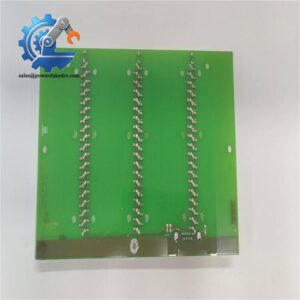
- Backplane: ERBP / ERRB
- Terminal Interface: Two 25-pin connections per applicable customer-I/O path
- Revision Requirement: ABB suffix must be physically verified against the installed board
- Stock & Condition: Exact ABB revision confirmation required; New Surplus / Tested Refurbished; Emergency shipping subject to cutoff
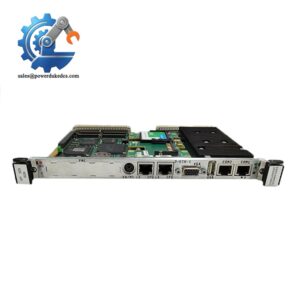
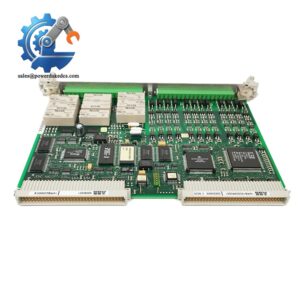
The IS200ERIOH1A is documented as the Exciter Regulator I/O Board for GE EX2100 excitation-control systems. It provides customer and system I/O interfaces in both simplex and redundant configurations, with FPGA-controlled data acquisition and storage in dual-port memory accessible by the DSPX processor through the backplane.
For the exact user-supplied IS200ERIOH1ABB, public documentation is indexed primarily under the base IS200ERIOH1A number; the final ABB marking should therefore be treated as a revision/configuration identifier that requires nameplate verification before substitution.
Module 3: Obsolescence & Supply Chain Deep Dive
A failed IS200ERIOH1ABB can interrupt customer and system I/O in an EX2100 excitation regulator while the primary control processor and other boards remain serviceable. The ERIO provides the interface between the control system and field/interface boards such as EPCT and ECTB, while also exchanging system I/O with EROC, ERDD, and ERRR through the appropriate backplane. The FPGA manages acquisition and storage into dual-port memory, allowing the DSPX processor to access the collected data.
The TCO case favors an exact board replacement when the surrounding EX2100 architecture remains healthy. Keeping the existing ERBP/ERRB backplane, terminal boards, DSPX, field wiring, and excitation application avoids the engineering, rewiring, testing, and outage costs associated with a wider regulator migration. The key procurement issue is configuration: simplex and redundant systems use the ERIO differently, and a visually similar revision may not reproduce the same customer-I/O or system-I/O arrangement. (Legacy EX2100 inventory can be valuable during a forced outage because replacement-board lead times are often less predictable than field swap time.)
Module 4: Compatibility & Replacement Matrix
| Approval Item | Engineering Assessment |
|---|---|
| Exact Part Replacement | Drop-in Replacement when the installed board is the same ERIO hardware revision |
| ABB Revision | Physical verification required before PO approval |
| Software Compatibility | Configuration-dependent; verify DSPX, terminal-board mapping, and excitation application |
| Firmware Flash | Potentially required at system level; verify the installed software/hardware revision |
| Hardware Modification | Normally none for an exact replacement |
| Architecture | Simplex or Redundant |
| Backplane | ERBP or ERRB, depending on configuration |
| Customer-I/O Interfaces | EPCT / ECTB |
| System-I/O Interfaces | EROC / ERDD / ERRR |
| Processor Interface | DSPX through backplane |
| Data Memory | Dual Port Memory |
| Estimated Physical Swap | 1–3 hours |
| Engineering / Commissioning Allowance | 500–1,500 planning range |
| Post-Replacement Testing | Required for customer I/O, system I/O, diagnostics, and excitation functions |
The published ERIO description confirms that simplex applications use the ERBP, while redundant configurations use ERIO boards across the appropriate M1/M2/C backplane sections. It also identifies two 25-pin connector interfaces for customer I/O connections.
⚠️ Field Traps — Watch Out
- Revision Identification: Public technical references identify the base assembly as IS200ERIOH1A, while the supplied part includes ABB. Do not remove the original board until the complete nameplate and hardware markings have been photographed and matched.
- Simplex vs Redundant Arrangement: An ERIO board used in a simplex ERBP arrangement should not be assumed equivalent to every ERIO position in a redundant system. Verify the M1/M2/C architecture, backplane, terminal-board connections, and installed controller arrangement.
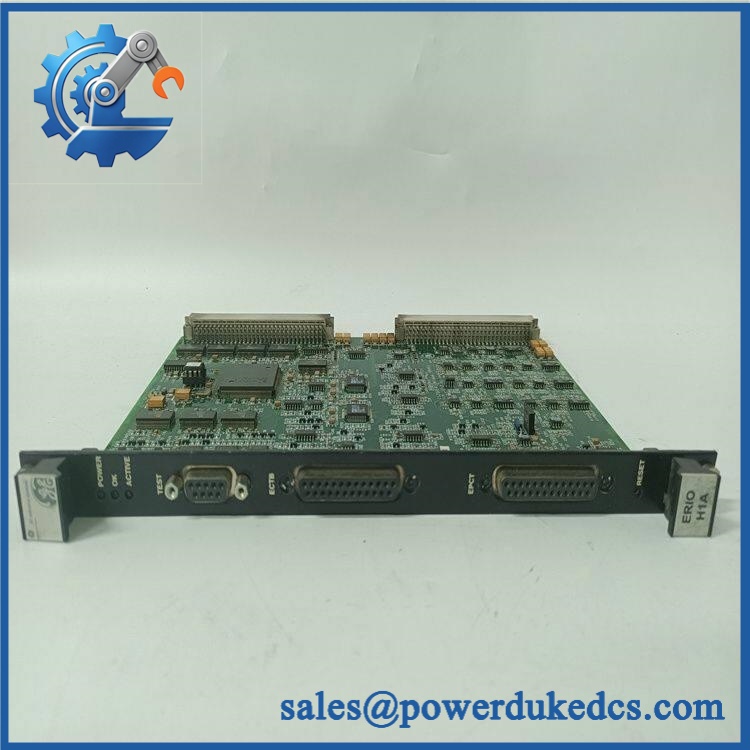
GE IS200ERIOH1ABB
Module 5: Quality Assurance & Testing SOP
- OEM anti-counterfeit visual inspection — verify GE identification, complete IS200ERIOH1ABB marking, board legends, connectors, PCB construction, labels, and traceability.
- Revision audit — photograph every visible revision identifier and compare the complete suffix with the installed board.
- Architecture audit — document whether the board is being supplied for a simplex ERBP or redundant ERBP/ERRB installation.
- Mechanical inspection — inspect backplane connectors, module guides, mounting points, 25-pin interfaces, and PCB edges for damage or deformation.
- PCB condition inspection — check for corrosion, contamination, overheated components, cracked joints, damaged traces, and unauthorized modification.
- Electrical pre-screening — verify continuity, isolation, grounding, and abnormal resistance before energization.
- Power-on self-test (POST) — install the board in an approved test environment and verify expected initialization and diagnostic behavior.
- DSPX interface test — verify communication through the backplane and confirm correct processor access to ERIO data.
- DPM data test — verify FPGA-managed acquisition and correct data availability through the dual-port memory interface.
- EPCT interface testing — simulate representative PT, CT, and applicable analog signals and verify correct acquisition.
- ECTB interface testing — test representative contact-input and relay-output paths according to the installed ECTB configuration.
- ERDD interface testing — verify applicable system-I/O paths associated with excitation and dynamic-discharge functions.
- EROC interface testing — verify applicable ground-detector and regulator-option interface paths.
- ERRR testing — for redundant systems, verify the applicable redundant-relay interface and associated fault/status handling.
- Customer-I/O load testing — apply controlled representative loads to applicable field-interface paths and monitor signal stability.
- System diagnostic testing — simulate representative I/O faults and verify expected diagnostic behavior without introducing an uncontrolled excitation trip.
- Configuration-retention test — perform a controlled power cycle and confirm correct board recognition and I/O data recovery.
- Extended energized run — monitor communication, diagnostic status, data stability, thermal behavior, and intermittent faults.
- Final QC release — photograph the complete identification, retain interface-by-interface test data, package using ESD protection, and preserve serial/part-number traceability.
Because the ERIO is a central interface board rather than a simple passive terminal card, acceptance should cover both customer I/O and internal system I/O. A board that passes power-up but fails one backplane interface is not ready for shipment.
Module 6: Procurement & Lifecycle FAQ
Q1. Is GE IS200ERIOH1ABB genuinely in stock, and what is the cutoff for emergency shipping?
Exact availability should be confirmed against the complete IS200ERIOH1ABB marking, quantity, condition, and destination before PO release. Current industrial listings for the base IS200ERIOH1A report both stocked and unavailable units, so emergency fulfillment should be based on confirmed physical inventory and revision-level verification.
Q2. How do you verify the condition and authenticity of an obsolete ?
Require complete part-number and revision inspection, OEM marking verification, PCB and connector examination, electrical screening, powered testing, DSPX communication checks, DPM data verification, and applicable EPCT/ECTB/ERDD/EROC/ERRR interface tests. The exact suffix should remain linked to the QC record.
Q3. Are there firmware compatibility issues engineers should check before issuing the PO?
Yes. The ERIO participates in the regulator-control architecture through the DSPX and backplane. Engineers should record the installed software/hardware revision, ERBP or ERRB arrangement, terminal-board configuration, and simplex or redundant architecture before commissioning. The ABB suffix should also be confirmed from the physical nameplate.
Q4. Can another IS200ERIOH1A revision replace ?
Not automatically. The base IS200ERIOH1A designation covers the ERIO function, but the complete hardware revision should be matched against the installed board and system configuration. Verify backplane position, terminal-board interfaces, and revision markings before approving a substitute.
Q5. What warranty and return terms should procurement require?
Require a written warranty period, DOA criteria, return-authorization process, serial/part-number traceability, and exclusions for incorrect installation, wiring faults, electrical overstress, or unauthorized board modification. The quotation should explicitly state , the verified hardware revision, and the tested condition.



 Start Chat