

Description
- Brand: GE
- Full Model Number: IS200EROCH1ABB
- Lifecycle Status: Legacy / Obsolete
- Core Function: EX2100 Exciter Regulator Options Card
- Top 3 Technical Specs: 6U double-height Eurocard; P1/P2 96-pin backplane connectors; +5 VDC and ±15 VDC internal power inputs
- Stock & Condition: Physical stock verification required; New Surplus / Tested Refurbished; Emergency dispatch subject to QA release
Module 3: Obsolescence & Supply Chain Deep Dive
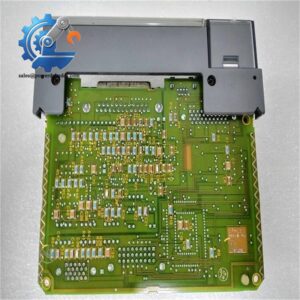
A failed GE IS200EROCH1ABB can interrupt regulator support functions inside an EX2100 excitation control system, even when the main regulator processor and power-conversion hardware remain serviceable. The EROC is identified as the Exciter Regulator Options Card, used in simplex and redundant regulator configurations as well as certain static excitation architectures. Available technical records describe a 6U double-height Eurocard with P1/P2 96-pin backplane connectors. The board also provides interfaces for a keypad, engineering/tool connection, ground detection, redundancy communication, and power distribution to the Exciter Contact Terminal Board. (xm-dcs.com)
For a facility maintaining an installed EX2100 regulator, replacing the exact EROC assembly can be substantially less expensive than redesigning the regulator interface architecture. Existing backplanes, terminal boards, operator interfaces, ground-detection wiring, and application configuration can remain in service when the correct board revision is restored. That reduces engineering hours, panel work, commissioning effort, and outage exposure. —The procurement priority is exact hardware matching: IS200EROCH1ABB is associated with specific EX2100 backplanes and interface functions, so another EROC revision should not be approved solely because it carries the same EROC family designation.
Module 4: Compatibility & Replacement Matrix
| Replacement Scenario | Classification | Engineering / Procurement Guidance |
|---|---|---|
Exact IS200EROCH1ABB replacing the same installed board |
Drop-in Replacement — subject to verification | Match full part number, revision, backplane position, connectors, and EX2100 application |
| Same EROC family with documented compatible revision | Hardware Compatible with Engineering Review | Confirm interface functions, power requirements, and board revision |
| Different EROC suffix or revision | Engineering Review Required | Verify backplane compatibility, connector assignment, firmware/application requirements, and hardware changes |
| EROC installed on an incompatible backplane | Not a Direct Replacement | Confirm whether the system uses ERBP, ERRB, ESBP, or EPBP architecture |
| Migration to newer excitation hardware | Hardware Modification | Requires regulator architecture, wiring, application, and commissioning review |
Available technical records associate the board with IS200ERBP, IS200ERRB, IS200ESBP, and IS200EPBP backplane configurations, depending on the EX2100 application. (xm-dcs.com)
Estimated switch cost/time: For a verified spare already staged on-site, plan approximately 2–5 hours for controlled board replacement, connector verification, power checks, interface testing, and regulator functional checkout. A newly sourced unit may require 1–5 business days for inspection and expedited transportation. These are planning estimates.
Field Traps — Watch Out
- Backplane mismatch: EROC boards are used with different backplane architectures depending on simplex, redundant, or static excitation applications. Verify the installed backplane before approving substitution.
- Interface-function mismatch: The board supports multiple functions, including keypad/tool interfaces, ground detection, redundancy communication, and terminal-board power distribution. A different revision may alter one or more of these interfaces.
- Power-rail verification: Available technical records identify +5 VDC and ±15 VDC internal supply requirements. Confirm the installed backplane delivers the expected rails before energization.
- Revision traceability: Record the complete
IS200EROCH1ABBidentification and hardware revision from the physical board. Do not rely only on the base EROC family number.
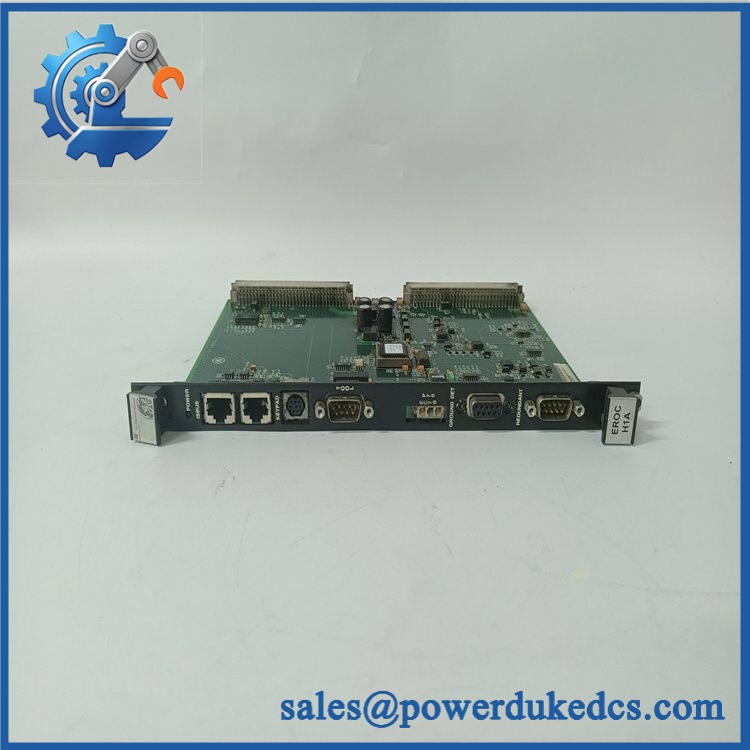
GE IS200EROCH1ABB
Module 5: Quality Assurance & Testing SOP
The EROC should be qualified as an regulator-interface assembly. A basic power-up check does not establish functional acceptance.
- Part-number verification: Confirm
IS200EROCH1ABB, revision, serial/traceability information, and GE identification markings. - OEM anti-counterfeit visual inspection: Inspect GE labels, PCB identifiers, component layout, connector construction, board markings, and evidence of unauthorized rework.
- Physical condition inspection: Check the Eurocard PCB, edge/backplane connectors, front-panel connectors, mounting hardware, capacitors, converters, and accessible components for corrosion, contamination, cracking, or thermal damage.
- Connector inspection: Examine P1/P2 96-pin backplane connectors and all front-panel interfaces for bent contacts, oxidation, contamination, or mechanical damage.
- Power-path inspection: Check accessible power-conditioning components and protective devices for signs of overheating or electrical stress.
- Continuity testing: Verify applicable power, ground, and accessible signal paths before controlled energization.
- Power-on self-test (POST): Install the board in the appropriate test backplane and verify normal startup behavior and the green power indication.
- Power-rail verification: Apply the approved backplane supply and verify expected +5 VDC and ±15 VDC rails under controlled conditions.
- Keypad-interface test: Where applicable, verify the front-panel keypad interface and expected communication behavior.
- Tool-interface test: Verify the engineering/tool connection using the approved test environment.
- Ground-detector interface test: Exercise the applicable ground-detection interface and confirm correct signal handling.
- Redundancy-interface test: In redundant configurations, verify the redundancy communication path between the applicable regulator sections.
- ECTB interface test: Confirm the expected interface and power-distribution path to the Exciter Contact Terminal Board.
- Backplane communication test: Verify that the EROC is correctly recognized and communicates with the associated regulator hardware.
- I/O functional testing: Exercise supported interface signals with controlled test inputs and verify expected responses.
- I/O load testing: Apply representative interface loads while monitoring power stability, connector integrity, and board temperature.
- Diagnostic test: Verify the board does not generate unexpected hardware-identification or communication faults.
- Extended observation: Operate the EROC under representative load and interface activity to detect intermittent communication, power, or connector faults.
- Final QC release: Record full part number, hardware revision, power-rail measurements, interface-test results, photographs, condition grade, test date, and QC authorization.
Available technical records describe the EROC as a double-height 6U Eurocard with 96-pin P1/P2 backplane connections, a front-panel power LED, keypad and tool interfaces, and additional interfaces associated with ground detection and redundant regulator operation. (xm-dcs.com)
Module 6: Procurement & Lifecycle FAQ
Q1. Is the GE genuinely in stock, and what is the cutoff for emergency shipping?
Physical inventory should be verified against the exact marking and hardware revision before the PO is accepted. Emergency dispatch depends on QA completion, warehouse location, carrier pickup time, and destination. Same-day shipment should only be confirmed after the actual board has been physically identified and released.
Q2. How do you guarantee the condition and authenticity of an obsolete ?
Require exact part-number verification, OEM visual inspection, PCB and connector examination, controlled power-up, power-rail measurement, interface testing, and documented QC results. Photographs of the actual board and identification markings should remain with the procurement record.
Q3. Are there firmware compatibility issues engineers should check before issuing the PO?
Yes, at the complete regulator-system level. Record the existing controller configuration, application revision, board revision, and relevant interface settings before replacement. The EROC is an interface/options board, so hardware and application configuration must be evaluated together.
Q4. Can another EROC board replace ?
Not automatically. Confirm the complete part number, hardware revision, installed backplane, application type, connector assignment, power rails, and required interface functions. A board intended for a different regulator or static-excitation configuration should not be assumed interchangeable.
Q5. What warranty and return terms should be written into the PO?
Specify warranty duration, DOA coverage, power-rail performance, backplane-interface operation, communication performance, configuration conformity, return authorization, inspection period, and serial-number traceability. For refurbished inventory, require the actual functional test record and define whether failures discovered during commissioning are covered.



 Start Chat