

Description
- Brand: GE
- Full Model Number: IS200SPROH1AAB MRP663860
- Lifecycle Status: Legacy / Obsolete Mark VIe Spare
- Core Function: SPRO Emergency Protection Terminal Board for backup turbine protection
- Top 3 Technical Specs: PPRO/YPRO I/O pack interface; 3 high-speed speed-input channels; Bus and generator voltage sensing through potential transformers
- Stock & Condition: Physical stock verification required; New Surplus / Tested Refurbished; Emergency dispatch subject to QA release
Module 3: Obsolescence & Supply Chain Deep Dive
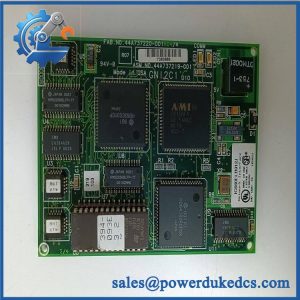
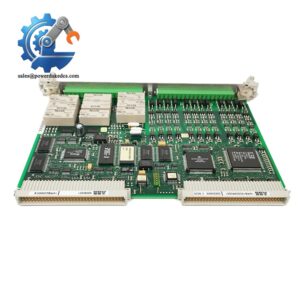
A failed GE IS200SPROH1AAB MRP663860 can interrupt an independent turbine-protection path even when the primary Mark VIe controller remains operational. The SPRO is the Simplex Backup Protection Terminal Board used with GE Mark VIe/Mark VIeS protection architectures. GE documentation describes the SPRO as a board that hosts a protection I/O pack, conditions high-speed shaft-speed inputs, and accepts potential-transformer signals associated with generator and bus voltage. A dedicated DC-37 connector links the board to the designated turbine emergency-trip board.
For a facility maintaining an existing backup protection system, replacing the exact SPRO board can be considerably less expensive than redesigning the emergency overspeed and synchronization protection chain. Existing I/O packs, trip-terminal wiring, potential-transformer connections, DIN-rail or panel hardware, and established protection logic can remain in service when the replacement is correctly matched. This preserves the installed architecture and avoids unnecessary engineering and outage work. —The crucial purchasing check is that SPRO is a terminal-board platform, not a generic processor module. Public records contain inconsistent product descriptions for this exact part number, so the physical board label, installed I/O pack, cabinet drawing, and GE system documentation should control the final qualification.
Module 4: Compatibility & Replacement Matrix
| Replacement Scenario | Classification | Engineering / Procurement Guidance |
|---|---|---|
Exact IS200SPROH1AAB replacing the same installed SPRO board |
Drop-in Replacement — subject to verification | Match complete part number, hardware revision, I/O pack, connectors, and protection architecture |
| SPRO with compatible PPRO protection pack | Hardware Compatible | Verify PPRO model, speed-input configuration, PT inputs, and trip-board connection |
| SPRO with YPRO protection pack | Engineering Review Required | Confirm whether the application is Mark VIe or Mark VIeS and verify the approved YPRO configuration |
| Different SPRO revision | Engineering Review Required | Compare PCB revision, terminal configuration, connector assignment, and system application |
| Different protection terminal board | Hardware Modification | Requires protection-system wiring, logic, and commissioning review |
Estimated switch cost/time: For a tested spare already staged on-site, plan approximately 3–6 hours for controlled replacement, I/O-pack installation, speed-input verification, PT-input checks, DC-37 trip-interface testing, and protection validation. Because this board participates in an emergency-protection architecture, formal proof testing or management-of-change requirements may extend the return-to-service window.
Field Traps — Watch Out
- PPRO vs. YPRO application: GE documentation shows SPRO being used with protection I/O packs such as PPRO and YPRO, depending on the Mark VIe/Mark VIeS architecture. Do not substitute based on the SPRO board number alone.
- Speed-input configuration: The SPRO conditions high-speed shaft-speed signals for the protection pack. Verify the number and source of magnetic-pickup inputs before reconnecting the board.
- PT input wiring: The board contains potential-transformer interfaces for bus and generator voltage monitoring. Incorrect PT wiring can affect synchronization protection.
- Trip-board connection: The DC-37 connection from SPRO to the designated emergency-trip board is part of the protection chain. Verify connector orientation, cable identity, and continuity before energizing.
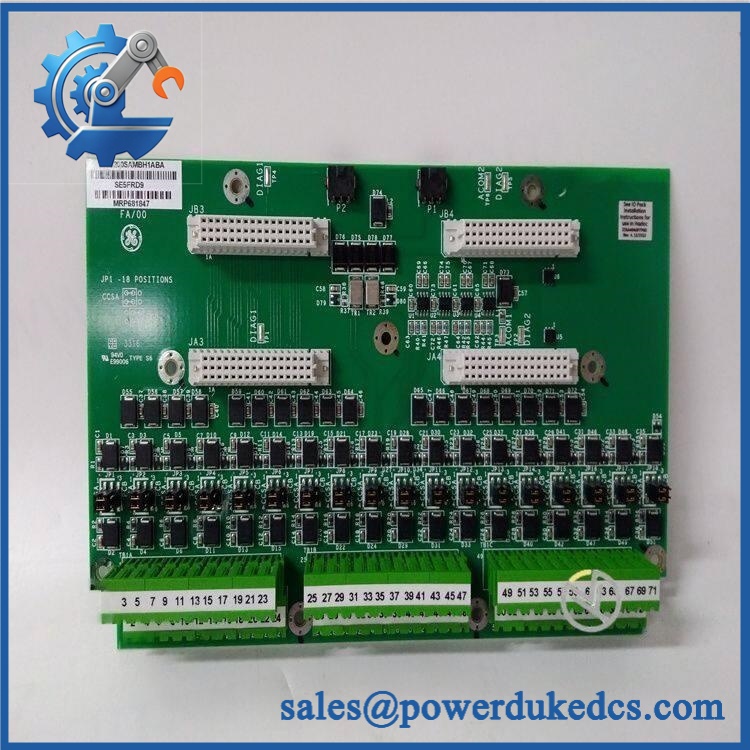
GE IS200SPROH1AAB MRP663860
Module 5: Quality Assurance & Testing SOP
The SPRO should be qualified as a protection terminal assembly. A simple power-up check is not enough.
- Part-number verification: Confirm
IS200SPROH1AAB,MRP663860, hardware revision, serial/traceability data, and GE identification markings. - OEM anti-counterfeit visual inspection: Inspect GE labels, PCB identifiers, terminal blocks, connectors, component placement, and evidence of unauthorized rework.
- Physical condition inspection: Check the PCB, terminal blocks, mounting hardware, connector housings, PT interface components, and protection circuitry for corrosion, cracks, contamination, or thermal damage.
- Terminal inspection: Examine barrier or pluggable terminals for damaged screws, bent contacts, oxidation, contamination, and loose hardware.
- Connector inspection: Verify the protection-pack interface and DC-37 connector for bent pins, contamination, damaged latches, or mechanical wear.
- I/O-pack compatibility verification: Confirm the installed or replacement protection pack is the approved PPRO/YPRO configuration.
- Continuity testing: Verify power, ground, speed-input, PT-input, and trip-interface paths before controlled energization.
- Power-on self-test (POST): Install the SPRO with the appropriate protection I/O pack and verify expected startup behavior and status indications.
- Speed-input testing: Apply calibrated simulated magnetic-pickup signals independently to each configured speed channel and confirm correct acquisition.
- Frequency sweep: Test representative shaft-speed frequencies across the intended operating range and verify stable signal conditioning.
- PT-input testing: Apply controlled simulated bus and generator voltage signals through the appropriate test interface and verify correct signal transfer.
- Signal-conditioning verification: Confirm that speed and voltage inputs are correctly routed to the protection I/O pack.
- DC-37 trip-interface test: Verify continuity and signal transfer between the SPRO and the designated emergency-trip board.
- Trip-path simulation: Apply controlled protection conditions and confirm expected signal propagation through the backup protection chain.
- TMR architecture test: Where three SPRO/PPRO or YPRO paths are used, test each protection channel independently and verify the approved voting arrangement.
- Single-channel fault test: Simulate loss of one protection path and confirm system behavior matches the approved safety design.
- I/O load testing: Apply representative signal activity and interface loads while monitoring board stability, connector integrity, and temperature.
- Diagnostic test: Confirm the protection I/O pack recognizes the terminal board and does not report an unexpected hardware-identification fault.
- Extended observation: Maintain representative speed and voltage inputs to identify intermittent signal-conditioning, connector, or protection-interface faults.
- Final QC release: Record complete part number, MRP identifier, hardware revision, I/O-pack configuration, speed-input results, PT-input results, trip-interface results, photographs, condition grade, test date, and QC authorization.
GE’s Mark VIe documentation identifies SPRO as a dedicated protection terminal board that conditions speed signals and interfaces with the emergency-trip section. In the PPRO architecture, three independent protection packs can be mounted on separate SPRO boards, supporting an independent backup overspeed-protection system.
Module 6: Procurement & Lifecycle FAQ
Q1. Is the GE IS200SPROH1AAB MRP663860 genuinely in stock, and what is the cutoff for emergency shipping?
Physical inventory should be verified against both IS200SPROH1AAB and MRP663860 before the PO is accepted. Emergency dispatch depends on QA completion, warehouse location, carrier pickup, and destination. Same-day shipment should only be confirmed after the actual board has been identified and released.
Q2. How do you guarantee the condition and authenticity of an obsolete ?
Require exact part-number and MRP verification, OEM visual inspection, PCB and terminal inspection, controlled power-up, speed-input simulation, PT-input testing, DC-37 interface testing, and documented QC results. Photographs of the actual board and identification markings should remain with the procurement record.
Q3. Are there firmware compatibility issues engineers should check before issuing the PO?
The SPRO terminal board is primarily a hardware interface rather than the main firmware-bearing processor. The critical checks are the installed PPRO or YPRO I/O pack, protection-system architecture, board revision, system configuration, and associated controller software. Preserve the existing protection configuration before replacement.
Q4. Can replace another SPRO board directly?
Not automatically. Verify the complete board revision, I/O-pack type, terminal configuration, speed-input arrangement, PT inputs, and DC-37 connection. The Mark VIe and Mark VIeS protection architectures can use SPRO with different protection packs, so application matching is required.
Q5. What warranty and return terms should be written into the PO?
Specify warranty duration, DOA coverage, speed-input performance, PT-interface performance, DC-37 trip-interface conformity, protection-pack compatibility, return authorization, inspection period, and serial-number traceability. For refurbished inventory, require the actual protection-interface test record and define whether failures discovered during commissioning are covered.


 Start Chat